

3 Days in Hue — Honest Itinerary, Costs & Local Tips 2026
A practical 3-day Hue itinerary with transit, cost estimates and food recommendations to see the Imperial City, key royal tombs, Perfume River, and markets.
A clear, no-nonsense 72-hour plan for Hue that balances the Imperial City, riverside life, royal tombs and the local food scene with realistic costs and timing.
Arrivals tend to notice two things first: the compact scale along the Perfume River and the concentration of imperial buildings clustered on the north bank. Streets near the Citadel are a mix of low-rise French-era buildings, motorbikes, and markets; noise levels vary but expect constant traffic noise during daytime. Temperatures can feel intense in summer and rain can disrupt plans in autumn, so pacing is necessary rather than attempting to tick off every tomb.
This place suits travelers who prioritise architecture, layered history and specific local dishes over nightlife or long beach days. Many visitors underestimate walking distances between sites and overbook the same afternoon with multiple long transfers, which leads to rushed visits and missed photo light.
Is 3 days in Hue enough?
Three days is enough to see the Imperial City, Thien Mu Pagoda, and two royal tombs while sampling local dishes and a river cruise. The honest caveat: must skip a detailed visit to every royal tomb and several museums — those require extra days to avoid rushed visits.
Who This Guide Is For
Best for history-focused travelers and food-focused visitors who can walk and use motorbike taxis; less suitable for travelers who want a slow beach-and-relax trip or plan to visit every royal site in detail.
Local Tips for Hue
Practical details that most travel sites skip — specific to Hue.
- Imperial City (Dai Noi) entrance ticket costs about 200,000 VND for adults when bought at the West Gate ticket office; bring cash and arrive early to avoid queues.
- Phu Bai International Airport (HUI) is about 15 km from the city centre; expect a metered taxi fare of roughly 200,000–300,000 VND (≈€8–12) or use Grab for slightly lower rates.
- Dong Ba Market’s fresh-produce section ends around 17:00; the same area reopens as a small night market after 19:00 for street food and souvenirs.
- Boat trips along the Perfume River to Thien Mu Pagoda are commonly priced at 120,000–200,000 VND per person depending on boat size — negotiate a fixed price before departing.
- Use the HueBus app for route maps and timetables; single bus fares are about 7,000 VND per ride and many local stalls and tombs still only accept cash.
How This Guide Was Prepared
Hue’s appeal is concentrated: imperial architecture along the Perfume River and a food culture that still follows regional recipes. Many guides cram the same photo spots and ignore the slow, local rhythms — traffic, market hours, and how long boat trips actually take. This guide prioritises what fits cleanly into three days, calls out common timing mistakes, and gives real costs. This guide was prepared through a structured research that combines destination research, geographic context, itinerary planning logic, and content review.
Plan Your Stay in Hue
Use this itinerary as your starting point, then compare areas to stay, transport options, seasonal timing, and realistic daily costs before booking.
Why Visit
The Imperial City (Dai Noi) provides a compact study of Nguyen dynasty court life with gates, palaces and the Noon Gate — useful for anyone who wants tangible palace architecture without needing to travel far between sites. Thien Mu Pagoda on the riverbank is one of the most photographed religious sites in central Vietnam and offers river views and local monk life that contrast with palace ruins.
The royal tombs of Minh Mang, Khai Dinh and Tu Duc show different architectural choices and landscape settings: Minh Mang’s symmetry and gardens, Khai Dinh’s tiled mosaic work, and Tu Duc’s lakeside quiet. Food is a reason in itself: bún bò Huế, bánh bèo and com hến are region-specific and best sampled at market stalls rather than tourist restaurants. Finally, the riverfront rhythm and smaller museums like the Hue Royal Antiquities Museum let visitors trace court objects without city-scale crowds found in larger cities.

Quick Planning Tips
From Phu Bai Airport the fastest choice is a metered taxi (Mai Linh or Vinasun) or Grab; expect 25–35 minutes to the Citadel depending on traffic and 200,000–300,000 VND fare. From Hue Railway Station (Ga Huế) the Citadel is a short Grab ride or a bus trip; use the HueBus app to check routes and times.
Carry cash for most market purchases and smaller tomb entrances; larger hotels accept cards but many food stalls do not. A common planning mistake is arriving late morning and trying to visit the Citadel, Thien Mu and a tomb in the same afternoon — spread those across two half-days to avoid heat and time pressure.

Day 1
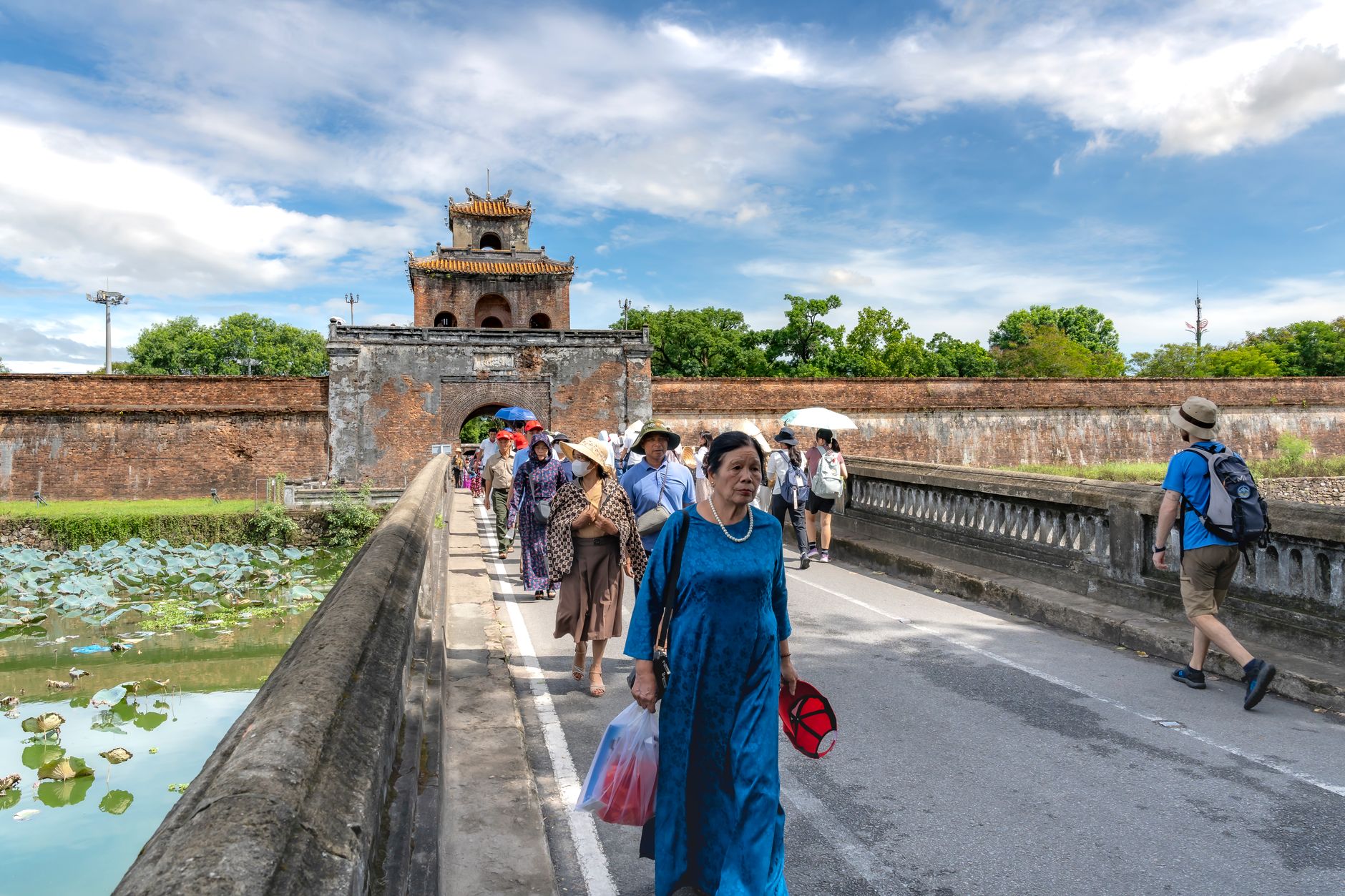
Morning: Start at the Imperial City (Dai Noi). Allow 2–3 hours to walk the main axis from Ngo Mon Gate to the Thai Hoa Palace and the Forbidden Purple City areas; ticket booth at West Gate has the full-entry ticket (about 200,000 VND). Walking between monuments is straightforward but expect uneven stone surfaces and limited shade.
Late morning: Cross Trang Tien Bridge on foot to Dong Ba Market (10–15 minutes on foot). Explore the market’s food stalls and the fresh-produce rows; this is the best spot to try bánh bèo and com hến from vendors who’ve served locals for decades. Lunch: eat at a stall inside Dong Ba Market where small noodle bowls typically cost 30,000–50,000 VND and are served quickly.
Afternoon: Take a short Grab ride (5–10 minutes) to the Hue Royal Antiquities Museum beside the Citadel to see imperial costumes and bronzes; a focused 45–60 minute visit works well. Continue to An Dinh Palace (10–15 minutes from the museum by taxi) to view its glazed tiles and audacious décor; entry is shorter but photogenic.
Evening: Walk the Perfume River banks at sunset and choose a riverside restaurant near Le Loi for dinner, then consider a short dragon-boat or private boat cruise for river views of Thien Mu Pagoda at night.
Day 2
Morning: Head south along Highway 49 to the tombs outside the city. Start at Minh Mang Tomb; allow 60–90 minutes to walk the formal gardens and terraces. Expect a 20–30 minute taxi or Grab ride from the city centre to Minh Mang and then another 15–20 minutes from Minh Mang to Khai Dinh if visiting both.
Midday: Visit Khai Dinh Tomb for its interior mosaic and tighter layout — entry is typically about 100,000 VND. Lunch near the tombs can be a simple rice-and-side-dish meal at a local canteen; plan 80,000–150,000 VND per person and a quick stop so schedules stay on track.
Afternoon: Return toward the Perfume River and stop at Thien Mu Pagoda; the riverbank setting is ideal for late-afternoon light and short walks. If time allows, add Tu Duc Tomb for a quieter, shaded garden experience (another 20–30 minute transfer). Use Grab or a hired driver for the day if planning two or three tombs — this saves on waiting and gives flexibility for photo stops.
Evening: Back in town, try a bún bò Huế restaurant near Phan Dinh Phung or Le Loi streets and sit where locals dine; ordering banh ram and che for dessert is common.

Day 3
Morning: Take a relaxed start with a coffee and bánh bèo at a market stall, then rent a motorbike or grab a xe ôm to An Cuu village across the river for a quieter riverside walk and local life observation. The ride from the Citadel to An Cuu takes roughly 10–15 minutes by motorbike taxi.
Late morning: Visit the Hue Museum of Royal Antiquities or choose a focused walk across the Trang Tien area to photograph colonial facades and the Perfume River; these are short visits of 45–90 minutes. If checking out midday, store luggage at the hotel and time return transport to the station or Phu Bai Airport with buffer for traffic.
Afternoon option (for late flights): If the flight is late afternoon or evening, book a driver to Tu Duc Tomb first then a direct transfer to Phu Bai; allow 60–90 minutes from Tu Duc to the airport. For an early afternoon flight, skip a tomb and spend the morning at Dong Ba Market and the river for easier transfer times.
Evening: If not departing, finish with a short sunset boat ride or a low-key riverside dinner near Le Loi and Trang Tien.

Best Local Experiences
Dong Ba Market morning food tour: try bánh bèo, com hến and local chè from individual stalls between 20,000–50,000 VND each. A Perfume River boat ride to Thien Mu Pagoda is worth doing at sunset; negotiate a fixed price before boarding (120,000–200,000 VND).
Attend a short ca tru or traditional music performance at a local cultural house near the Citadel when available — these are scheduled events and worth checking at the Hue Royal Antiquities Museum. Rent a motorbike for a half-day and follow the coastal road to the fishermen’s villages west of the city for seafood stalls and uncrowded beaches.
Early-morning walk across Trang Tien Bridge and along the riverbank shows daily routines and street vendors. Visit a royal tomb at dawn or late afternoon to avoid crowds and heat; Tu Duc and Minh Mang offer quieter gardens than Khai Dinh mid-day.

Where to Stay
Citadel / Le Loi area: Suits first-time visitors who want walking access to the Imperial City, Trang Tien and most riverside restaurants. Expect nightly rates from about 600,000–1,500,000 VND (≈€24–60 / $26–65) for mid-range hotels; budget guesthouses are cheaper nearby.
Dong Ba Market / Trang Tien area: Good for market access and local food stalls; rooms here range 400,000–900,000 VND per night (≈€16–36 / $17–39). This area is lively and can be noisy after dark because of market activity.
An Cuu and Phu Hoi (across the river): Suits travelers seeking quieter riverside stays and easy access to motorbike routes. Mid-range homestays and small hotels cost roughly 500,000–1,200,000 VND per night (≈€20–48 / $22–52). Choose this area for a calmer evening and better river views.
Food and Drink
Bún bò Huế: A spicy lemongrass-and-beef noodle soup with pig’s knuckle or oxtail, found at street stalls and local restaurants; expect 40,000–70,000 VND per bowl. Best tried in the morning at market stalls or specialist shops near Le Loi.
Bánh bèo: Small steamed rice cakes topped with shrimp, scallion oil and crispy bits; commonly 10,000–20,000 VND per plate of several cakes at Dong Ba Market or specialist vendors. Bánh khoái (Hue pancake): Crispy rice-flour pancake often served with herbs and shrimp — orders cost 30,000–60,000 VND at local eateries.
Com hến (clam rice): Small clams with rice and herbs, typically 30,000–50,000 VND at market stalls. Nem lụi: Lemongrass pork skewers that pair well with rice paper and herbs; expect 30,000–60,000 VND. Drinks: cà phê sữa đá (iced coffee) is common for 15,000–30,000 VND. For dessert, try local chè at Dong Ba for 15,000–30,000 VND.
Getting Around
Public buses are operated under the HueBus system; use the HueBus app for routes and timetables. Single bus fares are about 7,000 VND per ride; there is no widely used city-wide day pass, so most visitors mix buses with taxis and motorbike taxis.
Grab (app) operates motorbike taxis (GrabBike) and car rides; these are often faster and cheaper than metered taxis for short hops. Metered taxis (Mai Linh, Vinasun) are reliable; expect Phu Bai Airport to city centre fares of 200,000–300,000 VND. Motorbike rentals run about 120,000–150,000 VND per day; always inspect the bike and take photos before riding.
Best Time to Visit
Dry, cooler months from February to April are the most pleasant for walking and visiting tombs; daytime highs typically range 22–30°C and humidity is lower. May to August brings high heat and sun, with daytime temperatures often 30–35°C; plan early starts and mid-day breaks.
September to November is the wettest period and can see typhoon-related heavy rain and interruptions to travel; expect heavy downpours and possible closures of river services. December and January are cooler and quieter, with daytime temperatures around 18–25°C and fewer tourists but some overcast days.
Budget and Practical Tips
Daily budget (modest): Accommodation 400,000–800,000 VND (≈€16–32 / $17–35); food 150,000–300,000 VND (≈€6–12 / $6–13); transport and small tickets 60,000–200,000 VND (≈€2.5–8 / $3–9); attraction fees (Imperial City 200,000 VND, tombs ~100,000 VND each) about 200,000–400,000 VND per day if visiting paid sites.
Tipping is not obligatory but appreciated: round up taxi fares, leave 5–10% in restaurants if service is good, and offer small cash donations at temples rather than expecting change. Carry VND cash in small denominations for market stalls and ticket booths; ATMs are available in town but sometimes empty during busy tourist periods.
FAQ
Is Hue safe for solo travellers?
Generally yes; daytime areas around the Citadel and markets are busy and safe. Standard precautions apply at night — avoid poorly lit lanes and secure belongings against petty theft.
How do I get from Phu Bai Airport to the city centre?
Taxis and Grab rides are the easiest options and take roughly 25–35 minutes for 200,000–300,000 VND. Pre-booked airport transfers from hotels are also common.
Are motorbike rentals safe for tourists?
Experienced riders can rent bikes (about 120,000–150,000 VND/day) but roads and traffic require caution; helmets are mandatory and insurance coverage varies.
Is there a useful city pass for attractions?
No widely used all-in-one city pass exists; the Imperial City ticket is purchased separately and tombs have individual fees, so buy tickets on arrival in cash.
Can public buses reach the tombs?
Some HueBus routes serve outskirts, but schedules can be slow; hiring a Grab or a private driver is faster for multiple tombs in one day.
Are credit cards widely accepted?
Cards work at hotels and larger restaurants; Dong Ba Market and many food stalls accept cash only, so keep small VND notes handy.
Conclusion
Three days provide a clear, manageable window to experience the core of the imperial complex, a riverside mood, and a couple of royal tombs without rushing through every site. What will be remembered most is the combination of palace architecture and the intense flavours of bún bò Huế and market snacks. If time runs short, prioritise the Imperial City plus one tomb and a river cruise — that combination captures the architectural and cultural contrast that defines the place.
How this guide was prepared
This guide was prepared through a structured research that combines destination research, geographic context, itinerary planning logic, and content review.