

Introduction
Athens is one of Europe’s most rewarding city breaks for first-time visitors. It combines world-famous ancient monuments with busy neighborhood life, rooftop dining, local markets, street art, and easy day-to-day sightseeing. In just three days, you can cover the essential historical sites, spend time in the city’s most characterful districts, and still slow down enough to enjoy long meals, hilltop views, and evening walks.
The Greek capital can feel intense at first. It is noisy, layered, and full of contrasts. One street may lead past Roman ruins, the next through a contemporary shopping area, and the next into a village-like neighborhood beneath the Acropolis. That mix is exactly what makes Athens memorable. This itinerary is designed to help first-time visitors see the highlights in a practical order, avoid unnecessary backtracking, and experience both the ancient and modern sides of the city.
Quick Planning Tips

The best approach for a three-day visit is to group sights by area. Central Athens is very walkable, especially around the Acropolis, Plaka, Monastiraki, Syntagma, and Koukaki, but the streets can be hilly and uneven, so comfortable shoes are essential.
Start major archaeological visits early in the day. The Acropolis and other popular sites get hotter, busier, and more crowded as the day goes on. Morning visits are usually more pleasant, especially in warmer months.
Stay in a central neighborhood if possible. Being within walking distance of the Acropolis area will save time and make evenings more enjoyable.
Plan for a mix of indoor and outdoor sightseeing. Athens has strong sun for much of the year, so alternating between ruins, museums, shady streets, and cafés makes the trip more comfortable.
Use museums strategically. The Acropolis Museum is the best companion to the city’s ancient sites, while the National Archaeological Museum provides a broader understanding of Greece beyond the Acropolis itself.
Athens is generally easy for a short visit, but traffic can be slow. For airport transfers and cross-city trips, allow extra time.
Day 1 Itinerary
Your first day should focus on ancient Athens and the neighborhoods around the Acropolis. This gives you the city’s most important landmarks immediately and helps you understand the layout of the historic center.
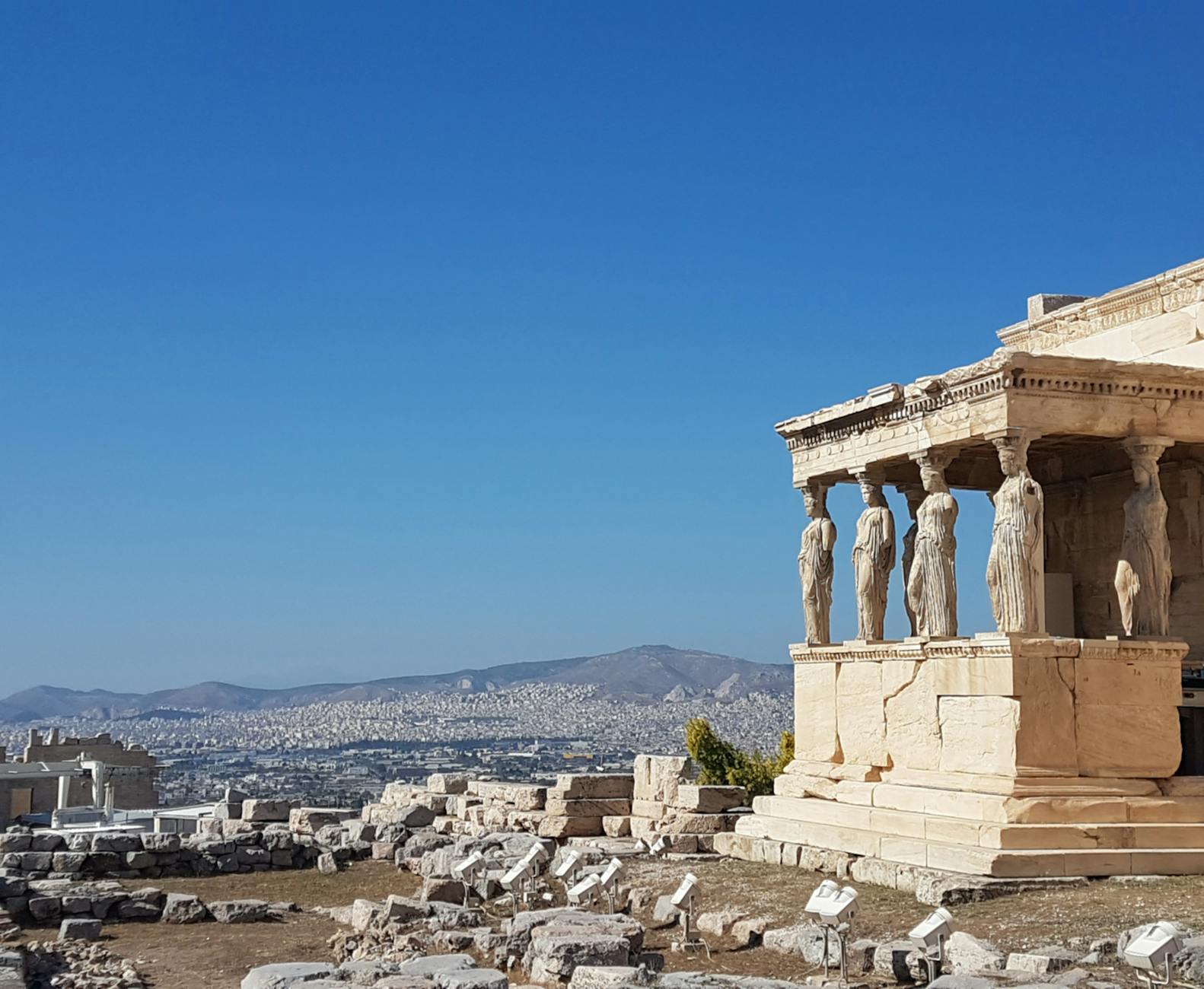
Begin early at the Acropolis. This is the essential Athens experience, and for first-time visitors it is best seen before the biggest crowds arrive. As you climb, you will pass major remains and viewpoints before reaching the Parthenon, the city’s defining monument. Also look out for the Erechtheion with its Caryatid porch and the Temple of Athena Nike. The hill itself is as important as the structures on it, since the views over Athens explain how the ancient and modern city connect.
After the Acropolis, continue to the Acropolis Museum. Visiting the museum on the same day works especially well because the sculptures, architectural fragments, and explanations help make sense of what you have just seen on the hill. The top-floor galleries, aligned toward the Acropolis, are particularly effective. This is one of the best museums in the city and worth taking your time over.
From here, walk into Plaka. For first-time visitors, Plaka is one of the easiest neighborhoods to enjoy. Its narrow streets, neoclassical houses, shaded corners, and small squares make it a good place for a relaxed lunch. It is tourist-friendly, but still one of the most atmospheric parts of central Athens.
In the afternoon, explore Anafiotika, the tiny hillside quarter tucked beneath the Acropolis. Its whitewashed houses and narrow lanes feel completely different from the rest of the city and offer one of the most distinctive walks in Athens. It is small, so it works best as a short detour rather than a major stop.
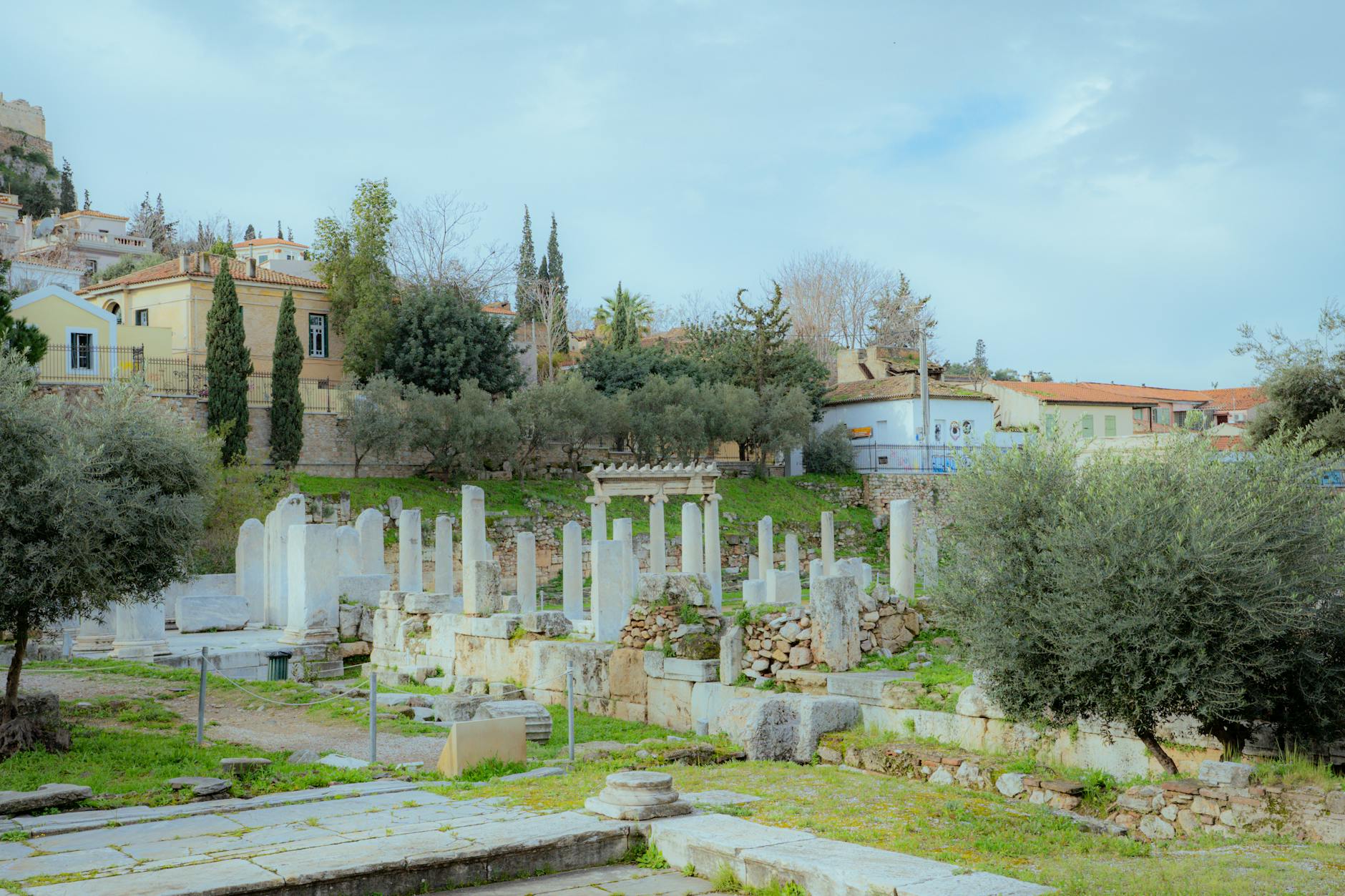
Then continue toward the Ancient Agora. This area was once the political and social heart of ancient Athens, and it is one of the easiest archaeological sites to appreciate because the ruins are spread out in a more readable landscape. The Temple of Hephaestus is especially impressive and among the best-preserved ancient temples in Greece. If you still have energy, visit the museum in the reconstructed Stoa of Attalos.
As evening approaches, walk through Monastiraki. The square, market streets, and rooftop views give you a lively introduction to modern Athens. This is a good place for a casual dinner or a drink with a direct view of the illuminated Acropolis. End your first day here or nearby in Thissio, where the pedestrian streets and evening atmosphere are especially pleasant.
Day 2 Itinerary

Your second day should broaden the picture beyond the Acropolis area and introduce the ceremonial center, major museums, and one of Athens’ best urban viewpoints.
Start at Syntagma Square, the political center of modern Athens. The main attraction here is the Hellenic Parliament and the Tomb of the Unknown Soldier. If timing works out, watch the changing of the guards. Even if you only stay briefly, this area helps connect the ancient city to the modern Greek state.
From Syntagma, walk through the National Garden. This is a useful and relaxing break from traffic and stone-paved streets, especially in warmer weather. The garden is not a major sightseeing stop in the same way as the Acropolis, but it provides shade, a quieter pace, and an easy route toward the next landmarks.
Continue to the Panathenaic Stadium. This marble stadium is closely tied to both ancient Athens and the revival of the modern Olympic Games. It is visually striking and easy to appreciate even on a short visit. For first-time visitors, it adds a different dimension to the city by showing how Athens’ past continued into the modern era.
Afterward, choose a museum focus for the late morning and early afternoon. The National Archaeological Museum is the strongest option if you want a deeper understanding of ancient Greece beyond the Acropolis. Its collections are extensive, with major sculpture, frescoes, and artifacts from across the country. It is a little removed from the main tourist core, but absolutely worth the trip.
If you prefer to stay more central and want a smaller-scale cultural stop, the Museum of Cycladic Art or the Benaki Museum are both excellent alternatives. The first is ideal for elegant prehistoric art and a focused visit; the second gives a wider overview of Greek culture across different periods.
In the late afternoon, head to Lycabettus Hill. This is one of the best viewpoints in Athens and a good contrast to the Acropolis. You can reach it by walking part of the way through Kolonaki, one of the city’s more refined central neighborhoods, and then continuing uphill, or by using the funicular for the steepest section if you prefer to save energy. Sunset is a popular time, and for good reason. The view over the city all the way to the sea, with the Acropolis rising from the center, is one of Athens’ defining panoramas.
Spend the evening in Kolonaki or return to Syntagma for dinner. Kolonaki suits visitors who want a polished, café-and-bistro atmosphere, while streets around Syntagma and nearby neighborhoods offer easier access back to most central hotels.
Day 3 Itinerary
Your third day should balance archaeology, local life, and a more alternative side of Athens. This final day works well as a mix of classic sights and neighborhoods that show the city’s personality beyond the main monuments.
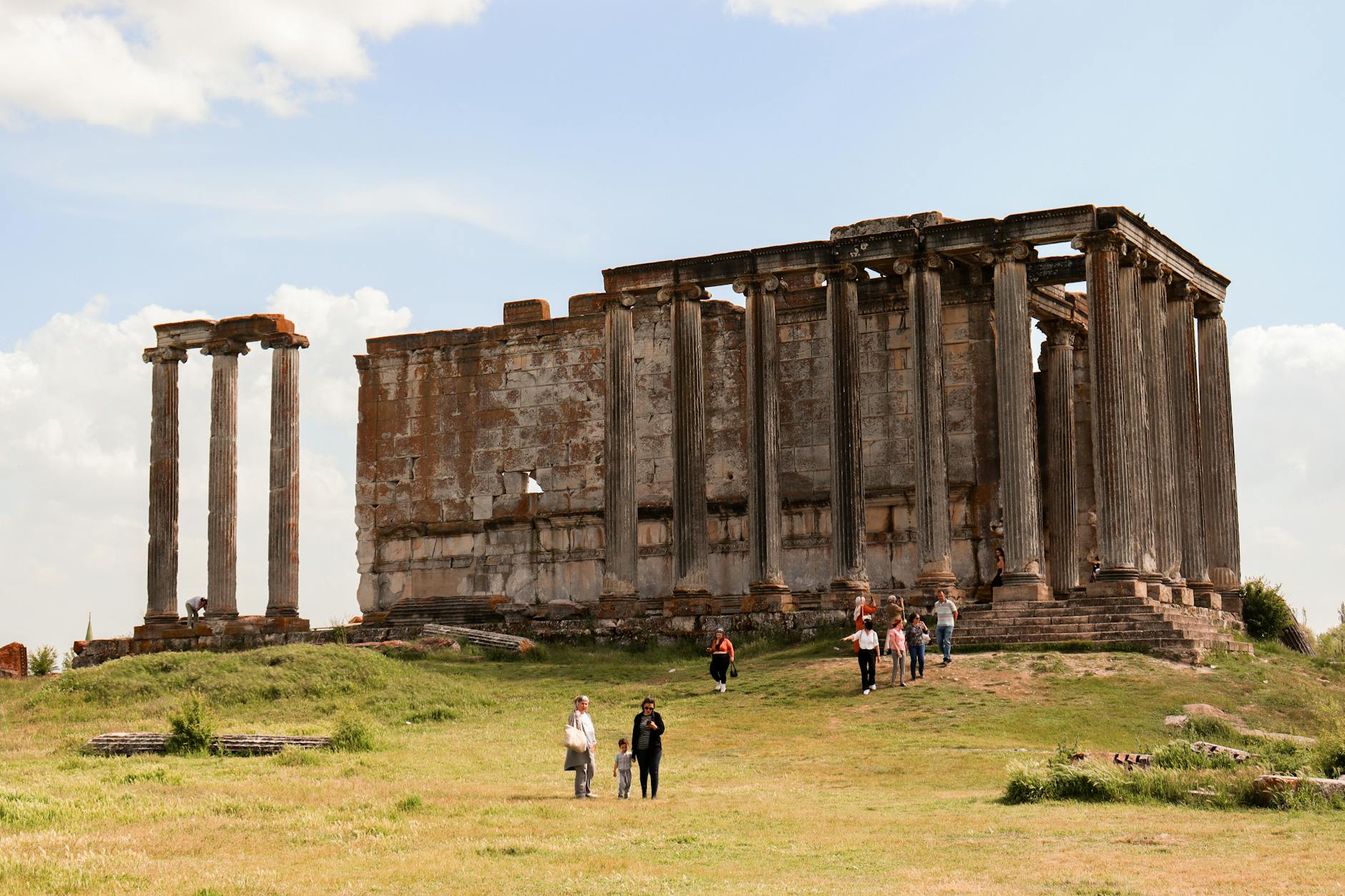
Begin at the Temple of Olympian Zeus. Although less complete than some other ancient sites, it remains one of the great landmarks of Athens and is worth seeing for its scale and setting. From here you can also appreciate the Arch of Hadrian, which symbolically marks the transition between ancient zones of the city.
Next, walk to the nearby Zappeion area and continue into the surrounding open spaces if you want a quieter morning stroll. This part of central Athens feels more spacious and formal than Plaka or Monastiraki and is a good counterpoint to the denser historic core.
After that, head to the Roman Agora and the Tower of the Winds if you did not already explore them fully on earlier days. These sites are smaller than the Acropolis and Ancient Agora but add useful context to the city’s long history under different empires. They also fit naturally into a morning walk through the old center.
For lunch and early afternoon, spend time in Psiri. This neighborhood gives first-time visitors a feel for a more creative, local, and contemporary side of Athens. You will find street art, workshops, cafés, and tavernas mixed with tourist-oriented spots. It is lively but still easy to explore on foot.
From Psiri, continue to Kerameikos. The archaeological site here is often overlooked by short-stay visitors, which makes it a good choice on day three. It was the ancient city’s cemetery and an important area just outside the classical walls. The site is quieter than the Acropolis and can feel more reflective. The small museum helps explain what you are seeing and is worth visiting if you want a less crowded historical experience.
If you would rather focus more on neighborhood atmosphere than another archaeological site, you can swap Kerameikos for a longer visit to Koukaki. This area south of the Acropolis is one of the most enjoyable neighborhoods for a final afternoon. It has a local feel, good food, and easy access to pedestrian streets for one last walk.
Finish your trip with an evening in Thissio or on a rooftop in Monastiraki. Seeing the Acropolis illuminated at night is one of the essential Athens moments, and your final evening is the ideal time to slow down and enjoy it. If you want one last memorable walk, stroll along the pedestrian route around the Acropolis as the city cools and fills with evening life.
Where to Stay
Plaka
Plaka is ideal for first-time visitors who want to be in the middle of the historic center. You can walk easily to the Acropolis, the Acropolis Museum, Monastiraki, and many restaurants. The atmosphere is charming and very convenient, though some streets are busy and accommodation here can be more expensive.
Koukaki
Koukaki suits travelers who want a central but slightly more local-feeling base. It is close to the Acropolis and museum district, has plenty of cafés and restaurants, and feels less hectic than Monastiraki or Syntagma. It is a strong choice for couples, food-focused travelers, and visitors who want a neighborhood atmosphere without being far from the main sights.
Syntagma
Syntagma is best for visitors who want transport convenience and a practical location. It works well for short stays, airport transfers, and easy access to different parts of the city. It is less romantic than Plaka but very efficient, especially if you plan to combine walking with metro trips or day tours.
Best Experiences

Watching sunrise or early morning light around the Acropolis area before the city gets crowded
Exploring Plaka, Anafiotika, and the pedestrian streets beneath the Acropolis at a relaxed pace
Visiting the Acropolis Museum after seeing the Acropolis itself for a clearer understanding of ancient Athens
Taking in the panorama from Lycabettus Hill, especially late in the day
Having dinner or a drink on a rooftop terrace with the illuminated Acropolis in view
How to Get Around
For a three-day trip, walking is the best way to experience central Athens. Many of the main sights are clustered around the Acropolis, Plaka, Monastiraki, Syntagma, and nearby neighborhoods. Walking also lets you appreciate the city’s sudden changes in atmosphere from one district to the next.
The metro is the most useful public transport option for longer distances and airport access. It is especially helpful if you are staying outside the immediate historic center or plan to visit museums farther away, such as the National Archaeological Museum.
Buses and trams can be useful, but for most first-time visitors they are less important than walking and the metro unless you are heading toward the coast or to areas outside the center.
Taxis are easy to use for convenience, especially at night, for airport runs, or when you want to avoid uphill walks. As with any major city, check the route in advance and use official or reputable booking options.
Athens is compact in sightseeing terms, but pavements can be uneven and some streets are steep, particularly near hills and archaeological zones. Good walking shoes, water, and sun protection make a real difference.
Typical Budget
Athens can work for a range of budgets. Budget travelers can keep costs reasonable by staying in simple central accommodation, using the metro, choosing casual tavernas, and focusing spending on major archaeological sites and one or two key museums.
Mid-range travelers will find Athens especially comfortable. This budget level gives you access to well-located hotels in central neighborhoods, good restaurant meals, museum visits, and occasional taxis without the city feeling overly expensive by European capital standards.
Higher-budget travelers can enjoy boutique hotels with Acropolis views, refined dining, private tours, and more flexible transport. Athens has a growing number of stylish places to stay, especially around Plaka, Koukaki, Kolonaki, and Syntagma.
In general, expect your biggest costs to be accommodation in central areas, entrance tickets to major sites, and rooftop or scenic dining. Food can still be very reasonable if you mix sit-down meals with bakery stops, casual souvlaki, and neighborhood cafés.
FAQ
Is 3 days enough for Athens
Yes. Three days is a very good amount of time for first-time visitors. It is enough to see the Acropolis, key museums, several important ancient sites, and a few neighborhoods without rushing too much. You will not see everything, but you can cover the city’s main highlights comfortably.
What is the best area to stay in for first-time visitors
Plaka, Koukaki, and Syntagma are the best choices for most first-time visitors. Plaka is the most atmospheric, Koukaki feels more local while staying central, and Syntagma is the most practical for transport and overall convenience.
Is Athens walkable for tourists
Yes, especially in the historic center. The main sightseeing areas are close enough to explore on foot. However, some routes involve hills, rough paving, and heat, so walking is easiest if you pace yourself and start earlier in the day.
Should I visit the Acropolis Museum or the National Archaeological Museum if I only have time for one
For most first-time visitors, the Acropolis Museum is the better single choice because it directly complements the Acropolis and helps explain the city’s most famous site. Choose the National Archaeological Museum if you want a broader and deeper introduction to ancient Greece as a whole.