

Best Time to Visit Sorrento
Decide when to go to Sorrento: weather, crowds, prices and events by month. Practical timing for ferries to Capri, Circumvesuviana trains, and shoulder-season savings.
When to go to Sorrento depends on trade-offs between weather, ferry schedules, and hotel prices. This page gives month-by-month weather, crowd levels, festival dates, transit notes and clear months to pick for value or to avoid.
Best time to visit Sorrento?
Late April–June and September–early October are the best months: pleasant highs around 20–26°C, limited rain, and hotel rates commonly €100–€180/night. Peak crowds and highest hotel prices arrive in July–August (expect €200–€400+ per night) while January–February offer cheapest rates but cooler weather (highs ~10–13°C) and reduced ferry frequency.
Who This Page Is For
This page is for travelers planning when to visit Sorrento for weather-sensitive activities (Capri day trips, Amalfi coast buses, sea swimming) and who want concrete cost estimates. It is less useful for visitors only passing through Pompeii station without staying in Sorrento.
Key Takeaways for Sorrento
- Best months: late April–June and September–early October, average hotel rates €100–€180/night and daytime highs ~20–26°C.
- Peak expensive months: July–August when hotel rates typically rise to €200–€400+ per night and ferries to Capri cost €25–€35 one-way.
- Low-season months: January–February with hotel deals often €60–€100/night but daytime highs around 10–13°C and reduced ferry schedules.
- Local transit note: Circumvesuviana train from Napoli Porta Nolana to Sorrento costs about €4.00 one-way; buy tickets at the station or via the EAV app and validate before boarding.
How This Page Was Prepared
This page was prepared through a structured editorial workflow that combines destination research, geographic context, and practical travel-planning review.
Plan the Rest of Your Trip
Use this page together with the full itinerary and the related planning pages below to make better booking, timing, transport, and budget decisions.
Choose late April through June or September to early October for the best balance of weather, ferry frequency and value. In those months expect daytime highs roughly 20–26°C, lower chance of heavy rain than October–November, and hotel rates typically between €100 and €180 per night.
Avoid late July and August if possible: hotels commonly charge €200–€400+ per night, ferries to Capri often sell out, and streets around Piazza Tasso and the port become congested. For lowest prices and quiet streets, visit in January–February but plan for cooler weather (highs around 10–13°C) and fewer daytime boat departures.
This page answers the specific question: when is the best time to visit Sorrento given weather, ferry and train reliability, festival timing, and accommodation cost. Many visitors underestimate how much timing affects plans here: a two-week difference can change ferry frequency, hotel rates, and crowd levels on Corso Italia and Marina Grande.
Sorrento functions as a transport hub for Capri, Positano, Amalfi and Pompeii, so arrival and departure logistics matter. Weekend day-trippers from Naples and cruise ships push local crowds up in summer and on public holidays, so choosing a month influences whether a visit feels relaxed or rushed.
What This Page Helps You Decide
This guide helps decide which month or season to book for swimming, a Capri day trip, Amalfi coast visits or a quiet hotel stay. It provides month-by-month temperature ranges, rainfall patterns, crowd expectations and price guidance so the reader can match priorities to dates.
Decisions supported include whether to book refundable vs non-refundable hotel rates, whether to plan ferries in advance, if a car is worth renting, and whether to time the trip to coincide with local events like patron saint processions or the Sorrento Jazz concerts. It also helps pick shoulder-season weeks when restaurants like O'Parrucchiano and Il Buco are open with shorter waits.

Top Recommendations
Month-by-month snapshot with average high/low temperatures (°C), rainfall tendencies and crowd levels:
– January: High 11°C / Low 5°C. Rainfall moderate; ferry frequency reduced. Crowd level: low. Hotels often €60–€100/night. Good for lowest prices and quiet streets, but some restaurants and ferries run limited schedules.
– February: High 12°C / Low 5°C. Similar to January; local Carnival events in nearby Naples can increase day-trip demand on weekends.
– March: High 14°C / Low 7°C. Rain decreases; early shops reopen. Crowd level: low–rising. Hotel rates start climbing toward €80–€130/night by late March.
– April: High 17°C / Low 10°C. Rainfall moderate but fewer wet days; ferries increase frequency. Crowd level: shoulder. Hotels €90–€150/night; good time for lemon blossom scenery and daytime swimming for hardy visitors.
– May: High 21°C / Low 13°C. Rain rare; ferry and bus schedules are full. Crowd level: moderate. Hotel rates €100–€170/night. Recommended for outdoor dining and day trips to Capri and Pompeii.
– June: High 25°C / Low 17°C. Low rain; sea temperatures start to feel warm. Crowd level: moderate–high. Hotels €120–€200/night. Good trade-off: long daylight and full services but not peak summer crush.
– July: High 29°C / Low 21°C. Very low rain; sea warm. Crowd level: high. Hotels €200–€350+/night. Ferries busy; book Capri crossings early in the day.
– August: High 30–31°C / Low 22°C. Minimal rain; highest crowd level, especially during Ferragosto (around August 15). Hotels €250–€400+/night; consider avoiding or accept high prices and crowded harbors.
– September: High 26°C / Low 18°C. Rain increases toward late month; sea still warm. Crowd level: moderate. Hotel rates drop to €110–€180/night; excellent shoulder-season value with most ferries still running on full timetables.
– October: High 21°C / Low 14°C. Rain increases, especially mid–late month; some evening closures of seasonal businesses. Crowd level: low–moderate. Hotels €80–€140/night; better prices but weather mixed.
– November: High 16°C / Low 10°C. Rainy season starts; ferry schedules trimmed. Crowd level: low. Hotels €70–€120/night.
– December: High 13°C / Low 7°C. Rain common; Christmas markets and lights in nearby Salerno (Luci d'Artista) begin late November. Crowd level: low–medium around holidays.
Three annual events to note:
– Feast of Sant'Antonino (Sorrento patron saint) — mid-September: procession and local markets that increase accommodation demand.
– Sorrento Jazz Festival — July: outdoor concerts in Villa Comunale or public squares; expect higher evening demand for restaurants.
– Marina Grande Fish Festival (Sagra del Pesce) — early August: local seafood stalls and music near the fishing port.
Which months offer the best value: January–March and late October–November for lowest hotel prices (often €60–€120/night) and low crowds.
Peak/most expensive months: July–August, especially Ferragosto week (around August 15) when hotels frequently charge €250–€400+ per night and ferries to Capri can be priced €25–€35 one-way.
Months to avoid and why: Late July–August if avoidance of crowds and high costs matter; October–November if the plan depends on reliable ferry schedules or daily swimming due to increased rain and limited boat services.
Shoulder-season advantages: Late April–June and September provide warm days for swimming, regular hydrofoil and ferry timetables (Alilauro, NLG, SNAV), shorter restaurant waits at O'Parrucchiano and Trattoria da Emilia, and lower hotel rates than peak summer. Circumvesuviana trains run on their usual schedules in shoulder months, keeping day trips to Pompeii and Naples convenient.

Local Context
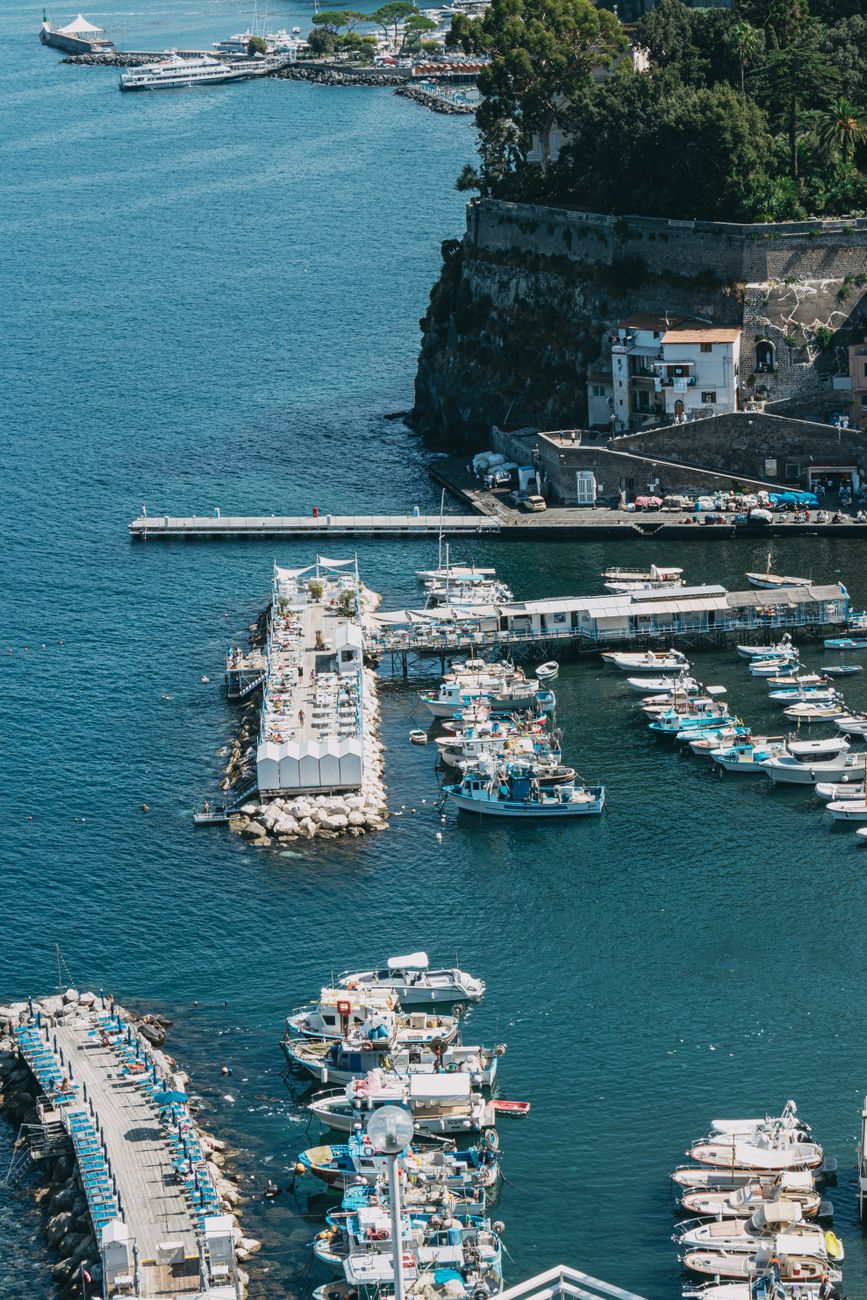
Sorrento is a compact town with a concentrated centre around Piazza Tasso and the cliff-top Villa Comunale park overlooking the Bay of Naples. Marina Grande is a working fishing harbour with narrow alleys and seafood restaurants; Marina Piccola is the ferry hub for departures to Capri and Naples.
Local transit profile affects timing: the Circumvesuviana train (operated by EAV) links Napoli Porta Nolana to Sorrento with frequent runs most of the day; buy a single ticket (about €4.00 one-way) at the station or via the EAV app and validate at platform machines. SITA Sud buses run the Amalfi coast routes from Sorrento to Positano and Amalfi; buses are subject to summer crowding and limited luggage space.
Ferries are run by companies such as Alilauro, NLG and SNAV and switch from slower car ferries to faster hydrofoils in high season. Ferry timetables shrink in winter: expect fewer crossings to Capri in November–March and occasional cancellations in bad weather. Restaurant openings and hotel services follow a seasonal rhythm—several small family-run venues in Marina Grande close from November through March while main hotels remain open year-round.
How to Choose Well
Start by ranking priorities: swimming and boat day trips, lower cost, or avoiding crowds. If boat trips to Capri and Positano are central, pick late April–June or September when full timetables run and the sea is calmer.
If lowest price is main priority, choose January–February: hotels often drop to €60–€100/night but expect reduced ferry frequency and some restaurant closures. For family travel with school breaks, book early for July and August and lock refundable rates: expect hotel rates €200–€400+ in peak weeks and limited availability on ferries and SITA buses.
Car vs no car decision: town centre streets and parking are tight; choose no car if staying in central Sorrento and using Circumvesuviana plus ferries. Rent a car only if planning day drives along the Amalfi coast where parking at coastal towns can cost €2–€3/hour and hotels often charge €15–€30/day for parking.

Responsible and Local-First Tips
Support local businesses by eating at family restaurants in Marina Grande such as Trattoria da Emilia and ordering regional dishes like gnocchi alla Sorrentina and delizia al limone. Buy limoncello and pastries from long-established shops on Corso Italia rather than bulk tourist stalls to keep revenue local.
Use public transit when possible: Circumvesuviana and SITA buses reduce the need for cars and parking. Buy EAV tickets at local tabacchi or through the EAV app to avoid unvalidated tickets and fines. Avoid contributing to crowd pressure during peak times by scheduling popular visits (Capri Blue Grotto, Positano beach) for early morning or late afternoon slots.
Common Mistakes to Avoid
Booking ferries and accommodations last-minute in July–August and expecting availability: many hydrofoils to Capri sell out, and last-minute hotels charge premiums. Overlooking transport validation rules: Circumvesuviana tickets must be stamped at small green machines before boarding; inspectors issue fines for unvalidated tickets.
Assuming a rental car solves logistics — central Sorrento streets are narrow, many hotels charge parking fees (€15–€30/day), and Amalfi coast parking is limited and costly. Expecting the same service level year-round: small restaurants and boat operators reduce services in November–March, so check opening dates before planning a trip dependent on a specific business.
FAQ
What month has the best weather for swimming in Sorrento?
June through September have reliably warm sea temperatures and daytime highs from about 25–30°C; September offers warm water with fewer crowds.
How much does Circumvesuviana from Naples to Sorrento cost?
Single tickets are about €4.00 one-way from Napoli Porta Nolana to Sorrento; buy at the station or on the EAV app and validate before boarding.
Are ferries to Capri available year-round?
Ferries run year-round but frequency drops in November–March; hydrofoil services are most frequent April–October and subject to cancellation in rough seas.
When is Sorrento busiest and most expensive?
Late July and August, especially the Ferragosto week around August 15, when hotels often charge €250–€400+ per night and public spaces are crowded.
Which months have the best value for hotels?
January–March and late October–November typically offer the lowest hotel rates, often €60–€120/night, with trade-offs in weather and reduced services.
Are there local festivals that affect travel plans?
Yes: Feast of Sant'Antonino (mid-September) increases local demand; Sorrento Jazz Festival in July draws evening crowds; Marina Grande Fish Festival in early August brings locals and tourists to the harbour.
Should a visitor rent a car while staying in Sorrento?
For most visitors, no. The town center is compact and public transit (Circumvesuviana, ferries, SITA buses) covers main day trips; rent a car only for flexible Amalfi coast driving, accounting for parking fees €15–€30/day and narrow roads.
Conclusion
The single most important thing to remember: pick dates based on what matters most—if smooth ferry access and warm sea are priorities, choose late April–June or September; if lowest price is priority, pick January–February. Avoid late July–August unless willing to pay peak hotel rates and accept large crowds.
For concrete planning, reserve ferries to Capri early (book hydrofoils) and plan at least one day trip on the Circumvesuviana to Pompeii. For a practical next step, consult the 3 days in Sorrento itinerary to align chosen dates with a daily plan that fits ferry timetables and restaurant openings.
How this guide was prepared
This guide was prepared through a structured research that combines destination research, geographic context, itinerary planning logic, and content review.