

Introduction

Lisbon is a compact capital with steep hills, tiled facades, old trams, river views, and distinct neighborhoods that feel different from one another. In three days, first-time visitors can cover the city’s essentials without rushing: the historic core around Baixa, Alfama, and Chiado; the monumental waterfront district of Belém; and a more local side in Bairro Alto, Príncipe Real, Estrela, and the modern riverfront at Parque das Nações. This itinerary is designed to minimize backtracking, use Lisbon’s trams, metro, and walking routes efficiently, and include the city’s major landmarks, viewpoints, museums, and food stops.
Quick Planning Tips

Stay in a central area like Baixa, Chiado, or Avenida da Liberdade if you want easy access to tram lines, metro stations, and the main sights. Lisbon’s hills are real, so comfortable shoes are essential, especially in Alfama, Graça, and Bairro Alto.
Book major sights in Belém in advance if possible, especially Jerónimos Monastery. Popular tram routes and miradouros such as Miradouro de Santa Luzia and Miradouro da Senhora do Monte get crowded later in the day, so go early or near sunset.
Use public transport strategically. Walk within compact districts like Baixa and Chiado, but save energy by taking the metro, Elevador da Glória, Tram 28, or taxis for uphill stretches. Keep some flexibility for weather, since Lisbon is especially pleasant outdoors along Praça do Comércio, Ribeira das Naus, and the Tagus waterfront.
Day 1 Itinerary

Start in Baixa, Lisbon’s orderly downtown rebuilt after the 1755 earthquake. Begin at Praça do Comércio on the Tagus River, then pass under the Arco da Rua Augusta and walk north along Rua Augusta toward Rossio Square. This route gives a clear introduction to the city’s layout, from the grand waterfront to the shopping streets and historic squares. If you want a quick city overview, take the Santa Justa Lift area route uphill, but focus more on the surrounding streets than the lift itself.
From Rossio, continue into Chiado, one of Lisbon’s most classic central neighborhoods. Stop at Bertrand Bookstore, browse Rua Garrett, and take a break around Largo do Carmo, where the ruined Carmo Convent offers both history and one of the city’s most memorable architectural spaces. Nearby, the National Museum of Contemporary Art in Chiado is a good option if you want one museum without taking too much time.
In the afternoon, explore Alfama, Lisbon’s oldest district. Rather than trying to cover every alley, focus on a simple route: Lisbon Cathedral, Miradouro de Santa Luzia, Portas do Sol, and the climb toward São Jorge Castle. The castle is one of the best places to understand the city’s geography, with views over Baixa, the river, and the red rooftops of Alfama. The surrounding lanes are as important as the monument itself, with stairways, tiled houses, and small squares.
End the day in Graça or lower Alfama. For sunset, Miradouro da Senhora do Monte is one of the strongest viewpoints in Lisbon, while Portas do Sol is easier to reach and still excellent. In the evening, stay in Alfama for dinner and, if interested, a traditional fado performance. This first day works well because it combines Lisbon’s core landmarks with its most atmospheric historic neighborhoods.
Day 2 Itinerary

Dedicate your second day to Belém, Lisbon’s monumental riverside district west of the center. Arrive in the morning and start with Jerónimos Monastery, one of Portugal’s most important Manueline landmarks. The cloisters are the highlight, and the church connected to the monastery is also significant, including the tomb of Vasco da Gama. Nearby, stop at Pastéis de Belém for the city’s most famous custard tart; go early if you want to avoid the longest lines.
Next, walk through the gardens and broad avenues around Praça do Império toward the Monument to the Discoveries on the riverfront. This area is tied closely to Portugal’s maritime history and gives the day a clear theme. Continue along the waterfront to Belém Tower, the district’s most recognizable landmark. The walk itself is part of the experience, with river views and the 25 de Abril Bridge visible in the distance.
Choose one museum in Belém depending on your interests. The MAAT is a good pick for contemporary art, architecture, and one of the best rooftop river views. The Coach Museum is stronger if you prefer decorative arts and royal history. If you want a more historical stop, the Navy Museum works well with the neighborhood’s exploration theme. Avoid trying to do all of them in one day.
In the late afternoon, stay by the river and walk east toward Docas or return to the center for an evening in Bairro Alto and Príncipe Real. Bairro Alto is known for nightlife, but before dinner it is pleasant for wandering its narrow streets. Príncipe Real feels calmer and more local, with attractive buildings, independent shops, and the garden at Jardim do Príncipe Real. If you still have energy, finish at Miradouro de São Pedro de Alcântara for a broad nighttime view across to the castle and Alfama.
Day 3 Itinerary

Use your final day to see a different side of Lisbon, mixing local neighborhoods with either a major museum or the city’s modern waterfront. Start in Avenida da Liberdade and walk uphill or take transport toward Príncipe Real and Estrela. Avenida da Liberdade shows Lisbon’s grander 19th-century side, while Príncipe Real is leafy and residential, with elegant streets and a more relaxed pace than Baixa.
Continue to the Botanical Garden or simply walk through the area toward the Basilica da Estrela and Jardim da Estrela. The basilica’s white dome stands out in the skyline, and the park opposite is one of the city’s best green spaces for a slower morning. Nearby, Tram 28 often passes through this part of the city, but it is better treated as transport if convenient rather than a must-do ride at peak times.
For the main cultural stop, choose the Calouste Gulbenkian Museum if you want one of Lisbon’s best museum collections in a calm setting. It is slightly outside the historic center but very worthwhile for first-time visitors who want art beyond the headline monuments. Another option is the National Tile Museum, east of Alfama, which is especially fitting in Lisbon because azulejos are such a visible part of the city’s identity.
Spend the afternoon at Parque das Nações for a modern contrast to old Lisbon. This riverfront district, developed for Expo 98, has broad promenades, contemporary architecture, public art, and open views over the Tagus. Walk along the marina area, see the Gare do Oriente station by Santiago Calatrava, and if it interests you, visit the Oceanário de Lisboa, one of Europe’s best aquariums. The Vasco da Gama Bridge in the distance emphasizes how different this area feels from Alfama and Belém.
For your final evening, return to Cais do Sodré and walk the Ribeira das Naus promenade at sunset. This stretch along the river is one of the easiest and most pleasant places to end a Lisbon trip. You can have dinner nearby in Cais do Sodré or head back to Chiado for a final stroll through the central streets.
Where to Stay
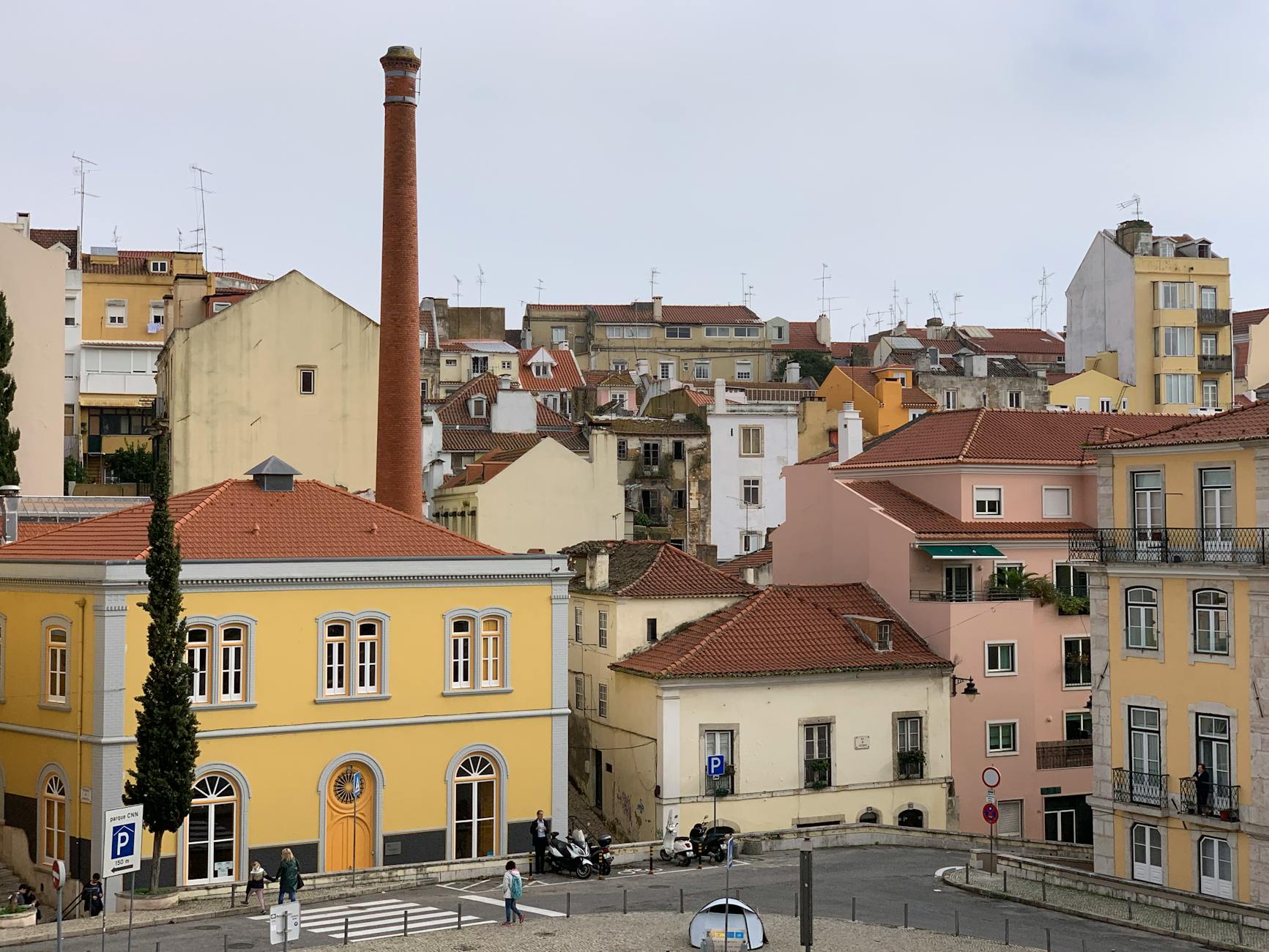
Baixa and Chiado suit first-time visitors who want to be central and close to Praça do Comércio, Rossio, Rua Augusta, and major tram and metro connections. This is the easiest base for short stays because you can walk to many top sights and return easily between outings.
Alfama and Graça suit travelers who want atmosphere, viewpoints, and old Lisbon on their doorstep. You will be near streets around the cathedral, São Jorge Castle, and miradouros like Santa Luzia, but expect hills, steps, and more effort with luggage.
Avenida da Liberdade and Marquês de Pombal suit visitors who prefer wider streets, more modern hotels, and straightforward transport links. This area is less atmospheric than Alfama but practical, comfortable, and well connected to both the airport and the historic center.
Best Experiences

Watching sunset from Miradouro de Santa Luzia, Portas do Sol, or Senhora do Monte, with tiled roofs and the Tagus spread below.
Walking from Praça do Comércio through Baixa to Chiado and then climbing into Alfama, which reveals Lisbon’s shift from grand squares to medieval lanes.
Spending a full half-day in Belém, combining Jerónimos Monastery, the Monument to the Discoveries, Belém Tower, and a stop at Pastéis de Belém.
Hearing live fado in Alfama or Mouraria in a small venue rather than treating it as just background music.
Taking an evening walk along Ribeira das Naus and Cais do Sodré, when the riverfront feels lively but not rushed.
How to Get Around
Lisbon is best explored by combining walking with public transport. Baixa, Chiado, Cais do Sodré, and parts of Alfama are manageable on foot, but the hills make trams, funiculars, metro lines, and taxis useful. The metro is efficient for longer hops, including airport access and reaching areas like Saldanha or Oriente.
Historic trams are part of the city’s identity, especially around Graça, Alfama, and Estrela, but they can be crowded. Funiculars such as Elevador da Glória help on steep routes between downtown and higher neighborhoods. For Belém and Parque das Nações, trains, trams, metro, or rideshare can save time depending on where you start.
If you only have three days, avoid overcommitting to transport experiences for their own sake. It is better to use them to reduce uphill walking and connect districts efficiently. Lisbon rewards simple point-to-point planning more than trying to ride every famous tram.
Typical Budget
Lisbon is not the cheapest city in Portugal, but it is manageable for a short trip if you plan well. Budget travelers can keep costs down by using the metro and trams, staying outside the most tourist-heavy streets of Baixa or Alfama, and choosing simple lunch spots, bakeries, and markets such as Time Out Market for variety.
Mid-range travelers will find plenty of comfortable hotels in Chiado, Avenida da Liberdade, and Marquês de Pombal, plus good dining options in Príncipe Real, Cais do Sodré, and Alfama. Admission fees add up most in Belém and at major museums, so it helps to prioritize rather than trying to enter every monument.
For a three-day stay, expect accommodation to be your biggest variable. Food, local transport, and general sightseeing are easier to control if you walk a lot and select a few key paid attractions like São Jorge Castle, Jerónimos Monastery, the Gulbenkian Museum, or the Oceanário.
FAQ
Is 3 days enough for Lisbon?
Yes. Three days is enough for first-time visitors to see Baixa, Chiado, Alfama, Belém, and either Estrela, Príncipe Real, or Parque das Nações without rushing too much.
Should I ride Tram 28?
Yes, but only if timing works in your favor. It passes through classic areas like Graça and Alfama, though it is often crowded. Use it early or treat it as useful transport rather than the centerpiece of your trip.
Is Belém worth a full day?
Yes, or at least most of one. Jerónimos Monastery, Belém Tower, the Monument to the Discoveries, riverside walks, and one museum easily justify several hours.
What area is best for first-time visitors?
Baixa or Chiado is usually the best choice. You will be close to Rossio, Praça do Comércio, public transport, and many of Lisbon’s most important streets and neighborhoods.