

Where to Stay in Las Vegas: Practical Neighbourhood Guide
Clear, practical advice on where to stay in Las Vegas: Strip, Downtown, Summerlin, Henderson, Chinatown. Prices, transit, noise, and best-value picks.
Compare the Strip, Downtown, Summerlin, Henderson and Chinatown with prices, transit options and honest trade-offs to pick the right Las Vegas base.
Where to stay in Las Vegas?
For first-time visitors who want the classic Las Vegas experience, stay on the Las Vegas Strip — expect $120–$350 per night for most mid-range hotels. For cheaper rooms and easy nightlife access, Downtown (Fremont Street) is often the best value at roughly $50–$150 per night and is served by the Deuce and SDX buses.
Who This Page Is For
This guide is for travellers deciding which neighbourhood to book in Las Vegas—first-timers, budget-conscious visitors, families and people who plan to use public transit. People only staying for a concert or convention and who have a single venue already booked may not need the full comparison.
Key Takeaways for Las Vegas
- Las Vegas Strip: expect roughly $120–$350 per night (USD) / €112–€325 and easy Monorail plus Deuce/SDX bus access.
- Downtown/Fremont Street: best-value hotels often $50–$150 per night (USD) / €47–€140 and served by the Deuce and SDX.
- Summerlin: good for families and hiking access, typical nightly rates $140–$300 (USD) / €130–€280 and limited bus/ride-share links to the Strip.
- Henderson (Green Valley): quieter suburban option about 20–30 minutes drive from the Strip, rates $90–$220 per night (USD) / €84–€205.
How This Page Was Prepared
This page was prepared through a structured editorial workflow that combines destination research, geographic context, and practical travel-planning review.
Plan the Rest of Your Trip
Use this page together with the full itinerary and the related planning pages below to make better booking, timing, transport, and budget decisions.
Pick the Las Vegas Strip if priority is proximity to casinos, shows and a short walk to most headline hotels; expect mid-range rooms roughly $120–$350 per night, plus resort fees. Choose Downtown (Fremont Street) for lower nightly rates, smaller casinos and easier parking at about $50–$150 per night and served by RTC Deuce and SDX buses to the Strip. Families and outdoors-oriented travellers often prefer Summerlin for quieter streets and proximity to Red Rock Canyon, at around $140–$300 per night and reachable by RTC buses and ride-share. For quiet suburban stays with grocery stores and local restaurants, Henderson (Green Valley) offers $90–$220 nightly rooms and is 20–30 minutes by car from the Strip.
This page helps decide where to sleep in Las Vegas with clear, verifiable trade-offs: cost, noise, transit and distance to the places most visitors want to see. Many travellers underestimate the effect of daily resort fees, late-night noise on the Strip, and the time cost of staying outside the central corridor. Hotels on Las Vegas Boulevard advertise low headline rates but often add a $25–$50 per night resort fee and parking charges. Staying farther out—Summerlin or Henderson—saves on noise and can lower room rates, but adds 20–40 minutes of travel time to the central Strip and Fremont Street unless using ride-share or specific RTC bus connections.
What This Page Helps You Decide
This guide supports the main choices visitors face: stay on the Strip for maximum convenience to shows and casinos, stay Downtown for lower rates and shorter lines at small casinos, or stay in suburbs like Summerlin or Henderson for quieter, family-friendly accommodations. The page provides realistic nightly price ranges, transit options (Deuce, SDX, Las Vegas Monorail, RTC buses), and practical trade-offs such as resort fees and parking costs. It helps decide whether to accept late-night noise in exchange for walking access to major venues, or to trade walkability for quieter streets and grocery access. The companion 3 days in Las Vegas itinerary is the next step after choosing which area suits the travel plan.

Top Recommendations
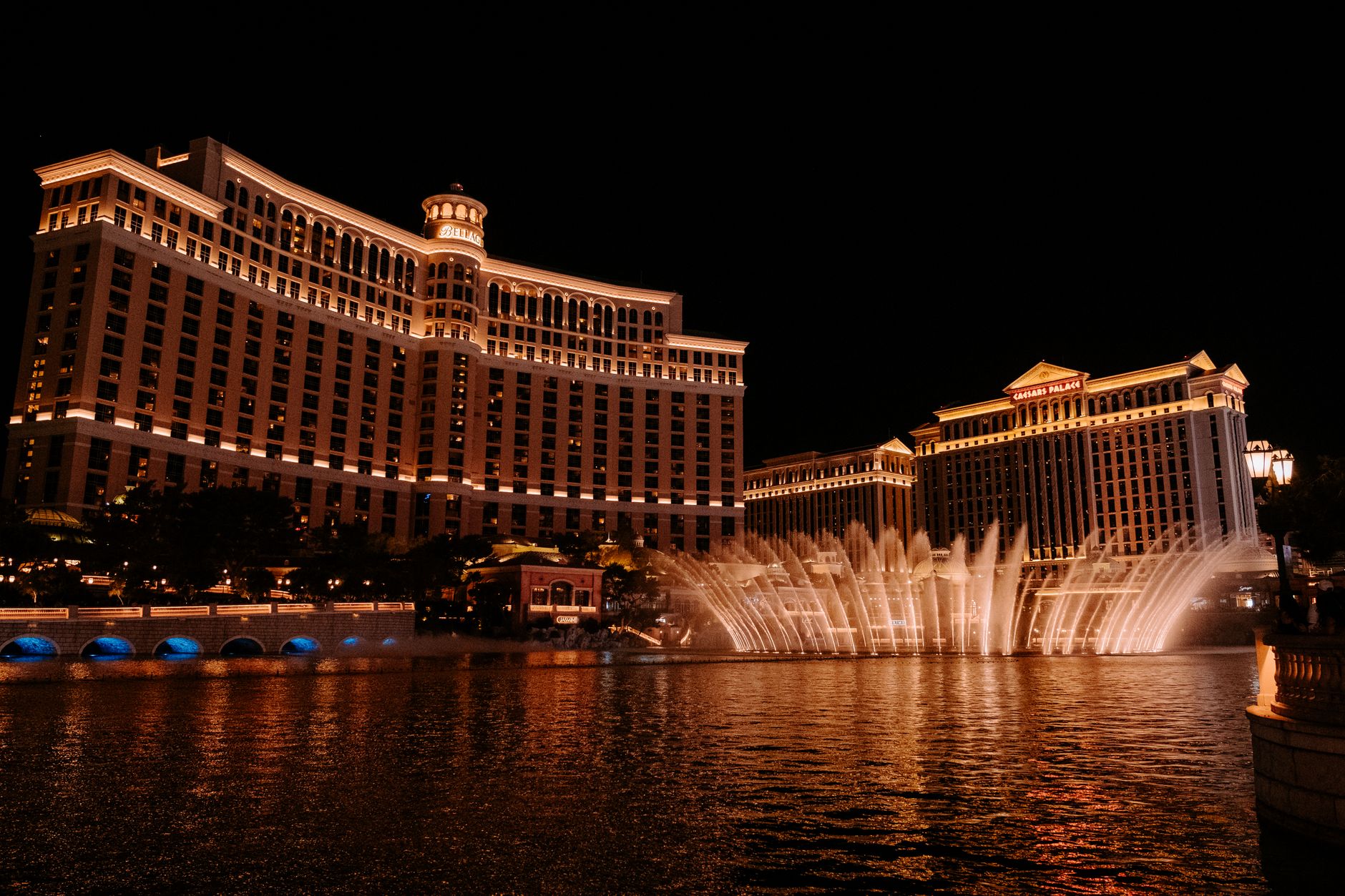
Las Vegas Strip (The Strip)
– Suits: first-time visitors, show-goers, casino-focused travellers.
– Close to: Bellagio fountains, The Venetian, T-Mobile Arena, many theatre venues.
– Atmosphere: continuous activity, loud at night, bright lighting and heavy foot traffic.
– Approx nightly price: $120–$350 (USD) / €112–€325. Expect resort fees $25–$50 per night and paid parking at many properties.
– Transit access: Las Vegas Monorail (east side hotels), RTC Deuce and SDX bus services along Las Vegas Blvd; Monorail stations at MGM, Harrah’s/Flamingo, Flamingo/Paradise, Bally’s/Paris, Las Vegas Convention Center, Westgate and Sahara.
– Note: caution for noise and resort fees; rooms on high floors and away from Las Vegas Blvd reduce noise.
Downtown / Fremont Street
– Suits: budget travellers, nightlife seekers who want smaller casinos, and people wanting shorter lines.
– Close to: Fremont Street Experience, Mob Museum, Circa, Downtown Container Park.
– Atmosphere: more compact casinos, intense nightlife concentrated under the canopy, lower room rates than the Strip.
– Approx nightly price: $50–$150 (USD) / €47–€140.
– Transit access: RTC Deuce and SDX connect Downtown to the Strip; many hotels within walking distance of Fremont Street.
– Note: often the best-value area for central Las Vegas access; quieter rooms are available a few blocks north of Fremont.
Summerlin
– Suits: families, outdoor-focused travellers, people attending events at Downtown Summerlin or hiking Red Rock Canyon.
– Close to: Downtown Summerlin shopping, Red Rock Canyon (15–25 minutes drive), TPC Las Vegas golf course.
– Atmosphere: residential, suburban resorts and chain hotels, calmer nights.
– Approx nightly price: $140–$300 (USD) / €130–€280.
– Transit access: RTC buses serve the area but connections to the Strip are less frequent; many visitors use ride-share or drive.
– Note: good value for larger rooms and free parking; expect longer transit time to Strip shows.
Henderson (Green Valley)
– Suits: visitors wanting a quieter suburban base, families seeking grocery and mall access, business travellers with meetings in Henderson.
– Close to: Galleria at Sunset mall, Lake Las Vegas, Henderson Executive Airport.
– Atmosphere: residential suburbs with chain hotels and local restaurants.
– Approx nightly price: $90–$220 (USD) / €84–€205.
– Transit access: local RTC bus routes and highway access (I-215/I-515); typically a 20–30 minute drive to the central Strip.
– Note: expect to rely on a car or ride-share; good for calmer nights and lower noise.
Chinatown (Spring Mountain Road corridor)
– Suits: food-focused travellers, longer stays who want apartment-style stays or lower-cost boutique hotels.
– Close to: a concentration of Asian restaurants, casinos on the west side of the Strip, and Chinatown Plaza.
– Atmosphere: practical, food-oriented, quieter than the Strip but busy during dinner hours.
– Approx nightly price: $70–$200 (USD) / €65–€185.
– Transit access: several RTC bus routes cross Spring Mountain Road and the area is a short ride to the central Strip; ride-share is common.
– Note: good food value and mid-range hotel options; some quieter residential pockets and smaller motels.
Recommended caution and best-value picks:
– Caution: The Strip is high price and high noise — check resort fees and room location before booking.
– Best-value area: Downtown/Fremont Street offers lower headline rates and walkable nightlife, making it the best-value central option for many travellers.
Local Context
Las Vegas has distinct neighbourhoods with different peak times, noise profiles, and transportation options. The Strip concentrates resorts and theatres; noise and late-night foot traffic commonly extend past midnight, especially on weekends. Resort fees and parking charges are common; a hotel advertising $99 may add a $30 resort fee plus $20–$40 daily parking.
Public transit is basic but usable: the RTC Deuce runs 24/7 along the Strip to Downtown and accepts the RTC bus passes bought through the RTC Transit app. The SDX (Strip & Downtown Express) is faster with fewer stops and is a good daytime link. The Las Vegas Monorail runs north-south on the east side of the Strip but misses some major resorts on the west side.
Seasonally, summer months (June–August) bring extreme heat with highs regularly over 100°F/38°C, which affects walking and daytime plans. Spring and fall have the most comfortable weather for walking between hotels. Weekday hotel rates can be significantly cheaper than weekend rates except during major conventions when rates spike citywide.

How to Choose Well
Start by listing top priorities: proximity to shows/casinos, quiet and family space, food and grocery access, or lower nightly price. If shows and walking to multiple casino theatres are highest priority, the Strip saves time but expect higher nightly costs plus resort fees. For lower nightly costs and a compact nightlife scene choose Downtown (Fremont Street); travel time to Strip is 10–20 minutes by Deuce or SDX but check bus schedules late at night.
If the trip includes hiking or visiting Red Rock Canyon, pick Summerlin to be within 15–25 minutes of the trailheads and to get larger rooms. For suburb-style stays with grocery stores and calmer evenings, select Henderson (Green Valley) and plan for a 20–30 minute drive to the Strip. If food variety is central, consider staying near Chinatown (Spring Mountain Road) for dozens of restaurants and mid-range accommodations. Factor in resort fees, free parking options, and whether the hotel offers free shuttle service to the Strip or airport.
Responsible and Local-First Tips
Choose accommodations that pay their staff fair wages and have clear tipping practices; many local housekeepers and service staff rely on tips. Eat at independent restaurants in Chinatown and on East Fremont like Le Thai or Metro Pizza for direct support to small operators. Buy supplies at local markets such as Smith's or Trader Joe’s in Summerlin instead of relying only on resort mini-bar purchases.
Use public transit where feasible: the RTC Deuce and SDX reduce car emissions compared with individual rides. When using ride-share, group trips when possible and select larger vehicles for families to reduce the number of trips. If visiting Red Rock Canyon, stick to marked trails and use the Red Rock Visitor Center shuttle where available to avoid overcrowding parking lots.

Common Mistakes to Avoid
Booking solely on headline nightly rate without checking resort fees, taxes and parking charges. Resort fees commonly add $25–$50 per night and parking can be $10–$30 per day at major Strip resorts; add these to the total before finalizing a booking.
Assuming public transit will mirror big-city subway convenience. The Deuce and SDX buses plus the Monorail cover main corridors, but service is slower outside peak corridors and schedules vary; late-night connections can be sparse, so plan for ride-share or taxis after midnight.
Choosing a hotel far from attractions for a lower nightly price without calculating the cost and time of rides. A $60 room 25 minutes from the Strip can become more expensive once two daily round-trips by ride-share or rental car fuel and parking are factored in.
FAQ
What area is best for first-time visitors?
The Las Vegas Strip is best for first-timers who want walkable access to major shows and casinos; expect $120–$350 per night and check resort fees.
Is Downtown cheaper than the Strip?
Yes, Downtown (Fremont Street) typically offers lower nightly rates, often $50–$150 per night, and is connected to the Strip by the RTC Deuce and SDX buses.
How reliable is public transit between neighborhoods?
RTC Deuce and SDX run regular service along the Strip and to Downtown, and the Las Vegas Monorail serves the east side of the Strip. Service is sufficient for many tourists but slower than a subway; late-night and suburb connections may require ride-share.
When is the best time to visit to avoid extreme heat?
Spring (March–May) and fall (September–November) offer the most comfortable daytime temperatures. Summer regularly exceeds 100°F (38°C) and increases costs for outdoor activities.
Are there quiet hotel options on the Strip?
Yes, ask for a high-floor room facing away from Las Vegas Blvd or a hotel with inward-facing courtyards; room rates remain similar but noise is noticeably lower.
Should families stay in Summerlin or on the Strip?
Families who value quieter evenings, grocery access and space usually prefer Summerlin; families prioritizing shows and casino proximity often pick family-oriented Strip resorts near MGM or Circus Circus.
Conclusion
The single most important thing to remember is to compare the total nightly cost, not just the advertised rate: add resort fees, parking, and likely transit or ride-share expenses before booking. For most visitors the choice narrows to the Strip for convenience, Downtown for best-value central access, Summerlin for quieter family stays and proximity to outdoor recreation, and Henderson for a suburban alternative. After choosing the right area, consult the companion 3 days in Las Vegas itinerary for a practical sightseeing and dining plan that matches the neighbourhood selected.
How this guide was prepared
This guide was prepared through a structured research that combines destination research, geographic context, itinerary planning logic, and content review.