

Adeje in 3 Days: Practical Tenerife South Weekend Itinerary
A practical 3-day guide to Adeje covering beaches, Barranco del Infierno hike, Siam Park, whale watching and transit tips with realistic costs and timings.
A direct, no-fluff 72-hour plan for Adeje: beaches, a protected gorge walk, a waterpark day, a whale-watching boat and where to eat, stay and move around.
A southern Tenerife destination that mixes large resorts, short coastal promenades and an old inland centre. First impression on arrival is often the contrast between the resort strip along the TF-1 exit and the compact Plaza de España area in the town uphill.
The south is sunny most of the year, and services are organised around holiday traffic: rental shops, restaurants and tour operators designed for short stays. Expectations that the place is only for sunbathing miss the Barranco del Infierno reserve, the small fishing cove of La Caleta and regular whale-spotting departures from Puerto Colón.
Noise, crowds and busy parking are real at peak times by the main beaches; inland streets are quieter and show more ordinary island life. The practical visitor will split time between a beach day, one major attraction and one local neighbourhood to get a representative sample of the area.
Is 3 days in Adeje enough?
Three days gives time for the main coastal highlights: one beach and promenade day, one visit to Siam Park or a whale-watching boat trip, and one short hike plus a town stroll. The honest caveat: there won’t be time to visit Mount Teide or fully explore the north of Tenerife.
Who This Guide Is For
Best for travelers wanting mixed beach, easy outdoor activity and short boat trips; suitable for families, active couples and those staying in the south. Poor fit for visitors wanting museum-heavy or island-wide exploration without renting a car.
Local Tips for Adeje
Practical details that most travel sites skip — specific to Adeje.
- Buy Siam Park tickets online in advance; standard adult prices are roughly €38–€42 and timed-entry slots cut queues significantly.
- Barranco del Infierno restricts access to about 300 visitors per day and requires an online reservation and a small access fee (around €5–€8) — book the morning slot if heat or crowds are a concern.
- TITSA is the island bus operator; locals call buses 'guaguas' and the Tenerife South Airport stop lists regular services to Costa Adeje — check line 111 from the airport for a direct connection.
- Costa Adeje uses zona azul pay-parking; expect roughly €1–€2 per hour and carry coins or use the local parking app displayed on the machine.
- Playa del Duque operates many private sunbed zones; a pair of sunbeds with umbrella typically costs €8–€12 per day compared with cheaper public stretches at Playa Fañabé.
How This Guide Was Prepared
Adeje’s south-coast resorts get most attention, but the area splits between high-end beachfront development and an older inland town with real local life. Many guides treat the place as only sun-and-beach; this guide separates the busy tourist strip, the protected Barranco del Infierno gorge, and the short boat trips that define the seafaring side of the area. This guide was prepared through a structured research that combines destination research, geographic context, itinerary planning logic, and content review.
Plan Your Stay in Adeje
Use this itinerary as your starting point, then compare areas to stay, transport options, seasonal timing, and realistic daily costs before booking.
Why Visit
Direct access to a range of short, high-value activities: a reliable waterpark (Siam Park), protected hiking in Barranco del Infierno and whale-watching trips from Puerto Colón. Each can be experienced with a half- or full-day commitment and does not require island-wide travel.
The coastline provides a choice of beach characters: manicured, paid sunbed zones at Playa del Duque and wider public sand at Playa Fañabé. That variety suits families who want a safe swimmable beach and also couples who prefer quieter walks at sunset.
A compact historic centre in Adeje town gives a quick cultural counterpoint: Casa Fuerte and the town plaza show how the area functioned before mass tourism. Practical infrastructure—tour desks, rental outlets and frequent airport transfers—makes organising short stays straightforward.

Quick Planning Tips
Best arrival option from Tenerife South (TFS) is either a taxi (15–25 minutes to the main resort strip) or a TITSA guagua from outside arrivals; the airport stop lists direct services such as line 111 to Costa Adeje. Drive time via TF-1 motorway is short but hire-car pick-up queues are common in summer.
Currency is euros; many small beach kiosks, parking machines and market stalls prefer cash. ATMs are available in shopping centres like Siam Mall and around Puerto Colón.
Avoid the planning mistake of leaving key bookings until arrival: buy Siam Park tickets and reserve Barranco del Infierno slots before travel. Expect peak-season congestion around late December, mid-February school holidays and July–August summer weeks.

Day 1
Morning: Start on Playa del Duque for a controlled beach introduction and a short walk along the promenade toward Puerto Colón. Allow one to two hours for sunbeds or a stroll; the promenade connects Duque with Puerto Colón in roughly 15–20 minutes on foot.
Late morning: Head to Casa Fuerte de Adeje and Plaza de España in the inland town. From Puerto Colón the drive or taxi is about 10–15 minutes; by bus allow 20–30 minutes depending on route. The small Casa Fuerte museum and adjacent church offer a quick overview of local history and photo stops.
Lunch: Eat at a chiringuito on Playa Fañabé for fresh fish or a paella portion; expect prices around €12–€18 for a plate. Afternoon: Walk or take a short taxi to La Caleta for snorkelling off rocky coves and to spot local fish; this is a 10–15 minute drive from the Duque stretch. Bring reef shoes; access is over rocks in places and currents can be strong near the headlands.
Evening: Return to Puerto Colón marina for a sunset stroll and dinner at a seafood restaurant by the quay. The marina has a range of mid-range menus (≈€18–€30 per person) and many operators offering next-day boat trips, which is handy for booking a whale-watching departure.
Day 2
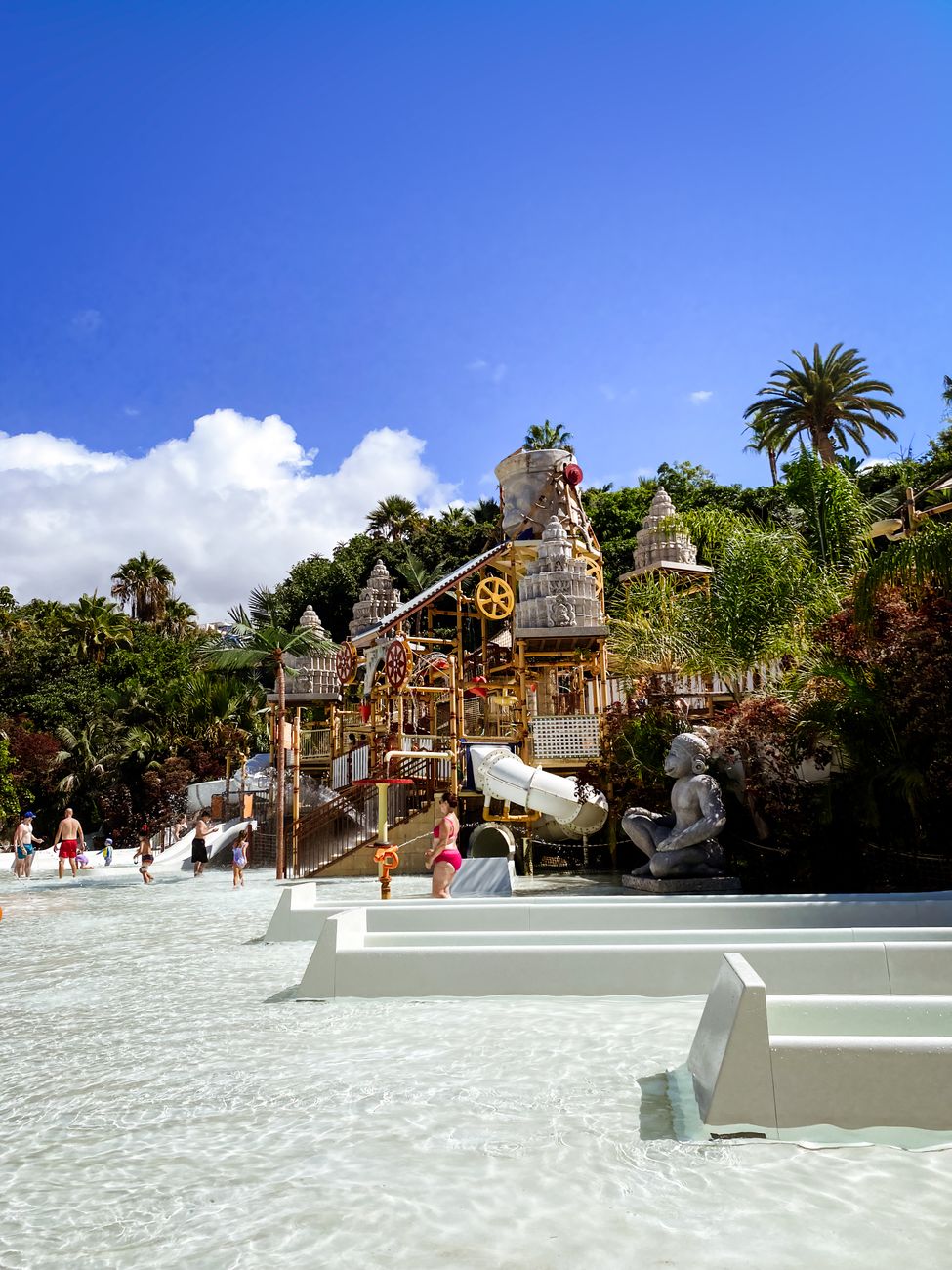
Morning: Reserve a half-day at Siam Park and arrive at opening to avoid the busiest hours. Allocate 4–5 hours to cover main slides, the wave pool and the lazy-river sections; changing rooms and lockers are available on site. Online-ticketed entry speeds access and prices for adults are typically €38–€42.
Afternoon: After the park, cross the TF-1 axis to Playa Fañabé for a relaxed promenade, shopping at Siam Mall or a coffee on Avenida de Las Américas. Walking between Siam Park and the nearby shopping area is a 10–15 minute stroll; taxis take 5 minutes.
Late afternoon/early evening option: Book a whale-watching or dolphin-spotting boat from Puerto Colón. Trips usually last 2–3 hours and cost about €30–€45 per adult depending on operator; choose small-group or RIB options for better viewing. Return to the marina and have dinner at one of the restaurants that specialise in local fish and Cherne (wreckfish).
Night: If energy remains, a short walk along the Las Américas promenade gives nightlife options; public bus options are reduced late, so plan a taxi for return transfers if needed.

Day 3
Morning: Book the Barranco del Infierno hike in advance and aim for the earliest slot to avoid heat. The trailhead is a short drive from town (roughly 10 minutes); the supervised walk to the viewpoint and back typically takes 2–3 hours. Bring water, a hat and sturdy shoes; entry is restricted and monitored.
Midday: Return for a simple lunch in Adeje town — a cafe near Plaza de España serves tostadas, local cheese plates and barraquito coffee (expect €4–8). Use the early afternoon for last-minute shopping at Siam Mall or a final beach hour at Playa Fañabé if luggage needs to be collected.
Practical note for departures: If catching an afternoon flight from Tenerife South, leave the coast two to three hours before the recommended check-in time. Taxi to the airport is 15–25 minutes depending on traffic; allow extra time for rental-car returns. If staying late, shore up luggage storage or check if the hotel will hold bags until transfer time.

Best Local Experiences
Siam Park — a full-day waterpark with high-capacity slides and a controlled wave pool; best booked online. Barranco del Infierno reserve — a restricted-access gorge walk with a maintained trail and a limit on daily visitors. Whale- and dolphin-watching departures from Puerto Colón — short trips that often reach feeding grounds within an hour and are useful for quick wildlife encounters.
La Caleta seafood strip — a small former fishing village with family-run restaurants specialising in Cherne and fresh catches. Playa Fañabé promenade and evening market events — a social coastline walk with itinerant stalls and snack kiosks on key evenings.
Golf Costa Adeje — an 18-hole layout for those wanting a mid-day change; tee-times can fill on weekend mornings. Local food markets and small produce stalls near Adeje town on market days provide seasonal fruit, local cheeses and gofio-based products.

Where to Stay
Costa Adeje (beachfront) — suits beach-first travellers and families who want direct access to Playa del Duque and Puerto Colón. Expect nightly rates from about €90–€250 in high season (~€100–€275 USD). The area has larger hotels and apartment complexes.
Adeje town (Plaza de España) — suits visitors who want quieter evenings, local cafes and proximity to Barranco del Infierno. Nightly rates here are lower, roughly €50–€100 (~€55–€110 USD), and accommodation includes small guesthouses and apartments.
Playa Fañabé / Playa de las Américas fringe — suits those wanting a mix of beach and promenade nightlife with easy transport links. Mid-range hotels and apartments typically run €70–€150 per night (~€75–€165 USD). Booking a place with flexible cancellation helps with changing ferry or boat plans.
Food and Drink
Papas arrugadas con mojo — small boiled potatoes in salt-sprinkled skins served with mojo rojo or verde; a side portion costs €3–€5 and appears in nearly every tapas bar. Barraquito — a layered Canarian coffee with condensed milk and liqueur; café kiosks charge €2.50–€4.
Cherne a la plancha — local wreckfish grilled in seaside restaurants around La Caleta; a main course costs roughly €15–€25. Gofio-based dishes — toasted corn or wheat flour used in porridges and desserts; try a small tasting at local markets for €2–€5.
Breakfast option: Tostada con tomate y jamón at a local panadería or cafe for €3–€6. Street/quick bite: bocadillo de tortilla (Spanish omelette sandwich) or a quick empanada for €2.50–€6. Dinner recommendation: book a seafood restaurant at Puerto Colón for grilled fish and a bottle of local wine, about €25–€40 per person excluding drinks.
Getting Around
Buses (TITSA) — the main public transport network; locals call buses 'guaguas'. Key routes include connections from Tenerife South Airport to Costa Adeje (check the airport stop for line 111 and related services). Buy single tickets on the vehicle or use the rechargeable Ten+ card for discounted multi-journey fares.
Single-ride fares vary by distance; short trips commonly cost €1.40–€3.50. A multi-trip Ten+ loaded card reduces the per-ride cost and is available at sales points and some kiosks. The TITSA Móvil app and the website list routes and timetables and will show real-time bus locations.
Taxis operate on metre fares with higher charges for night and airport rides; expect roughly €15–€25 from Tenerife South to the main resort strip during daytime. Renting a car is common for flexible island exploration; the TF-1 motorway links the south with other towns, but beware parking charges in Costa Adeje.
Best Time to Visit
Spring (April–June) offers warm sea temperatures and fewer tourists; daytime highs usually sit between 20–25°C and hotels often have lower shoulder-season rates. Autumn (September–October) is similar with warm sea and lower crowds than midsummer.
High season includes Christmas–February and late July–August; expect higher prices and fuller beaches. Winter months are mild (around 18–22°C) and popular with northern-European tourists seeking sun, so avoid if low prices and quiet beaches are the priority.
For best value with reliably good weather, aim for late April–early June or September when crowds thin and daytime temperatures stay pleasant without the mid-summer peaks.
Budget and Practical Tips
Realistic daily budget (per person): Accommodation mid-range €70–€120 (≈$75–$130) per night; Food €20–€50 (≈$22–$55) including coffee, a casual lunch and mid-range dinner; Transport €5–€15 (≈$5.50–$16) for buses and occasional taxis; Entry fees: Siam Park €38–€42, Barranco del Infierno ≈€5–€8, whale-watching €30–€45.
Tipping: not mandatory but appreciated — round up small bills at cafés, leave 5–10% in restaurants for table service, and give small change to boat and tour staff for good service. Carry a small amount of cash for parking machines, bus drivers in rural areas and small market stalls.
Practical tip: keep sunscreen, a refillable water bottle and reef shoes in daypack. If planning to visit multiple paid attractions, pre-booking online often gives small savings and saves time waiting in queues.
FAQ
Is Adeje safe for solo travellers?
Yes; the south coast is generally safe during the day and evening. Normal precautions apply: watch bags on crowded promenades and avoid poorly lit side streets late at night.
Is public transport convenient for three days without a car?
Yes for most coastal and town destinations using TITSA buses (guaguas) and local taxis. Late-night options are limited so plan return legs or budget for taxis.
Is a city card or tourist pass worth buying?
No dedicated Adeje city card exists that covers all main attractions; buying online tickets for individual attractions (Siam Park) or package deals from operators is usually better value.
Are the beaches safe for swimming?
Many beaches are protected and supervised, but some coves and open stretches have rip currents; heed local flags and lifeguard advice and avoid swimming after heavy surf.
How long is the Barranco del Infierno walk and is it suitable for families?
The guided walk is about 2–3 hours round trip on a maintained path to a viewpoint. It’s family-suitable but not stroller-friendly; book early slots to avoid midday heat.
Can a short trip include whale watching?
Yes, most whale-watching departures from Puerto Colón are 2–3 hours and work well within a three-day trip and often book out on good-weather days.
What apps or cards should be used for local transport?
The TITSA Móvil app shows timetables and stops and the Ten+ rechargeable card reduces fares for multiple journeys on guaguas.
How expensive are taxis from the airport?
Daytime taxi fares from Tenerife South to the resort strip usually run €15–€25; expect higher fares at night or special-event rates.
Conclusion
A three-day plan gives a compact but representative view: a controlled beach day, one major attraction such as Siam Park or a whale-watching trip, and a short local hike or town visit. Most visitors will leave remembering the coastline promenades, the marine life sightings from Puerto Colón and the contained nature of Barranco del Infierno.
If time becomes tight, prioritise a morning at Barranco del Infierno or an afternoon whale trip; both are distinctive experiences not easily replicated elsewhere on the island and will shape the overall visit.
How this guide was prepared
This guide was prepared through a structured research that combines destination research, geographic context, itinerary planning logic, and content review.