

3-Day Bergen Itinerary: Practical Weekend Guide for 72 Hours
A frank 3-day Bergen guide with timing, neighbourhood plans, transit tips and sample costs that shows what to prioritise in 72 hours and transport apps.
A clearly paced, non-romanticised 72-hour plan for seeing Bryggen, two mountain viewpoints, KODE museums, fish market food and a realistic fjord option.
Expect steep streets, wooden wharves and frequent rain. First impressions are often a mix of maritime smells, trams and narrow alleys backed by tree-covered ridges.
Street life concentrates around Bryggen, Torgallmenningen and the harbour; museums cluster on the harbour edge and in the city centre. That density suits travellers who like short walks between concentrated sites rather than long drives.
Many visitors arrive thinking everything fits into a single afternoon; realistic pacing and wet-weather options make three days feel comfortable. The guide focuses on how to move efficiently between viewpoints, museums and the harbour so time isn’t lost standing in queues.
Is 3 days in Bergen enough?
Three days are enough to cover Bryggen, the Fish Market, KODE museums, two mountain viewpoints (Fløyen and Ulriken) and a short fjord cruise or Troldhaugen visit. A full multi-hour fjord circuit or deeper West Coast drives must be left for another trip.
Who This Guide Is For
Best for first-time visitors who like museums, scenic walks and short boat trips; less suitable for travellers seeking nightlife or low-budget backpacking because prices and transport can add up.
Local Tips for Bergen
Practical details that most travel sites skip — specific to Bergen.
- Buy Skyss single tickets or day passes in the Skyss Billett app — tickets must be validated before boarding, single city rides are about NOK 45 (around €4 / $4.5).
- Take Bybanen line 1 from Byparken to Bergen lufthavn Flesland — the tram-style light rail takes about 45 minutes and is the easiest airport link.
- Ride the Fløibanen funicular from Vetrlidsallmenningen to Fløyen; cars depart every 10 minutes and return tickets are around NOK 150 (approx €13–14).
- Pick up a Bergen Card at the Tourist Office on Torget or buy online for discounts on KODE, Troldhaugen and some boat trips — check durations: 24/48/72-hour options cover different combos.
- If planning a fjord cruise, book a specific time from the Hurtigruten or local RIB operators at Strandkaien; many small-boat operators require exact meeting points such as Skostredet or Vetrlidsallmenningen.
How This Guide Was Prepared
This guide treats Bergen as a working harbour city with steep streets, changeable weather and compact museums rather than a postcard. Many guides over-focus on Bryggen or a single viewpoint and underplay transit time, rain logistics and the effort of moving between ridges and harbour. This guide was prepared through a structured research that combines destination research, geographic context, itinerary planning logic, and content review.
Plan Your Stay in Bergen
Use this itinerary as your starting point, then compare areas to stay, transport options, seasonal timing, and realistic daily costs before booking.
Why Visit
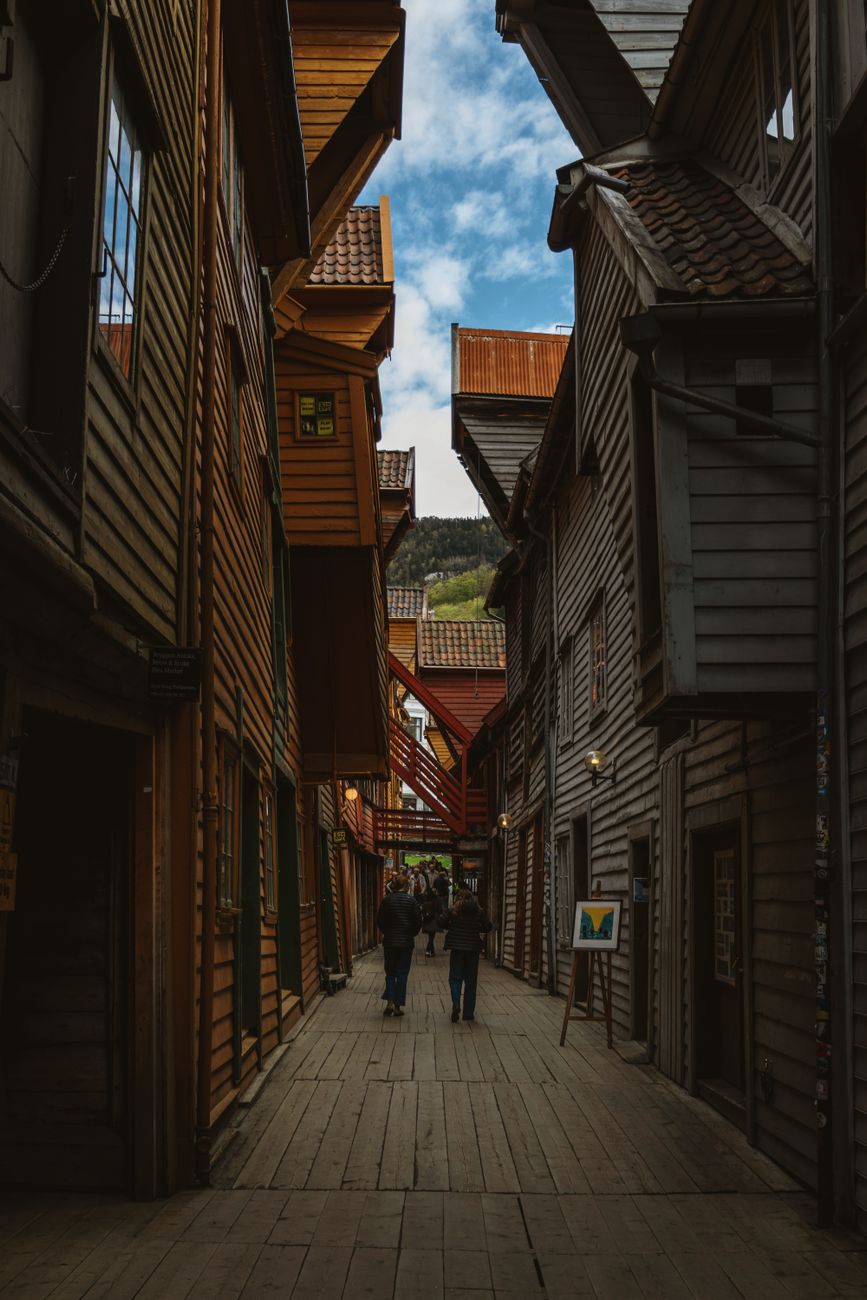
Bryggen’s Hanseatic rows provide a compact, tangible link to maritime trade and survive as working timber buildings framed by the harbour. Walk the wooden alleys, visit Hanseatic Museum and note the UNESCO-listed facades.
Two short mountain rides—Fløibanen and Ulriken cable car—deliver different panoramas: Fløyen looks over rooftops into the inner harbour while Ulriken faces open sea and fjord channels. Each viewpoint requires little time but yields different photo angles.
KODE art museums and Troldhaugen (Edvard Grieg’s home) give a concentrated cultural offering without long travel. For a short fjord experience, one-hour harbour cruises and local RIB trips let travellers sample the coastal landscape without a full-day commitment.

Quick Planning Tips
Arrive by Bybanen line 1 if coming from Bergen lufthavn Flesland; trams depart Byparken for the airport and the ride is about 45 minutes. If arriving by train, Bergen stasjon sits a short walk from Torgallmenningen and the harbour.
Buy Skyss tickets in the Skyss Billett app or at machines before boarding buses or Bybanen; inspectors ticket on board and fines apply. Carry a contactless card or set up Vipps — cash use is limited and many small stalls prefer contactless payment.
Avoid packing a strict schedule that plans both Ulriken and a fjord day trip in the same morning; transfers between harbour, ridges and suburbs take longer than maps suggest, especially in rain or winter daylight.

Day 1
Morning: Start at Bryggen and walk the wharf, visit the Hanseatic Museum on Bryggen 40 and the Bryggeloftet shops. Allow 60–90 minutes for Bryggen including a short museum visit.
Late morning: Walk to Fisketorget (Fish Market) along the harbour (5–8 minutes). Sample a shrimp or fish sandwich at one of the outdoor stalls; expect NOK 120–220 for a decent plate. The market is a practical lunch spot and useful for weather shelter.
Afternoon: Take the Fløibanen funicular from Vetrlidsallmenningen to Fløyen (ride ~5–8 minutes). Walk 30–45 minutes on the summit trails for views over Vågen and the islands. Descend by funicular or walk back into town.
Late afternoon: Visit KODE 1–4 museums on Rasmus Meyers allé; plan 90–120 minutes for highlighted galleries (modern art, music exhibits). Dinner: book a table at Bryggeloftet & Stuene or a fish-restaurant near Torget for traditional seafood mains (main courses ~NOK 250–420). Evening: Finish with a dusk view from Fløyen or a short harbour walk toward Torgallmenningen.
Day 2
Morning: Head to Nordnes peninsula for a coastal walk and visit Akvariet i Bergen (Bergen Aquarium). From the city centre it's a 15–20 minute walk or a short bus to Nordnesparken. Aquarium entry is useful if weather forces indoor plans.
Midday: Walk back via Bergenhus Fortress and visit Rosenkrantz Tower; allow 45–60 minutes for the fortress and grounds. Lunch in the area at a bakery or small cafe on Strandgaten or by the harbour (lunch sandwiches ~NOK 120–200).
Afternoon: Take the Ulriken cable car (Ulriksbanen) for the high ridge panorama; the station is a short bus from the inner city—plan 20–30 minutes travel time. On the ridge there are marked walks from 20 minutes to 2 hours; stick to the shorter options if reserving energy for evening.
Evening: Return to the centre and explore Strandsiden for quieter dining options or find a small pub on Øvregaten. If rain arrives, the KODE museums have later opening evenings on some days—check online and swap visits if needed.

Day 3
Morning: Choose either a short fjord option or a local cultural stop. For a fjord sampler, book a 3–4 hour boat from Strandkaien that heads into Byfjorden and nearby channels; bring a waterproof layer and expect a wet spray on the bow.
Alternative morning: Visit Troldhaugen, Edvard Grieg’s villa, reachable by bus from the city centre in about 25–35 minutes; tours and museum entry take about 60–90 minutes. Combine Troldhaugen with a quick stop in Fantoft if time allows.
Afternoon: If catching an afternoon flight or train, return to the centre with time to collect luggage; Bybanen line 1 to the airport runs from Byparken and takes about 45 minutes—purchase a Skyss ticket beforehand. If staying later, use the afternoon for any missed museums (KODE or the Hanseatic Museum) or a final walk along Bryggen.
Practical note: For departures, allow a 90–120 minute buffer for city-to-airport transfers and security; tram frequency is high but luggage slows walking times.
Best Local Experiences
Fisketorget morning stalls for shrimp and hot fish soup—arrive before noon for live-cooking stalls. KODE 1–4 for classical and contemporary Norwegian art in close sequence along Rasmus Meyers allé. Fløibanen summit walk for an easy viewpoint with short trail options and a café.
Ulriken ridge and cable car for a long-sea perspective and more rugged paths than Fløyen. Troldhaugen for a focused music pilgrimage to Edvard Grieg’s home and concert programme; book concert tickets in advance during summer.
A short RIB or harbour cruise departing Strandkaien or Skostredet to see fjord inlets without a full-day commitment. Nordnesparken and the Nordnes peninsula for local dog-walking culture and shoreline paths frequented by residents.

Where to Stay
City centre (Bryggen / Vågen / Torgallmenningen): Suits first-time visitors who want short walks to museums, shops and the harbour. Expect mid-range hotels and guesthouses around NOK 1,200–2,200 per night (€100–€190 / $110–$210) depending on season.
Nordnes / Sandviken: Suits travellers who prefer quieter streets and easy access to Akvariet and coastal walks. Smaller guesthouses and apartments here run about NOK 900–1,700 per night (€75–€145 / $80–$160).
Fana / Sandviken suburbs (near Troldhaugen): Suits visitors planning to visit Troldhaugen or who want more suburban tranquillity; expect B&Bs or Airbnb options from NOK 800–1,600 per night (€70–€135 / $75–$150).
Food and Drink
Røkt laks (smoked salmon): Thin-sliced local salmon often sold at Fisketorget or in cafés; good portions cost NOK 120–220. Try at outdoor stalls on the harbour.
Fiskesuppe (fish soup): Creamy, often with chunks of cod and shellfish; a bowl in a mid-range restaurant is NOK 150–260. Local places near Bryggen and Strandgaten do reliable versions.
Kongekrabbe or fresh shrimp plates: Seasonal and pricier—expect NOK 220–420 at fish-market restaurants. Street-style shrimp sandwiches (reker på brød) are a quicker option for around NOK 120–160.
Breakfast: Knekkebrød or rye bread with brunost or cured salmon at local bakeries; a bakery coffee and open sandwich will run ~NOK 80–140. Try small cafés on Torgallmenningen or near Marken.
Dinner recommendation: A mid-range seafood restaurant near Torget or Bryggen for cod, monkfish or baked halibut mains at NOK 250–420; reserve for weekend evenings.
Getting Around
Main modes: Bybanen light rail (line 1) to the airport and southern suburbs, Skyss bus network across boroughs, short harbour ferries for nearby islands and occasional train services from Bergen stasjon. Buy Skyss tickets in the Skyss Billett app or at machines; tickets must be validated before boarding.
Typical fares: single city ticket about NOK 45 (roughly €4 / $4.5) for a one-hour zone ride; a 24-hour Skyss pass is about NOK 110 (≈€9–10 / $11) — check the Skyss site for current zonal prices. Bybanen to the airport uses Skyss fares; the ride is about 45 minutes from Byparken.
Useful apps and cards: Skyss Billett app for local tickets, Entur app for regional connections and timetables, and the Bergen Card for discounts on museums and some transport over 24/48/72 hours. Taxis are metered; airport to city taxi fares often run NOK 700–900 (~€60–€80 / $65–$85).
Best Time to Visit
Summer (June–August): Long daylight, festivals and open museums; average highs 16–19°C with frequent rain. This is peak season for boat trips and prices rise on accommodation.
Late spring and early autumn (May, September): Cooler temperatures 8–15°C, fewer crowds and lower accommodation rates; many boat operators still run regular cruises. Rain occurs often; pack a waterproof shell and layers.
Winter (November–March): Short daylight, temperature around -1 to 5°C; scenic snow on the mounts but many outdoor options close and some boat services reduce frequency. For lower prices and fewer tourists, late autumn or early spring offers best value while keeping reasonable daylight.
Budget and Practical Tips
Daily budget estimate for a sensible mid-range stay: Accommodation NOK 1,200–1,800 (€100–€155 / $110–$170), food NOK 400–700 (€35–€60 / $40–$70), transport NOK 80–150 (€7–€13 / $8–$15), entry fees and tours NOK 200–500 (€17–€43 / $20–$50). Expect daily totals around NOK 1,900–3,150 (€160–€260 / $170–$290).
Museum and ticket examples: Fløibanen round-trip about NOK 150, KODE combined entries about NOK 150–220 per museum depending on exhibitions, Troldhaugen entry around NOK 140–180—check online for seasonal rates. Boat trips vary widely; short harbour cruises start around NOK 200–350.
Tipping: Service charges are not automatic; rounding up or leaving 5–10% for good sit-down service is appreciated but not obligatory. Practical note: carry a charged phone and an external battery—maps and Skyss app are relied on frequently when moving between viewpoints.
FAQ
Is Bergen safe for solo travellers?
Yes; central areas are generally safe by day and evening, but standard city caution applies—watch belongings in crowded places and avoid poorly lit back streets late at night.
How do I get from the airport to the city centre?
Use Bybanen line 1 from Bergen lufthavn Flesland to Byparken (about 45 minutes) or take an airport express coach; buy Skyss tickets in the Skyss Billett app before boarding.
Is the Bergen Card worth buying?
The Bergen Card pays off if visiting multiple paid museums (KODE, Troldhaugen) and using local buses or short boat discounts over 24–72 hours; run the math against planned entries.
Can day trips to the fjords be done in a single day?
Short fjord samplers and one-way RIB trips or 3–4 hour cruises are doable in a day; full Sognefjord circuits or Hardanger with waterfalls require a full-day to multi-day commitment.
Are there good options for rain days?
Yes—KODE museums, the Hanseatic Museum, Bergen Aquarium and indoor concerts at Troldhaugen provide shelter and culture without long outdoor exposure.
How do I pay for tram, bus and ferries?
Buy Skyss tickets via the Skyss Billett app, at ticket machines or on some kiosks; tickets must be validated before boarding to avoid fines.
Any safety issues on the mountain trails?
Trails are generally well-marked but become slippery in rain or snow; proper footwear and staying on marked paths are essential, especially on Ulriken and Fløyen.
Conclusion
Three days that balance Bryggen, one or two mountain viewpoints, a museum day and a short fjord experience make for a realistic weekend. Most travellers will remember the contrast between harbour-side wooden streets and sudden, high ridge panoramas.
If time runs short, prioritise a morning at Bryggen and the Fløibanen summit walk—those two items alone convey the city’s geography and harbour character quickly. Reserve longer fjord circuits or regional drives for another trip.
How this guide was prepared
This guide was prepared through a structured research that combines destination research, geographic context, itinerary planning logic, and content review.