

Three-Day Practical Itinerary — Las Palmas de Gran Canaria
Practical 72-hour plan for Las Palmas de Gran Canaria covering Vegueta, Las Canteras, markets, transit tips, realistic budgets and where to eat each day.
A no-fluff 3-day plan for Las Palmas de Gran Canaria that balances Vegueta’s streets, Las Canteras beach time, museum stops and local markets with realistic transit and budget advice.
Las Palmas de Gran Canaria feels like a coastal city where ocean light and practical daily life meet. Expect a city with working traffic, university students, long beach promenades and pockets of strong local trade rather than a single tourist zone.
Morning life centers around markets and cafés, afternoons draw people to Las Canteras and evenings concentrate on tapas bars in Vegueta and the Santa Catalina corridor. Plan days around sun and museum opening hours; crowds concentrate on the beach on weekends and during Spanish holidays.
Is 3 days in Las Palmas de Gran Canaria enough?
Yes — three days lets a traveler see Vegueta’s historic core, walk most of Las Canteras, visit a couple of museums and sample local markets. The honest caveat: a full island circuit (dunes, inland drives or Roque Nublo) must be left for another trip.
Who This Guide Is For
Best for travelers who want a mix of city life and beach without renting a car; poor fit for people who want remote hiking or a single-purpose resort holiday.
Local Tips for Las Palmas de Gran Canaria
Practical details that most travel sites skip — specific to Las Palmas de Gran Canaria.
- Guaguas Municipales runs city buses; island coaches are operated by Global. Buy single tickets on board (cash) or load a "bono" (10-ride card) at kiosks — a 10-ride card usually cuts per-ride cost roughly in half.
- Bus line 60 (Global) links Gran Canaria Airport (LPA) with the Santa Catalina area in about 25–30 minutes; a one-way fare is typically around €3–€4 depending on destination.
- Mercado del Puerto near Parque de Santa Catalina opens late afternoons into the evening on weekends and is the best spot for tapas and late fish stalls without the strict hours of Vegueta markets.
- Las Canteras has clear local divisions: La Cicer (western end), La Barra (central shallow reef good for snorkeling) and La Puntilla (east near Alfredo Kraus Auditorium); plan swimming by tide and reef exposure.
- Casa de Colón and Museo Canario have modest entry fees (roughly €3–€6); check museum websites for free mornings—most offer reduced fares for EU citizens and students.
How This Guide Was Prepared
This guide treats Las Palmas de Gran Canaria as a working city with a long coastline, not a resort island stop. Many guides over-focus on beaches or day trips and skip how neighborhoods like Vegueta, Triana and La Isleta feel different at different hours and how practical transit and meal planning change the day. This guide was prepared through a structured research that combines destination research, geographic context, itinerary planning logic, and content review.
Plan Your Stay in Las Palmas de Gran Canaria
Use this itinerary as your starting point, then compare areas to stay, transport options, seasonal timing, and realistic daily costs before booking.
Why Visit
The historic quarter around Plaza de Santa Ana and Casa de Colón offers compact streets, colonial facades and accessible museums without long walks between sites. Las Canteras is one of Europe’s reliable urban beaches with a protected reef for snorkeling and a long promenade with cafes and surf rental shops.
Local markets such as Mercado de Vegueta and Mercado del Puerto serve fresh Atlantic fish and Canary island produce; sampling these gives a better sense of local food than tourist menus. The city’s cultural institutions — Museo Canario and CAAM — show Canary Islands archaeology and Atlantic-focused modern art within short transit hops.

Quick Planning Tips
Gran Canaria Airport (LPA) is connected to Santa Catalina and central stations by Global bus line 60; allow 25–40 minutes depending on traffic. Small hotels and pensiones often store luggage after check-out for a few hours — confirm before arrival.
Euros are used everywhere; carry some cash because small tapas bars and market stalls sometimes refuse cards for small sums. Buy a 10-ride bus "bono" if planning multiple bus trips; it reduces cost and avoids fumbling for change on frequent rides.

Day 1
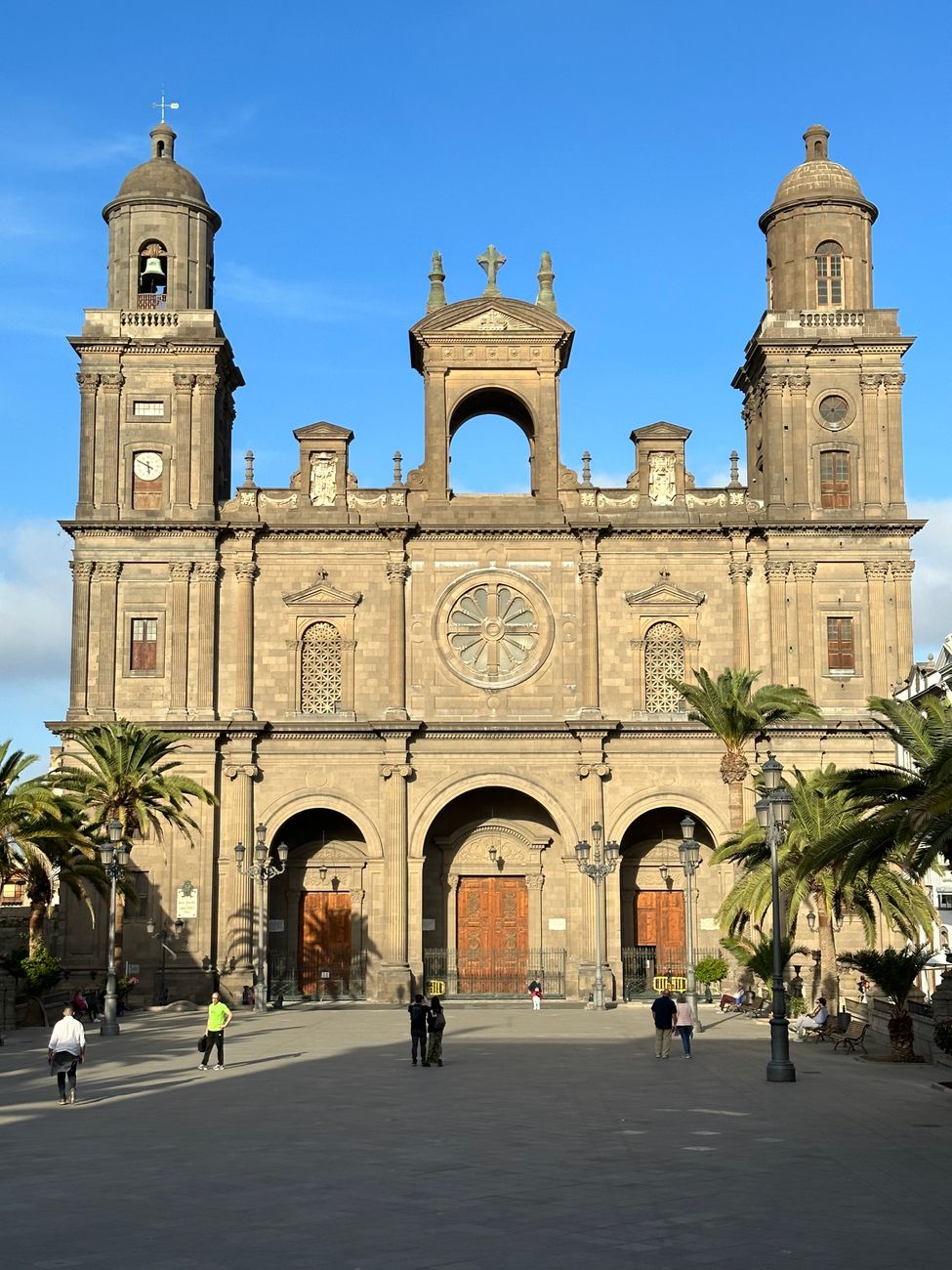
Start in Vegueta with Plaza de Santa Ana and a visit to Casa de Colón; the cathedral and museum cluster are within a 5–10 minute walk of each other. Walk Calle Mayor de Triana north toward the shopping streets and stop at Museo Canario; the walk between Plaza de Santa Ana and Museo Canario should take 8–12 minutes.
Lunch at Mercado de Vegueta lets visitors sample fresh fish, papas arrugadas and mojo from stall vendors. From Triana, walk or take a short bus (Guaguas Municipales) 15–20 minutes to Parque de Santa Catalina and the Mercado del Puerto for an afternoon coffee or pastry.
Late afternoon is ideal for a 20–30 minute walk or short bus ride to Las Canteras; stroll the promenade from La Cicer toward La Barra and swim if tides permit. Dine at a seafood restaurant at La Puntilla such as La Marinera (reservations recommended) and finish with a sunset walk on the sand.
Day 2
Spend day two by the sea and in the port area. Begin at Alfredo Kraus Auditorium at the eastern end of Las Canteras and walk west along the promenade to La Barra for snorkeling or a stand-up paddle session; the walk along the beach takes 30–40 minutes end to end.
Midday visit to Poema del Mar aquarium near the port; plan 90–120 minutes for the main tanks and the tropical gallery. After the aquarium, walk 10–15 minutes to Castillo de la Luz and the port quarter to see fishing boats and old fortifications.
In the afternoon explore the Guanarteme neighbourhood uphill from Las Canteras for small cafés and an atmosphere less aimed at tourists; getting there is a 10-minute bus ride or 20-minute walk from the beach. For evening options, return to Mercado del Puerto for shared plates or head back to Triana for wine bars.

Day 3
Reserve the morning for any museums missed earlier: CAAM (Centro Atlántico de Arte Moderno) and Museo Elder de la Ciencia y la Tecnología near Parque de Santa Catalina both sit within a short walk of each other. CAAM often has free entry days; check opening times and allow 60–90 minutes per museum.
Use the midday to revisit a favourite beach spot for a last swim or to buy take-home food items at Mercado del Puerto or local bakeries in Triana. If catching an afternoon flight, allow 25–45 minutes to the airport by Global bus line 60 and add 45–60 minutes for airport check-in; hotels will usually store luggage after check-out for a few hours if arranged.
End with a relaxed tapas dinner in Vegueta or a coffee on the promenade, keeping travel time to the airport in mind if leaving early the next day.

Best Local Experiences
Carnival of Las Palmas (usually Feb–Mar) is one of the island’s biggest public events and fills Vegueta and the Santa Catalina area with parades and competitions. Mercado del Puerto on Paseo de las Canteras hosts evening tapas and live music on weekends and is a good late-night option.
Surf or take a beginner lesson at Las Canteras’ La Cicer area where local schools rent boards and wetsuits. Visit Museo Canario for pre-Hispanic Canary artifacts and then walk to Casa de Colón to compare colonial-era exhibits.
Join a short fishing-boat or whale-watching trip from the port or a snorkeling session at La Barra. Stroll the streets of Triana and Parque Doramas for a sense of local shopping and café life outside the immediate beach strip.

Where to Stay
Las Canteras / Guanarteme: Suits beach-lovers and active travelers who want immediate sea access and evening promenade life; near Alfredo Kraus Auditorium and bike rentals. Typical nightly rates: budget apartments €50–90, midrange hotels €90–160 (≈$100–$180).
Vegueta / Triana: Suits culture-focused visitors who want short walks to Casa de Colón, Catedral de Santa Ana and Triana shops; quieter at night. Typical nightly rates: small guesthouses €45–100, boutique hotels €80–140 (≈$90–$155).
Santa Catalina / Port area: Suits those who want ferry connections, nightlife, and museums within 5–15 minutes’ walk; good for weekend market access. Typical nightly rates: midrange €70–140, higher for seafront rooms €110–180 (≈$125–$200).
Food and Drink
Papas arrugadas con mojo: Small salted boiled potatoes served with mojo rojo or mojo verde; find them at Mercado de Vegueta stalls and local guachinches for about €3–€6 as a side. Sancocho canario: Salted fish stew often served with gofio and salad; look for it at traditional restaurants in Vegueta for €8–€14.
Gofio: Toasted cereal flour used in porridges and desserts; buy packaged bags at markets for €2–€5 or try a fresh dish at Mercado del Puerto. Bienmesabe: Almond and honey dessert often served in pastry shops and cafés for €2–€5.
Barraquito: A layered coffee with condensed milk and liquor typical in the Canaries; available at cafés for €1.50–€3. Street food option: bocadillos and empanadas from bakeries in Triana and Guanarteme for €2.50–€6. Dinner recommendation: a seafood restaurant on La Puntilla (expect €18–€30 per main).
Getting Around
City buses are run by Guaguas Municipales and island routes by Global; buses are called guaguas locally. Single cash fares on city buses usually range around €1.40–€1.70; a 10-ride "bono" lowers the per-trip cost and is sold at kiosks and some tobacconists.
From the airport, Global bus line 60 serves Santa Catalina and central stops; journey time is roughly 25–40 minutes. Taxi from Gran Canaria Airport to the central area will typically cost €20–€30 depending on luggage and traffic; base fares around €3.50 plus per-kilometre charges apply.
Useful apps include Moovit for real-time schedules and the official Guaguas Municipales app for routes and times. Walking covers many central areas; Triana, Vegueta and the beach promenade are compact and easy on foot.
Best Time to Visit
Spring (April–June) and autumn (September–November) offer mild temperatures (18–26°C) with fewer visitors and good value on accommodation. Summer (July–August) brings warmer weather (24–29°C) and the biggest beach crowds; book seaside hotels early.
Winter (December–February) is mild (16–22°C) and attracts holiday visitors and Carnival attendees; museum and accommodation prices rise around the December holidays and Carnival. For lower prices and comfortable weather, target April–June or September–October.
Budget and Practical Tips
Budget travel daily estimate: €55–75 (≈$60–$80) covering a budget guesthouse (€30–45), food (€15–25), local transport (€5–10) and one museum entry. Midrange daily estimate: €120–180 (≈$130–$200) covering a midrange hotel (€80–120), meals (€25–40), local transport (€8–12) and a couple of paid attractions.
Tipping is not mandatory; service charges are often included. Leaving small change, rounding up taxi fares or adding 5–10% in sit-down restaurants for good service is appreciated. Carry copies of reservation confirmations; some smaller guesthouses ask for a printed voucher on arrival.
FAQ
Is Las Palmas de Gran Canaria safe for solo travelers?
Generally yes; usual urban precautions apply, avoid poorly lit streets late at night and keep valuables secure on busy beach promenades.
What is the best way to get from Gran Canaria Airport to the city centre?
Take Global bus line 60 to Santa Catalina for about €3–€4 and 25–40 minutes, or a taxi for €20–€30 depending on traffic and luggage.
Is a city card or tourist pass worth buying?
There is no single well-known all-inclusive city card that pays off for a short stay; buy a 10-ride bus "bono" if using buses often and check museums for combined or free-entry days.
Are cards widely accepted and where is cash required?
Cards are accepted at hotels, larger restaurants and shops; small tapas bars, market stalls and some bakeries often prefer cash for small transactions.
How easy is it to get a surf lesson or rent gear at Las Canteras?
Very easy; several surf schools operate near La Cicer and La Barra with lessons and rentals by the hour — expect €20–€40 for beginner lessons.
Can day trips to Tenerife or Puerto de la Cruz be done from here?
Ferry services (Naviera Armas, Fred Olsen) connect the ports, but crossings take a few hours; plan an overnight stay in Tenerife rather than a rushed same-day return.
Conclusion
Three days gives a practical slice of life: Vegueta’s streets, Triana’s cafés and Las Canteras’ sea are all reachable without a car. The memory most travelers keep is the contrast between city rhythms and the Atlantic — mornings in markets and late afternoons on the promenade.
If time runs short, prioritise a morning in Vegueta and an evening walk along Las Canteras reef at sunset; those two experiences together give the clearest feel for what makes the place different from other Canary resorts.
How this guide was prepared
This guide was prepared through a structured research that combines destination research, geographic context, itinerary planning logic, and content review.