

Best Time to Visit Shanghai — When to Plan Your 3-Day Stay
Clear, practical guidance on the best months to visit Shanghai for sightseeing, food, and day trips to Suzhou or Hangzhou. Season-by-season advice, transport realities, festival cautions, and sustainable tips to pair with our 3 days in Shanghai itinerary.
Plan your 3-day Shanghai itinerary around spring (Apr–May) or autumn (Sep–Nov) for pleasant weather, manageable crowds, and the best local experiences. Avoid major Chinese holidays when possible and favor shoulder seasons for lower impact travel and better deals.
Quick Answer
Plan your 3-day Shanghai itinerary around spring (Apr–May) or autumn (Sep–Nov) for pleasant weather, manageable crowds, and the best local experiences. Avoid major Chinese holidays when possible and favor shoulder seasons for lower impact travel and better deals.
Who This Page Is For
This page is for travelers planning a stay in Shanghai who want clearer decisions about best time to visit, local logistics, timing, budgeting, and practical trip planning.
How This Page Was Prepared
This page was prepared through a structured editorial workflow that combines destination research, geographic context, and practical travel-planning review.
Plan the Rest of Your Trip
Use this page together with the full itinerary and the related planning pages below to make better booking, timing, transport, and budget decisions.
Best months for most travelers: April–May and September–November. Expect mild temperatures, lower humidity, and better air clarity. Choose March or November for shoulder-season savings and fewer crowds. Avoid Chinese New Year (late January/February) and National Day week (first week of October) unless you want to experience festivals and are prepared to book far in advance.
Shanghai's climate, festival rhythm, and transport links shape the best times to visit. Spring (March–May) and autumn (September–November) offer the most comfortable weather and clearer skies for river views and rooftop bars. Summer is hot and humid with frequent storms; winter is cold, damp and quieter. This page helps you match weather, crowds, and day trips to what you want from a 3-day visit, while suggesting lower-impact choices and neighborhood-focused stays.
What This Page Helps You Decide
Use this page to:
– Pick dates that match weather preferences and crowd tolerance for a 3-day Shanghai itinerary.
– Decide whether to add a day trip to Suzhou, Hangzhou or Wuxi and how that affects travel days.
– Plan transport and booking priorities (metro-accessible hotels, high-speed train tickets, river cruise time slots).
Practical note: high-speed trains to Suzhou and Hangzhou run frequently from Hongqiao; allocate at least half a day for each day trip to avoid rushed sightseeing.

Top Recommendations
Match timing to what you want to do:
– Sightseeing & comfortable weather: mid-April–May, mid-September–October.
– Photography & skyline views: late autumn mornings after a rain or cold front, when visibility is higher.
– Food and markets: late morning to early afternoon for fresh stalls; evenings for street-food scenes in lanes.
– Festivals: visit for Lantern Festival or Mid-Autumn if you enjoy crowds and cultural programs—but book hotels and trains early.
Booking tips and sustainability notes:
– Book hotels near a metro line (French Concession, Jing'an, People's Square) to minimize taxi use.
– Favor locally run guesthouses and neighborhood restaurants to keep tourist spending local.
– Choose shoulder seasons for lower-impact travel and better availability for small guided tours.
Local Context
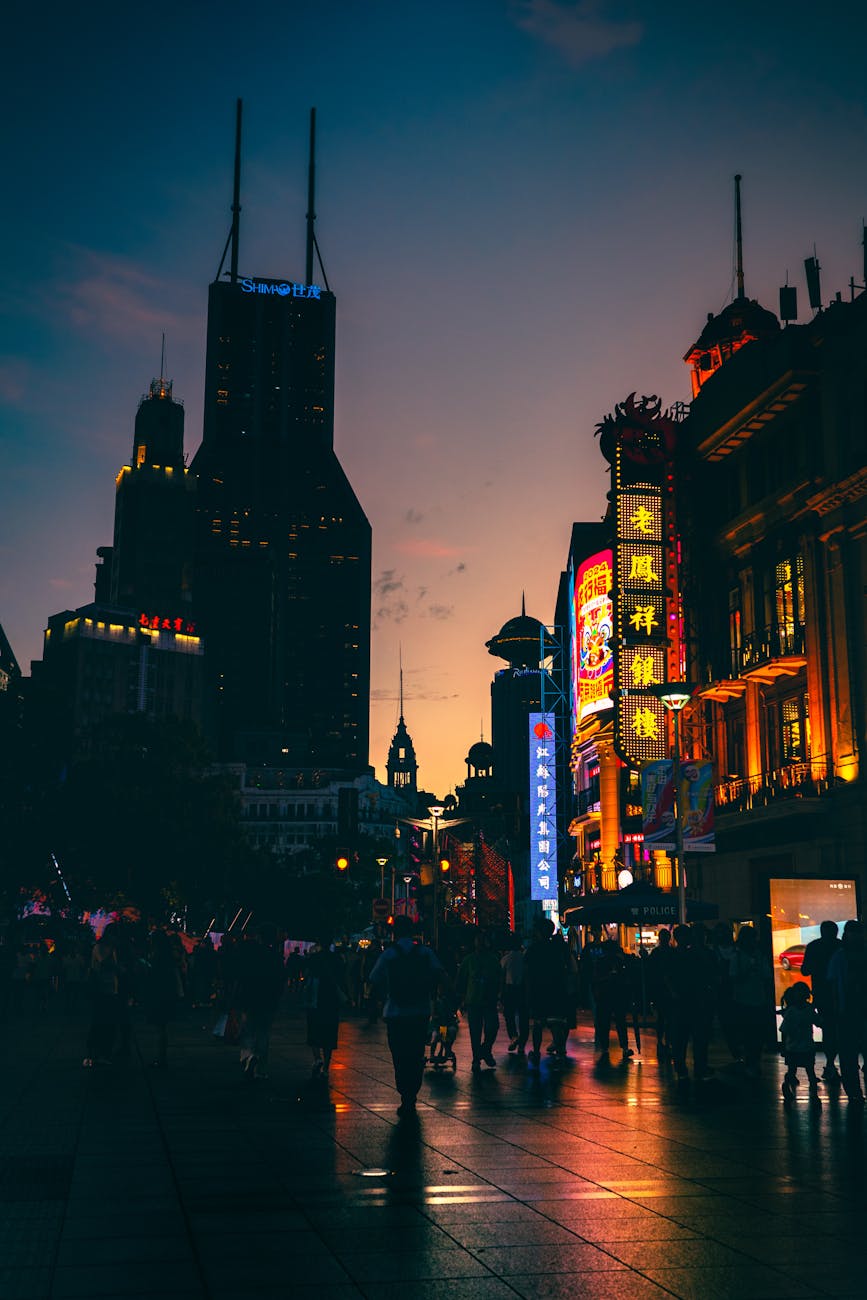
Neighborhoods: French Concession and Jing'an are walkable with cafés and tree-lined lanes; People's Square is central for museums; Pudong hosts the financial skyline and major hotels. Weather and seasons: June–August are hot, humid and rainy (monsoon influence); late summer can bring typhoon-related storms that disrupt ferries and coastal high-speed services. Air quality improves in autumn but can vary—check forecasts 48 hours before outdoor plans.
Transport realities:
– Metro is fast and extensive; avoid morning (7:30–9:00) and evening (17:00–19:00) rush hours.
– Hongqiao is the main hub for long-distance trains; Pudong handles international flights and the Maglev.
– Taxis and ride apps are convenient but can surge during holidays—plan extra time for airport transfers.
Nearby day trips (train times from Hongqiao):
– Suzhou: ~25–30 minutes by G/ D trains.
– Hangzhou: ~45–55 minutes.
– Wuxi and Changzhou: 30–60 minutes, depending on train type.
– Ningbo: ~2–2.5 hours by high-speed rail.

How to Choose Well
Consider these decision points:
– Weather tolerance: pick autumn/spring for comfort; choose winter if you prefer fewer crowds and lower hotel rates.
– Crowds vs. events: avoid National Day and Chinese New Year for lower impact travel. If you travel during festivals, book hotels, trains, and river cruises at least 4–8 weeks ahead.
– Neighborhood fit: stay in French Concession for relaxed walking; Jing'an for centrality; Pudong for business and airport access.
– Day-trip planning: if you want Suzhou or Hangzhou, plan one full day each and book high-speed train tickets in advance for holiday periods.
Booking practicalities:
– Reserve popular experience slots (Shanghai Tower observatory, river cruise at dusk, theatre shows) online when possible.
– Get a Shanghai Public Transport Card or top up a metro app to avoid repeated ticket queues.
– Check visa validity and allow extra time for arrival logistics if flying internationally.

Responsible and Local-First Tips
Small choices make a big difference:
– Move like a local: prioritize metro, ferry, and walking. Use bike-sharing services for short hops, and lock bikes properly.
– Spend locally: choose family-owned restaurants, artisanal shops in Tianzifang or Taikang Road, and licensed neighborhood guides.
– Reduce waste: carry a refillable bottle and reusable cutlery; bring a lightweight tote for market shopping.
– Respect local norms: queue patiently for metro and taxi, keep voice levels moderate on public transport, and follow photography rules inside temples and private shops.
– Responsible day trips: use scheduled trains rather than private cars where possible to lower per-person emissions; spread visits to popular sites across mornings and late afternoons to reduce crowding.

Common Mistakes to Avoid
- Booking during major Chinese holidays without reserving hotels and train tickets well in advance.
- Staying in a hotel far from a metro station and underestimating travel time during rush hour.
- Trying to cram Suzhou and Hangzhou into the same short day without factoring train schedules and site opening times.
- Expecting consistently clear skies in summer; storms and haze can affect skyline views.
- Relying solely on cashless payments without setting up a local payment method or accepting that some small stalls may prefer QR apps.
FAQ
Is spring or autumn better for a first trip to Shanghai?
Both are excellent. Spring (April–May) has flowers and mild temperatures; autumn (September–November) typically offers clearer skies and lower humidity. Choose based on personal comfort with humidity and whether you prefer spring blooms.
Should I avoid traveling to Shanghai in summer?
Summer is hot and humid with frequent afternoon storms. If you travel then, plan indoor activities during the hottest hours, book air-conditioned attractions, and expect higher hotel rates near international school summer schedules.
How far is Suzhou for a day trip and is it worth it?
Suzhou is about 25–30 minutes by high-speed train from Hongqiao. It's an excellent day trip for canals, classical gardens, and silk workshops. Start early and return after dinner if you want a relaxed pace.
Are there times when river cruises or rooftop bars are closed due to weather?
Yes—heavy rain, strong winds, or typhoon warnings (most likely in late summer) can suspend cruises and outdoor venues. Check forecasts and book flexible tickets.
Do I need WeChat Pay or Alipay to get by in Shanghai?
Major hotels, restaurants, and stores accept international cards, but many small vendors and neighborhood markets prefer QR payments. Consider setting up a payment app or carrying a bit of cash and a contactless card as backup.
Will air quality affect outdoor plans?
Air quality varies; autumn months are generally better. For outdoor photography or long walks, check air-quality forecasts 48 hours in advance and move strenuous activities to clearer days.
Conclusion
For a sustainable, low-impact 3-day visit, favor April–May or September–November, stay in a metro-friendly neighborhood (French Concession, Jing'an, or near People's Square), and reserve at least one day for a relaxed day trip to Suzhou or Hangzhou. Book trains and key experiences in advance during busy periods, prioritize local restaurants and shops, and use the metro to keep your carbon footprint low. For concrete packing lists and a timed 3-day plan, see our companion 3 days in Shanghai itinerary and the linked guides to Suzhou, Wuxi, Ningbo, Changzhou, and Hangzhou.
How this guide was prepared
This guide was prepared through a structured research that combines destination research, geographic context, itinerary planning logic, and content review.