

Introduction

Florence is one of the easiest cities in Italy to love on a first visit. It is compact, walkable, and packed with Renaissance art, beautiful churches, lively squares, and memorable food. In three days, you can see the headline sights, spend time in a few world-class museums, cross the Arno into quieter neighborhoods, and still leave room for long meals and evening strolls.
This itinerary is designed for first-time visitors who want a balanced trip. It covers Florence’s major landmarks like the Duomo, Uffizi Gallery, and Accademia, but also includes neighborhoods such as Oltrarno and San Lorenzo, scenic viewpoints, local markets, and gardens. The pace is full but realistic, with practical suggestions to help you avoid backtracking and make the most of your time.
Quick Planning Tips

Florence is busiest from spring through early autumn, so reserving major museums in advance is important, especially for the Uffizi Gallery and Accademia Gallery. If you want to climb the Duomo or visit the dome, bell tower, or baptistery complex, booking ahead is also a smart move.
Stay in or near the historic center if this is your first trip. Florence is small enough that you can walk between most major sights, which saves time and makes the city much more enjoyable.
Wear comfortable shoes. The historic center has plenty of stone streets and pavements, and you will likely walk much more than expected.
Start sightseeing early. Florence’s most famous attractions become crowded by mid-morning, particularly around Piazza del Duomo, Piazza della Signoria, and Ponte Vecchio.
Plan museum time carefully. Florence rewards slow looking, but trying to do too many museums in one day can become exhausting. This itinerary spaces them out.
Leave room for evenings. Florence is especially beautiful after day-trippers leave, when the golden light hits the palaces and church facades and the streets feel calmer.
Day 1 Itinerary

Begin your first day in the historic heart of Florence with the Duomo complex. Start at Piazza del Duomo, where you can take in the Cathedral of Santa Maria del Fiore, Giotto’s Campanile, and the Baptistery of San Giovanni. This is the best introduction to Florence’s architecture and civic pride. If you want the big panoramic experience, book the dome climb or the bell tower climb in advance. The views over the terracotta rooftops are unforgettable and give you a sense of how compact the city really is.
After exploring the Duomo area, walk a few minutes to Piazza della Repubblica. This square feels more open and elegant, with cafes and a different atmosphere from the medieval lanes around the cathedral. From there, continue toward Piazza della Signoria, one of Florence’s most important public spaces. This square is filled with history and sculpture, including Palazzo Vecchio and the open-air Loggia dei Lanzi. Even if you do not go inside Palazzo Vecchio, the exterior and square are worth slowing down for.
Next, head to the Uffizi Gallery. For first-time visitors, this is one of the essential museums in Florence. Focus on the highlights rather than trying to absorb everything. Look out for works by Botticelli, Leonardo da Vinci, Michelangelo, Raphael, and Caravaggio. The museum itself also offers wonderful views over the Arno and across to the city’s rooftops. Booking a timed entry is strongly recommended so you do not lose half your day in line.
For lunch, stay around the center or move slightly toward Santa Croce for a less frantic feel. After lunch, walk to the Basilica of Santa Croce. This church is important both artistically and historically, with beautiful chapels and tombs associated with famous Italians. The surrounding neighborhood has a lively but less formal atmosphere than the Duomo area, making it a good place to wander.
In the late afternoon, make your way toward the Arno and cross over or walk along the river before sunset. Stop at Ponte Vecchio, Florence’s most famous bridge, known for its historic shops and distinct look. It is touristy, but it remains a classic Florence moment. Early evening is one of the best times to be here.
End your first day with a relaxed dinner in the historic center or on the Oltrarno side of the river. If you still have energy, take a nighttime walk back past Piazza della Signoria and Piazza del Duomo. Florence’s landmarks feel calmer and more atmospheric after dark.
Day 2 Itinerary

Start your second day with one of Florence’s other essential sights, the Accademia Gallery. This museum is most famous for Michelangelo’s David, which is one of those works that truly feels different in person. The museum also gives useful context on Renaissance sculpture and painting, but for many first-time visitors, David is the main event. Go early if possible, and reserve ahead.
From the Accademia, head into the San Lorenzo area. Visit the Basilica of San Lorenzo if it interests you, and consider the Medici Chapels, where you can dive deeper into the story of Florence’s ruling family. This part of the city is especially good for understanding the power and ambition behind so much of Florence’s art and architecture. Nearby, Mercato Centrale is a practical lunch stop, especially if you want variety and a lively atmosphere.
In the afternoon, walk toward the convent and museum of San Marco if you enjoy quieter, more contemplative spaces. It offers a different museum experience from the blockbuster galleries, with frescoes by Fra Angelico and a more intimate connection to Florence’s religious and artistic life. If you prefer architecture and chapels, another option is to spend more time around the Medici and San Lorenzo sites instead.
Later in the day, shift away from major museum time and enjoy Florence as a city. Walk south through the center and cross the Arno into Oltrarno, one of the most appealing neighborhoods for first-time visitors who want to see a more local side of Florence. Explore around Piazza Santo Spirito and the streets near Piazza del Carmine. This area is known for artisan workshops, smaller streets, and a more lived-in rhythm.
If you still want another major landmark, visit Pitti Palace in the late afternoon or simply admire its scale from outside and focus instead on the Boboli Gardens behind it. The gardens provide a welcome break from streets and museums, with tree-lined paths, sculptures, and elevated viewpoints back toward the city. They are especially good if you want a slower pace after a busy first day.
Stay in Oltrarno for dinner. This is one of the best parts of Florence for an evening meal that feels a little less rushed than the center. After dinner, walk back across the river, perhaps via Ponte Santa Trinita for one of the best views toward Ponte Vecchio at dusk.
Day 3 Itinerary

Use your third day to combine scenic Florence with a few places that round out the city beyond its most famous museums. Begin at Palazzo Pitti and the Boboli Gardens if you did not visit them on Day 2, or go straight to the gardens if you only saw the palace exterior before. This part of Florence gives you more space and a different view of the city’s grand history. The gardens are ideal in the morning, before the day gets hotter and busier.
From Oltrarno, continue uphill or take a straightforward route to Piazzale Michelangelo. This is the city’s classic viewpoint and a must for first-time visitors. The panoramic view over Florence, with the Duomo rising above the skyline and the Arno threading through the city, makes it clear why Florence leaves such a strong impression. If you do not mind a bit more climbing, continue to San Miniato al Monte, a beautiful church in an even better setting. It is one of the most rewarding stops in Florence for atmosphere and views.
After taking in the panorama, head back down toward the Santa Croce or central area for lunch. Spend your afternoon filling in what best suits your interests. If you want another museum, the Bargello is an excellent choice and often overlooked by first-time visitors focused only on the Uffizi and Accademia. It is one of the best places in Florence for sculpture, with works by Donatello and Michelangelo in a historic building that feels very Florentine.
If you would rather have a less museum-heavy afternoon, devote this time to wandering. Browse the streets around Via de’ Tornabuoni for elegant palaces and shops, revisit favorite squares, or explore smaller churches and corners of the center that you may have rushed past earlier. Florence is a city where unplanned walking often becomes one of the best parts of a trip.
For your final evening, choose one last memorable Florence experience. A sunset walk along the Arno is a simple and perfect option. Another is returning to Piazzale Michelangelo in the evening if you want a grand finale view. End with dinner in a neighborhood you enjoyed most, whether that is the central historic streets, lively Santa Croce, or the more relaxed Oltrarno side.
Where to Stay

Duomo and the historic center
This area suits first-time visitors who want to be within walking distance of the main landmarks. You can easily reach the cathedral, Uffizi, Piazza della Signoria, and Ponte Vecchio on foot. It is the most convenient base for sightseeing, especially on a short trip. The trade-off is that it can be busy and more expensive, with crowds from early morning until evening.
Santa Maria Novella
This area suits visitors arriving by train or those who want a practical base with good transport connections. It is close to the station, which makes arrival and departure easy, and you can still walk to the center without much trouble. It often offers a good balance between convenience and slightly calmer streets. It is a strong choice if you are planning day trips as well.
Oltrarno
This area suits travelers who want a more local atmosphere, artisan streets, and evenings that feel a little less tourist-heavy. You are still close to the center, just across the Arno, but the mood is different. It is ideal for visitors who like neighborhood character, small piazzas, and good dining options. It may be slightly less convenient for very early museum starts, but many people find the atmosphere worth it.
Best Experiences
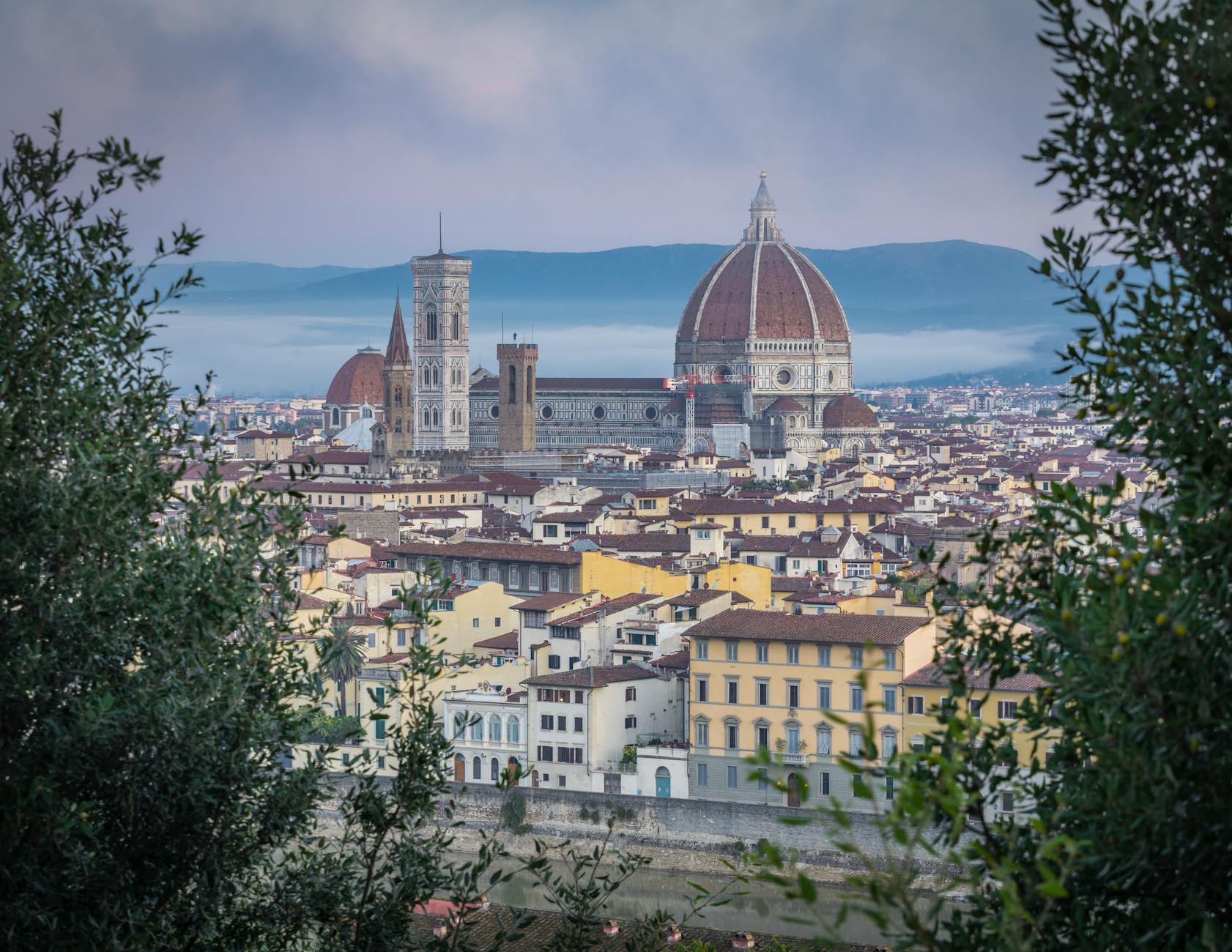
Watching sunset or sunrise from Piazzale Michelangelo and seeing the whole city spread out below
Standing in front of Michelangelo’s David at the Accademia and understanding why it is one of Florence’s defining works
Walking from Piazza del Duomo through Piazza della Signoria to the Arno and Ponte Vecchio, which gives you Florence’s classic historic core in one rewarding route
Exploring Oltrarno for artisan workshops, quieter streets, and a more local side of the city
Taking time inside the Uffizi to see Renaissance masterpieces in the city where so much of that history unfolded
How to Get Around
Florence is best explored on foot. For a first-time visitor staying near the center, most major sights are within comfortable walking distance of each other. The city’s compact size is one of its biggest advantages.
Taxis can be useful for airport transfers, early departures, or reaching hilly viewpoints if you do not want to walk uphill. Public transport is available and can help for areas farther from the center, but many visitors use it less than expected because walking is so practical.
If you are arriving by train, Santa Maria Novella station is well located for reaching the historic center on foot. If you are arriving by car, it is usually easier to avoid driving in the center due to restricted traffic zones, limited access, and parking challenges.
Typical Budget
Florence can work on a range of budgets, but first-time visitors should expect costs to be higher than in smaller Italian cities, especially in the peak season and around the historic center.
Budget travelers can keep costs down by staying a little outside the most central streets, walking everywhere, choosing simpler trattorias or takeaway lunches, and prioritizing only a few paid attractions.
Mid-range travelers will find Florence comfortable and rewarding, with plenty of well-located hotels, strong dining options, and enough time for a couple of major museums plus landmark entries.
Higher-budget travelers can enjoy boutique hotels in historic buildings, guided art experiences, better views, and more refined dining, especially around the center and Oltrarno.
A practical approach for most visitors is to book the major museums in advance, budget for a few key admissions, and balance those with free pleasures like piazzas, churches, markets, river walks, and viewpoints.
FAQ
Is 3 days enough for Florence
Yes, three days is a very good amount of time for a first visit. You can see the main landmarks, visit the Uffizi and Accademia, explore neighborhoods like Oltrarno, and still enjoy the city at a pleasant pace. You will not see everything, but you can cover the essentials well.
Should I book museums in advance
Yes, especially for the Uffizi Gallery and Accademia Gallery. Florence is one of Italy’s most popular destinations, and the biggest sights can be very busy. Advance booking saves time and helps structure your days.
Is Florence walkable
Very much so. Florence is one of the most walkable cities in Italy. If you stay near the center, most of the main attractions can be reached on foot. Comfortable shoes are important because the streets are often paved with stone.
What is the best area for first-time visitors to stay in
The historic center near the Duomo is usually the most convenient choice for first-time visitors because you are close to the main sights. Santa Maria Novella is a strong alternative for train access, while Oltrarno is ideal if you want a more local neighborhood feel.