

Responsible Travel in Kyoto — Practical Support for a Low-Impact 3-Day Visit
Practical, local-first advice for traveling responsibly in Kyoto: transport, neighborhoods, seasonal tips, sustainable stays, and low-impact day trips to Nara-shi, Osaka-shi, Kobe-shi, Sakai and Himeji. Designed to support the '3 days in Kyoto' itinerary.
Concrete, easy-to-scan guidance to make your short Kyoto visit low-impact and locally beneficial — when to go, where to stay, how to move, what to book, and which nearby cities to pair with a 3-day plan.
Quick Answer
Concrete, easy-to-scan guidance to make your short Kyoto visit low-impact and locally beneficial — when to go, where to stay, how to move, what to book, and which nearby cities to pair with a 3-day plan.
Who This Page Is For
This page is for travelers planning a stay in Kyoto who want clearer decisions about responsible travel, local logistics, timing, budgeting, and practical trip planning.
How This Page Was Prepared
This page was prepared through a structured editorial workflow that combines destination research, geographic context, and practical travel-planning review.
Plan the Rest of Your Trip
Use this page together with the full itinerary and the related planning pages below to make better booking, timing, transport, and budget decisions.
Yes — you can visit Kyoto responsibly in three days if you plan deliberately: prioritize early starts, fewer but deeper visits, public transit and walking, and book small local guides and machiya or family-run ryokan. For a full day-by-day plan see the companion 3 days in Kyoto guide and use this page to customize sustainable choices and day-trip logistics to Nara-shi, Osaka-shi, Kobe-shi, Sakai, or Himeji.
This page is a compact, practical guide to visiting Kyoto with low impact and maximum local benefit. It’s written to support the main 3-day Kyoto itinerary by offering transport realities, neighborhood-level advice, seasonal timing, sustainable stay options, and smart day-trip pairings to nearby cities such as Nara-shi, Osaka-shi, Sakai, Kobe-shi, and Himeji. Use these notes to tweak timing, book ahead, and choose experiences that directly support small businesses and cultural conservation.
What This Page Helps You Decide
You’ll get clear answers for: when to travel to avoid crowds and reduce strain on popular sites; how to move between neighborhoods with minimal footprint; which accommodations and shops benefit the local economy; what to book in advance; and how to add responsible day trips.
Practical outcomes you can expect:
– A timing plan for temple visits and markets to avoid peak congestion
– Which neighborhoods to base in for walkable days
– Sustainable accommodation types and neighbourhoods for a 3-day stay
– Low-impact transport and day-trip options to nearby cities

Top Recommendations
Core moves to keep impact low and experiences authentic:
– Start very early at major sites: Fushimi Inari before 7:00, Arashiyama Bamboo Grove at sunrise, and Kiyomizu-dera at first light.
– Base yourself in a central, walkable neighborhood: Higashiyama, Shimogyo (near Kyoto Station), or a restored machiya in Kamigyo for local stays.
– Favor small businesses: book a family-run ryokan, eat at market stalls in Nishiki or small izakayas, and buy crafts directly from local makers in Nishijin and Teramachi.
– Book selective guided experiences: a small-group sake tasting in Fushimi, a tea ceremony in Uji or a private kimono etiquette workshop with a responsible rental operator.
Pairing day trips (low-impact options):
– Nara-shi: half-day by JR or Kintetsu to see Todaiji early and return to Kyoto for a relaxed afternoon.
– Osaka-shi: train ride for an evening of small-plate dining and back to Kyoto by late subway.
– Himeji: train day trip focused on castle conservation and local soba makers.
Consider trains over buses for intercity travel to reduce vehicle emissions and avoid rush-hour crowds.
Local Context
Neighborhood realities:
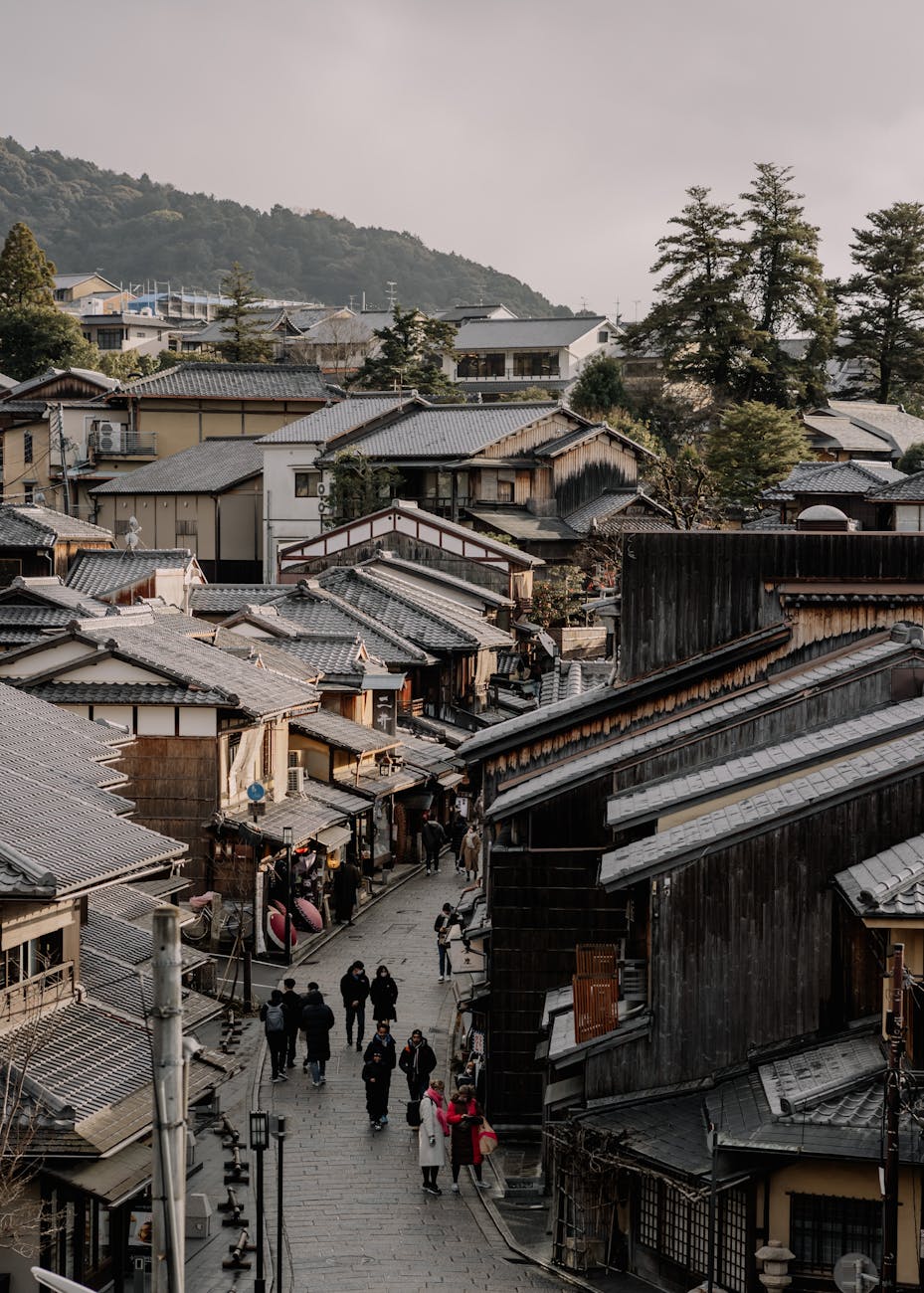
– Gion and Higashiyama: extremely popular after mid-morning; quiet early or late evening. Watch for private homes and respect residential areas.
– Arashiyama/Sagano: a mix of parkland and tourist corridors; choose side streets and smaller temples to spread impact.
– Fushimi: active sake district with light industry and small breweries — support local tasting rooms.
– Kyoto Station/Shimogyo: transport hub with luggage storage, practical if you have early or late trains.
Seasonal notes:
– Cherry blossom: late March–early April — book months ahead; prefer parks and river walks to minimize pressure on temples.
– Autumn leaves: mid-November–early December — book lodging early and use shoulder mornings.
– Rainy season (June) and summer (July–August) are lower-crowd times but be prepared for humidity and closures.
Transport realities:
– Kyoto buses are extensive but can be slow and crowded; use subway lines for east–west travel and IC cards (ICOCA, Suica) for convenience.
– Cycling is popular in quieter neighborhoods; follow signage and avoid busy central streets.
– Taxis are useful late at night or with luggage but are costly; prioritize trains for intercity travel to Nara-shi, Osaka-shi, Kobe-shi, Sakai, and Himeji.

How to Choose Well
Decide using three filters: timing, scale, and benefit.
– Timing: visit crowded sights at first light or late afternoon; save markets for late morning when fresh food vendors are active.
– Scale: prefer fewer sites with richer time (one major temple in the morning, a market lunch, a neighborhood walk in the afternoon) rather than trying to check every landmark.
– Benefit: choose businesses where your money goes to local staff or artisans (small restaurants, machiya stays, family-run breweries).
Booking checklist for a 3-day trip:
– Reserve accommodations at least 2–3 months ahead for peak seasons (hanami, koyo); shoulder months can be booked closer in.
– Prebook tea ceremonies, sake tours, and guided walking tours with small operators.
– Consider a luggage-forward service (takkyubin) if moving between cities like Osaka-shi or Kobe-shi to reduce vehicle reliance and stress.

Responsible and Local-First Tips
Simple choices that have outsized benefits:
– Buy local: snacks at Nishiki Market, hand-made fans, textiles from Nishijin, and woodwork from local artisans.
– Eat local and seasonal: choose restaurants that list local suppliers and smaller izakayas rather than international chains.
– Reduce waste: carry a reusable bottle and chopsticks; many cafés will fill bottles and markets will accept reusable containers if you ask politely.
– Respect sacred spaces: observe quiet, remove shoes where required, avoid drone use, and follow photography rules.
– Dress thoughtfully: comfortable shoes for walking and modest clothing for shrines; kimono rentals are fine—choose reputable shops and act respectfully in neighborhoods.
– Spread visits: include lesser-known sites such as Enko-ji, Otagi Nenbutsu-ji, and local neighborhood temples to reduce burden on flagship sites.
Support community projects: consider a short workshop with a local craftsperson or a conservation donation to a temple or neighborhood association if you use a guide.

Common Mistakes to Avoid
Avoid these frequent errors:
– Trying to see too many major temples in one day — this increases crowding and reduces appreciation.
– Visiting peak temples midday during cherry blossom or autumn leaf season without reservations.
– Relying solely on buses during rush hours; choose subway or walk where practical.
– Buying mass-produced souvenirs from tourist stalls instead of supporting local artisans.
– Wearing noisy or inappropriate costumes in residential areas; be mindful of photo etiquette in Gion and narrow streets.
Quick fixes:
– Shift a major temple to dawn, split crowds across morning and evening, and reserve experiences in advance.
FAQ
When is the best time to visit Kyoto to avoid crowds and still enjoy good weather?
Aim for late April–May or late October–early November (shoulder spring and autumn). These windows have pleasant weather and, if you avoid exact peak cherry blossom and koyo weeks, significantly fewer visitors.
How should I get around within Kyoto and to nearby cities like Nara-shi or Osaka-shi?
Use the subway and JR or private railways (JR for Himeji, Kintetsu for Nara) for intercity travel. Within central neighborhoods, walk or rent a bicycle from a reputable shop. Avoid relying on buses during morning and evening peaks.
Are machiya rentals and ryokan better for the local economy than international hotels?
Small ryokan and restored machiya stays tend to keep revenue local (staffed by families or local companies). They also offer cultural depth but book early during peak seasons.
Is it okay to rent a kimono while in Kyoto?
Yes if you use a responsible rental operator: choose shops that brief renters on respectful behavior, avoid blocking narrow residential streets when taking photos, and prefer rentals that provide modest, community-minded guidance.
Which nearby city makes the best low-impact day trip from Kyoto?
Nara-shi is easiest by train and can be low-impact if you visit early and stick to designated paths around Todaiji and Nara Park. For urban food culture with short travel time, Osaka-shi is convenient by train and good for evening dining back in Kyoto.
How should I prioritize temples during a short visit?
Pick one sunrise temple (Fushimi Inari or Arashiyama), one midday attraction (Nishiki Market or Kiyomizu-dera), and one neighborhood walk (Gion or Philosopher's Path) to balance cultural depth and reduced crowding.
Conclusion
A responsible 3-day visit to Kyoto is entirely feasible with planning that favors early starts, public transit, small local businesses, and thoughtful scheduling. Use this support page alongside the main 3 days in Kyoto itinerary to adjust timing, select sustainable stays, and add meaningful day trips to Nara-shi, Osaka-shi, Sakai, Kobe-shi or Himeji. Small choices — buying local, booking smaller guides, and visiting less-known sites — yield better experiences for you and more lasting benefits for Kyoto’s communities.
How this guide was prepared
This guide was prepared through a structured research that combines destination research, geographic context, itinerary planning logic, and content review.