

Responsible travel in Ohrid, Macedonia
Practical, local-first advice for lower-impact travel in Ohrid: where to eat, how to move, which seasons to choose, and real businesses to support. Clear costs.
How to visit Ohrid with minimal impact: concrete transport options, locally owned businesses, crowd-avoidance by month and site, and seasonal tips for Lake Ohrid visits.
Responsible travel in Ohrid?
Visit Ohrid outside July–August and prioritize walking, local buses, and boat trips operated by licensed providers. Expect a one-way intercity bus to Skopje around 450–600 MKD, airport taxi to Ohrid town ~700 MKD, and a guided boat to Saint Naum from the marina about 1,000–1,500 MKD per boat.
Who This Page Is For
Useful for travellers who want concrete, lower-impact plans for 1–4 days in Ohrid and who will use public transport, walking, or boats. Not aimed at large tour operators or party travellers seeking peak-summer nightlife.
Key Takeaways for Ohrid
- Avoid July–August crowds: travel in May–June or September when lake water is warm but visitor numbers fall by roughly 40%
- Airport transfer: taxi from Ohrid 'St. Paul the Apostle' Airport to Ohrid town center ~700 MKD; shared shuttle options sometimes run 300–400 MKD
- Boat trips: licensed boats from Ohrid Marina to Saint Naum cost about 1,000–1,500 MKD per private boat (not per person); join a shared boat to split cost
- Intercity bus: Avtobuska Stanica Ohrid runs regular routes to Skopje for roughly 450–600 MKD; book at the station or local ticket offices
How This Page Was Prepared
This page was prepared through a structured editorial workflow that combines destination research, geographic context, and practical travel-planning review.
Plan the Rest of Your Trip
Use this page together with the full itinerary and the related planning pages below to make better booking, timing, transport, and budget decisions.
Plan Ohrid for shoulder months (May–June or September) to reduce crowd impact and still have warm lake swimming. Use Avtobuska Stanica Ohrid for intercity trips (Skopje ~450–600 MKD) and the official Ohrid Marina for licensed boat operators to Saint Naum (~1,000–1,500 MKD per private boat). Walk the Old Town and Korzo; for Gradiste beach or Saint Naum, prefer municipal buses or licensed boat operators rather than multiple small private skiffs.
If arriving at Ohrid 'St. Paul the Apostle' Airport expect a taxi around 700 MKD; ask for the fare in MKD before leaving. For shopping, look for named pearl workshops and cooperative stalls near the Korzo or Plaoshnik instead of street stalls with unlabelled goods.
This page answers one practical question: how to visit Ohrid while minimizing negative impact and supporting local businesses. Visitors often underestimate how seasonal crowds, limited public transport, and a small-town tourism economy shape choices here. Many treat the Old Town and Church of St. John at Kaneo as isolated day-stops and then pile into the same small beaches and boats during July and August, which concentrates pressure on fragile lake shore areas.
The aim here is precise: name the local transport points, indicate realistic prices in Macedonian denar (MKD), point to locally owned shops and cooperatives, and propose lower-impact alternatives near the over-visited spots. This is a practical travel-support page, not a promotion. The information is intended to make decisions like when to go, how to reach Saint Naum with a licensed operator, whether to buy pearls from a named workshop, and where to find quieter public swimming beaches.
What This Page Helps You Decide
This page helps choose when to visit Ohrid and which local businesses and transport modes to use to keep impact low. Decisions supported here include whether to visit during peak July–August or shift to May–June or September to avoid the biggest crowds and higher prices.
It helps decide how to reach and visit Saint Naum — by licensed boat from Ohrid Marina or by public bus and a short walk — and which boat operators and cooperative sellers to prefer. It also helps choose where to eat and buy local products like Ohrid pearls and smoked trout, with concrete price expectations and named transaction points.
Finally, it offers guidance on short transfers (airport to town), intercity bus booking, and when to use a taxi. The page prepares readers to prioritize local, named providers and to avoid cheap mass-market alternatives that do not benefit local craftspeople.

Top Recommendations
Support named local operators and cooperatives.
– Buy pearls from workshops with labels: look for 'Ohrid Pearl' branded workshops or family-run studios near Korzo and Plaoshnik; expect handcrafted necklaces from 1,500–3,500 MKD. Ask the seller for a workshop name and a written receipt.
– Eat locally owned places: try traditional trout at restaurants that advertise 'local catch' such as small family-run konobas on the waterfront rather than large hotels; budget 400–900 MKD per person for a full meal.
Transport and active travel.
– Walk the Old Town and Korzo; distances are short and most lanes are pedestrian. Rent a bicycle near the marina (approximately 300 MKD/day) for Gradiste or the bay of Kaneo.
– Use Avtobuska Stanica Ohrid for intercity buses; buy tickets at the station for routes to Skopje, Bitola, or Tirana. For airport transfers, ask about shared shuttle vans at the airport desk (sometimes 300–400 MKD per person) or expect taxis around 700 MKD to the town center.
Licensed boats and over-touristed spots.
– Avoid ad-hoc skiffs that circle the Church of St. John at Kaneo continuously in high season. Instead, book a licensed boat from Ohrid Marina for a trip to Saint Naum; a private boat is about 1,000–1,500 MKD, so share to reduce per-person impact.
– Over-touristed spot: the small shoreline directly below the Church of St. John at Kaneo. Lower-impact alternative: Gradiste beach to the north or the public shore near the Archaeological Museum; both allow dispersed use and less pressure on the Kaneo promontory.
Seasonal and behavioural choices.
– Travel in May–June or September to lower congestion and keep accommodation prices 20–40% below peak-summer rates. Lake temperatures are typically warm enough for swimming from June through early September.
– When visiting Plaoshnik and Samuil's Fortress, pay official entry fees at the ticket office and do not rely on unofficial guides who solicit cash on the path. Use printed tickets and local museum staff for accurate information.
Practical money and booking tips.
– Carry some MKD for market stalls and small shops; card acceptance is common in restaurants but inconsistent at small workshops and buses. Expect taxi drivers to prefer cash in MKD.
Local Context
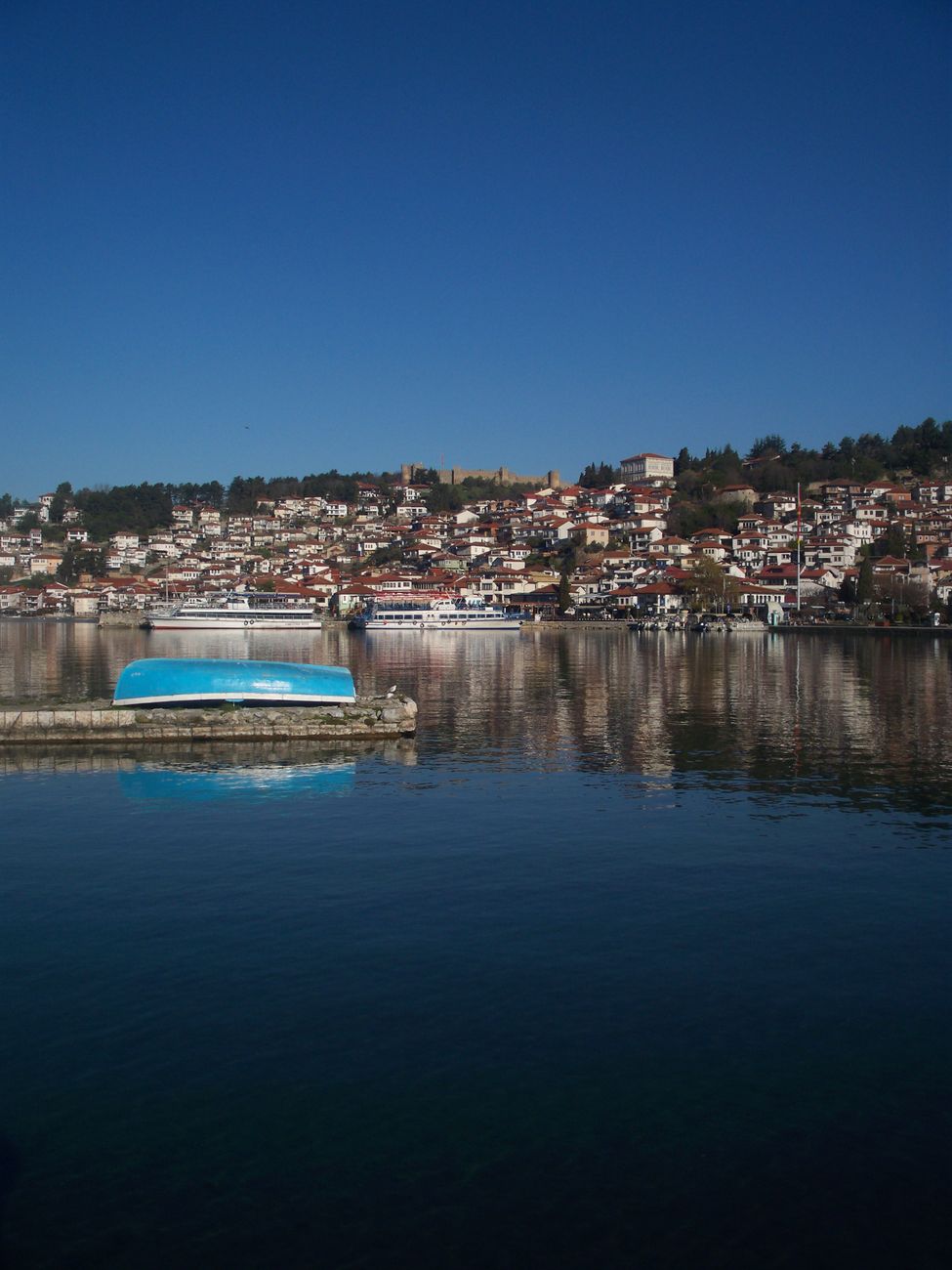
Ohrid is a small lakeside town with a concentrated Old Town, a central pedestrian Korzo, and a string of public beaches and private beaches along the lake. Tourism drives the local economy heavily in summer; small guesthouses, family-run konobas, pearl workshops, and licensed boat owners are the main beneficiaries.
The municipal transport picture is simple: the Avtobuska Stanica Ohrid is the hub for buses to Skopje, Bitola and Albanian routes. Within town, walking is the primary mode for visitors; a few municipal bus lines and shared minibuses connect peripheral beaches and suburbs. Ohrid 'St. Paul the Apostle' Airport handles seasonal flights; many arrivals use taxis or shared shuttles.
Weather matters: the warmest months are July and August with average lake surface temperatures around 23–25°C; spring and autumn are milder and less crowded. Environmental rules protect parts of the lake and archaeological sites; several beaches and the Saint Naum area lie within protected zones where boat noise and fuel discharges are regulated. Expect crowds at the Church of St. John at Kaneo and Samuil's Fortress during cruise-ship day arrivals.

How to Choose Well
Decide by weighing price, impact, and convenience. If minimizing impact is the priority, choose shoulder months (May–June or September) and use shared transport or walkable options rather than private taxis.
For visiting Saint Naum, trade off time versus cost. A licensed private boat from Ohrid Marina costs 1,000–1,500 MKD but saves a 45–60 minute minibus ride plus walking; sharing the boat lowers per-person cost. Taking the municipal bus is cheaper (ask at the station for current fare) but adds time and a small hike.
For shopping, prefer named workshops and request provenance to ensure purchases support local craftspeople. For dining, a konoba advertising 'local catch' or 'smoked trout' usually signals family supply chains; expect 400–900 MKD per person. If convenience matters more than impact, taxis from the airport (~700 MKD) are justified for late arrivals, but agree price in MKD before departure.

Responsible and Local-First Tips
Choose locally owned, named businesses and ask for receipts so money traces back to the operator. Examples: buy pearls only from labeled workshops near Korzo or Plaoshnik, order trout from family-run konobas on the waterfront, and hire boats registered at Ohrid Marina.
Use public bus services from Avtobuska Stanica Ohrid for intercity travel and municipal buses for nearby beaches when available. Renting a bicycle (around 300 MKD/day) reduces motor traffic and spreads visitors along less pressured shorelines like Gradiste.
Reduce water impact by avoiding idling engines close to reed beds and Saint Naum spring vents; when on a licensed boat, ask the operator to keep distance from sensitive areas. Bring a refillable water bottle and use taps in cafes or your guesthouse; many small shops will refill if asked politely and offered MKD.

Common Mistakes to Avoid
Relying on a taxi meter without confirming it works: taxi meters can be turned off; always agree a fare in MKD before starting or insist the driver turns the meter on. This avoids disputes on arrival.
Assuming the Church of St. John at Kaneo has unlimited access: the small shoreline below the church is fragile and crowded; do not attempt to climb or picnic on the rock face. Use nearby public spots such as the municipal beach or Gradiste for swimming instead.
Buying pearls from unlabelled stalls on Korzo without asking provenance: ask for the workshop name or a receipt, or choose an established workshop so the money supports local artisans rather than a middleman.
FAQ
How much does a typical boat trip to Saint Naum cost?
Private licensed boats from Ohrid Marina typically charge about 1,000–1,500 MKD per boat; joining a shared boat reduces cost per person. Confirm price and licensing at the marina ticket desk.
When is the best time to avoid crowds in Ohrid?
May–June and September offer fewer crowds and warm lake swimming; July–August are the busiest with higher prices and heavy beach use.
How to get from Ohrid airport to the town center and how much does it cost?
Taxis to the town center are around 700 MKD; some shared shuttle vans run 300–400 MKD per person when available. Agree the MKD fare in advance.
Where to buy genuine Ohrid pearls and how much should one expect to pay?
Buy from labeled pearl workshops near Korzo and Plaoshnik; handcrafted necklaces typically start at about 1,500 MKD. Ask for the workshop name and a receipt to confirm provenance.
Are there reliable public buses in Ohrid to reach beaches and Saint Naum?
Avtobuska Stanica Ohrid handles intercity routes; municipal buses and minibuses run seasonally to beaches and nearby villages. For Saint Naum, combining a bus with a short walk is possible, but many visitors prefer licensed boats from the marina.
How much is a meal at a family-run konoba?
Expect 400–900 MKD per person for a full meal featuring local trout or traditional dishes at a small, family-run restaurant.
Should visitors worry about environmental regulations on the lake?
Yes. Certain lake zones and the Saint Naum area have protective rules limiting where boats can anchor and speed limits to protect springs. Use licensed boat operators who adhere to local regulations.
Conclusion
The single most important thing to remember: pick shoulder months (May–June or September) and use named local providers — registered boats from Ohrid Marina, workshops near Korzo, and family-run konobas — to keep economic benefit local and reduce pressure on fragile shorelines. Walk the Old Town, use buses from Avtobuska Stanica Ohrid for longer trips, and share boats when possible to lower per-person impact.
For practical next steps, consult the companion 3 days in Ohrid itinerary to sequence Samuil's Fortress, Plaoshnik, a licensed boat trip to Saint Naum, and quieter beach time at Gradiste across three days.
How this guide was prepared
This guide was prepared through a structured research that combines destination research, geographic context, itinerary planning logic, and content review.