

Practical 3-Day Ahmadabad Itinerary: What to See and Do
A practical 3-day guide to Ahmadabad covering transit, neighbourhoods, food, museums and exact walking routes so travellers can plan each day efficiently.
A compact, honest 72-hour plan for Ahmadabad: heritage pols, street food at Manek Chowk, Sabarmati Ashram, museums and practical transit tips for a weekend visit.
A first impression on arrival: a city with layered neighbourhoods and clear contrasts between the old pols and newer commercial zones. Streets around Teen Darwaza and the pol clusters feel compact and noisy, with narrow lanes, small shops, and constant street activity. The riverside areas and newly built public riverfront offer wide promenades and a different pace.
Expect heat and dust in summer, a steady daytime rhythm in winter, and busy markets around festival seasons. Many visitors underestimate how long simple activities take here — crossing a market street or finding a historic house can absorb hours. The city suits travellers who enjoy markets, street food, textile history and walking; it disappoints those seeking a slow luxury resort-style weekend.
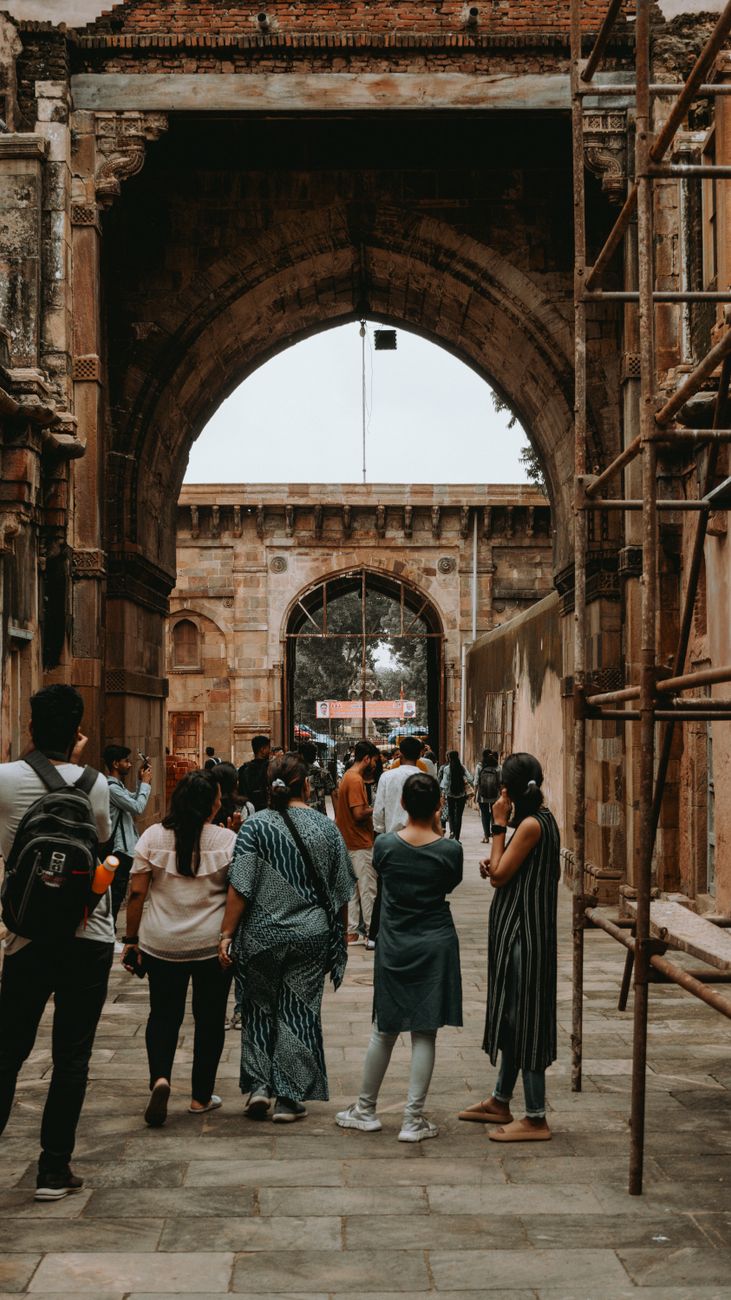
Practical realities matter: building restoration means some monuments are undergoing scaffolding, and museum timings can be strict. The most useful planning moves are slotting in one major museum per day, grouping old-city sights into a single morning or evening, and leaving one afternoon free for rest or an unplanned discovery.
Is 3 days in Ahmadabad enough?
Three days are enough to cover the old city pols, Sabarmati Ashram, Calico Museum of Textiles (pre-booked), Kankaria Lake and one nearby site like Adalaj Stepwell. One honest caveat: deep textile research or long museum visits need more time than a weekend allows.
Who This Guide Is For
Best for travellers who like walking neighbourhoods, markets, and food; poor fit for those who want a relaxed beach or wilderness break. Budget travellers and families can both manage a good trip with modest planning.
Local Tips for Ahmadabad
Practical details that most travel sites skip — specific to Ahmadabad.
- Manek Chowk changes function by time: vegetable market in the morning, jewellery hub midday, and a busy street-food bazaar from about 9pm to 1am — arrive early for shorter queues.
- Take Janmarg BRTS along Ashram Road and Drive-In Road to skip slow city traffic; single BRTS fares are low (roughly ₹8–15) and cash is accepted on board.
- Sabarmati Ashram on the river usually has no entry fee; the museum and Gandhi memorabilia can charge a small token fee for photography, and opening hours are roughly 8:30am–6pm.
- Calico Museum of Textiles requires advance booking through its official website and restricts camera use; plan a 2–3 hour visit and reserve at least a week ahead when possible.
- Kankaria Lake has several paid attractions (toy train, zoo, tethered balloon) with small separate charges; expect ₹50–300 per activity depending on the ride.
How This Guide Was Prepared
This guide treats Ahmadabad as a working Indian city with serious heritage districts and an active food culture rather than a tagline-packed sightseeing catalogue. Many guides either over-romanticize the old pols or reduce the visit to a handful of monuments; this guide balances the textile history, the living neighbourhoods, and the transport realities that shape a short visit. This guide was prepared through a structured research that combines destination research, geographic context, itinerary planning logic, and content review.
Plan Your Stay in Ahmadabad
Use this itinerary as your starting point, then compare areas to stay, transport options, seasonal timing, and realistic daily costs before booking.
Why Visit
Textiles: the Calico Museum of Textiles and several private workshops preserve weaving and printing traditions that shaped the city's economy. Seeing an archive collection at Calico or a small block-print studio gives context missing from shorter itineraries.
Heritage pols and architecture: the clustered pol neighbourhoods around Teen Darwaza and Shastrinagar show traditional urban living with carved wooden facades and courtyard houses. The Sidi Saiyyed Mosque's stone latticework is a single iconic reason to come, but the surrounding lanes reveal daily life.
Riverfront and civic energy: the Sabarmati Riverfront is an engineered public space that changed how people use the river edge, with walkers, cyclists and evening stalls. Public projects such as Science City and Kankaria Lake offer family-friendly attractions that contrast with the old city.
Food culture: a dynamic late-night street-food scene at Manek Chowk and decades-old family eateries around Ellis Bridge and Relief Road make eating a central part of the visit.

Quick Planning Tips
Best airport transfer: from Sardar Vallabhbhai Patel International Airport, expect a taxi or app ride (Ola/Uber) of 30–50 minutes depending on traffic; many drivers prefer cash. From Ahmedabad Junction railway station, autos to central areas like Ellis Bridge or Teen Darwaza take 10–20 minutes.
Payment tip: cash is still widely used for small stalls in the old city; carry smaller notes (₹10, ₹20, ₹50). Digital payments work at restaurants and stores, but connectivity and QR acceptance vary in narrow lanes.
One planning mistake to avoid: assuming every museum accepts walk-ins. Calico Museum and some private textile workshops require advance booking. Also avoid scheduling long walks in the midday heat between April and June; shift old-city walking to morning or late afternoon.

Day 1
Morning: Start in the old walled city at Teen Darwaza, then walk to Bhadra Fort (5–10 minutes on foot). Spend 45–60 minutes exploring the fort walls and the nearby temple and mosque precincts. From Bhadra, walk 5–10 minutes to Sidi Saiyyed Mosque to see the famous stone jali window; narrow lanes between these sites are slow going, so allow extra time.
Late morning: Walk 10 minutes to the Calico Museum of Textiles area (booked visits only). Allocate 2–3 hours for the museum and nearby private textile showrooms; return taxi or auto from Calico to Ellis Bridge is about 15 minutes in moderate traffic.
Lunch: Eat at Agashiye (for a sit-down Gujarati thali, on top of a heritage hotel near Ellis Bridge) or try C.G. Road eateries for a quicker, cheaper meal. Expect a thali to cost ₹450–800 per person at mid-range restaurants.
Afternoon: Cross over to the Sabarmati Ashram (20–25 minutes by auto from Ellis Bridge) for a reflective walk and museum exhibits; spend 60–90 minutes. From the Ashram, a short auto ride (10–15 minutes) brings you to Law Garden for a quick look at stalls selling handicrafts.
Evening: Head to Manek Chowk for night food after 9pm. Sample local snacks such as pav bhaji, khandvi, and jalebi from stalls clustered in the square. Expect queues on weekends; arrive by 9pm or be prepared to wait.

Day 2
Morning: Start at Kankaria Lake; take the toy train and stroll the promenade. Allow 1.5–2 hours to visit Bal Vatika and the small zoo if interested; the lake precinct is lively at morning and evening. From Kankaria, take an auto or BRTS to Science City (around 20–30 minutes by road depending on traffic).
Late morning: Spend 2–3 hours at Science City exploring the Hall of Space, energy parks and model galleries. This is a different pace from the old city and good for families and science-minded travellers. Budget an hour for travel time between Kankaria and Science City by auto.
Lunch: Try Café in Science City or return toward SG Highway for a casual meal at a chain café; expect a meal for two around ₹600–1,200.
Afternoon: Visit the Adalaj Stepwell (Adalaj ni Vav) about 25–35 minutes by road from Science City; explore for 45–60 minutes and photograph the carved stonework. From Adalaj, head back toward the city and stop at the Calico textile showrooms on the way if appointments permit.
Evening: Return to CG Road or SG Highway for dinner at a larger restaurant or brewery if preferred. Alternatively, experience local snacks around Sindhi Market or drive to Law Garden bazaar for street shopping and late evening food.

Day 3
Morning: Reserve early hours for an official heritage walk starting at Teen Darwaza (usually around 7:30am) that covers the pols, courtyard houses and local markets; the walk lasts 1.5–2 hours and saves time because guides point out doors that are otherwise easy to miss. After the walk, visit a local breakfast stall for khaman or fafda.
Late morning: Head to the Calico Textile district or a private workshop visit (if not already done), or choose a short visit to the Textile Market near Relief Road to browse block-printed fabrics and bandhani. Travel time: allow 20–30 minutes by auto between old city and Relief Road area.
Lunch: Have a late lunch at Manek Chowk area cafés or at a restaurant on Relief Road; street snacks remain an option for faster service. Expect a quick street-food meal to cost ₹80–250.
Afternoon (if catching an afternoon flight or train): Keep the final afternoon light — pack, check out, and allow 45–60 minutes from central areas to the railway station or 30–50 minutes to the airport by taxi. If time allows, a short stop at the Riverfront promenade for photos is an easy, flexible final sight.
Evening: For those with later departures, consider a relaxed dinner on SG Highway or return to Kankaria Lake after sunset for the lighted promenade and food stalls.
Best Local Experiences
Manek Chowk night food market — sample jalebi, pav bhaji, dosas and the local khaman at stalls that open after 9pm. The experience is crowded and best with short waits or a local guide.
Calico Museum of Textiles — book in advance to see rare fabrics and archive pieces; photography is restricted and tours are scheduled. A visit clarifies why the city was a textile centre.
Heritage walk through the pols (Teen Darwaza to Bhadra Fort) — a guided walk that shows courtyard homes, wooden facades and old civic life; morning tours reduce midday heat.
Sabarmati Ashram visit — the Gandhi museum, prayer grounds and simple living spaces are compact and require 60–90 minutes. Quiet mornings work best.
Kankaria Lake activities — toy train, zoo and evening food stalls; the tethered balloon ride offers a different city vantage point. These are family-friendly options and differ from the old city pace.
Additional experiences: a day trip to Adalaj Stepwell for carved stonework; exploring textile workshops around Shahpur and Relief Road for block-printing and dyeing demonstrations.

Where to Stay
Old City / Teen Darwaza area: suits travellers who want immediate walking access to pols, Manek Chowk and heritage walks. Rooms are often in guesthouses or heritage hotels; expect ₹1,200–3,000 per night (INR) which is about €13–35 / $14–38 depending on standards.
Ellis Bridge / Relief Road / Ashram Road: a mid-range option with easier access to Sabarmati Ashram, Calico Museum and main shopping streets. This area suits those who want a mix of heritage and modern amenities; nightly rates roughly ₹2,000–5,000 (INR) / €22–55 / $24–60.
SG Highway / Satellite / Science City area: best for families and those visiting Science City or Kankaria; offers newer hotels and chain options with larger rooms and parking. Expect ₹2,500–6,000 (INR) / €28–66 / $30–72 per night.
Choosing tips: book old-city stays with a review-checked entrance (some lanes are narrow and auto drop-offs are limited). For quieter nights and easier airport transfers, choose SG Highway or Ashram Road hotels.
Food and Drink
Khaman and dhokla — steamed gram batter snacks, soft and tangy; find good versions at old-city stalls and breakfast shops near Teen Darwaza for ₹20–60 per portion.
Khichu and fafda — street snacks often eaten with chutney; try them at morning stalls in the old city or at dedicated snack shops around Law Garden for ₹30–80.
Gujarati thali — a multi-dish meal featuring rotla, dal, shaak and farsan; try a quality thali at Agashiye (heritage hotel rooftop) or Bhavan's Restaurant. Expect ₹400–900 per person at mid-range venues.
Street-food at Manek Chowk — must-try items include pav bhaji, dosa, and jalebi. Portions are inexpensive (₹30–150) but queues can be long on weekends.
Khaja and mithai shops — sweet shops near Ellis Bridge and Relief Road sell regional sweets such as ghari and ladoo; a box costs ₹200–600 depending on size.
Breakfast option: local bakeries near Ellis Bridge and C.G. Road sell fresh bun maska and chai for around ₹40–120. Dinner recommendation: a sit-down Gujarati thali or a multi-cuisine restaurant on SG Highway for more comfort and variety.
Getting Around
Transit modes: city buses (AMTS), Janmarg BRTS corridors, and the Ahmedabad Metro (operational corridors in Phase 1). For short hops, auto-rickshaws and app taxis (Ola, Uber) are widely available. Walking is essential in the old city where vehicles cannot enter narrow lanes.
Ticketing and fares: AMTS and BRTS single fares are low (roughly ₹5–15 depending on distance). Ahmedabad Metro single fares vary by distance (approx ₹10–60). Autos typically start around ₹25–40 and add per kilometre; negotiate or insist on the meter for short trips.
Apps and cards: use Ola/Uber for point-to-point trips. For buses and BRTS, check the Chalo app for route info and live arrivals. Ahmedabad Metro has its own mobile information and token/card system at stations; purchase tokens at station counters if in doubt.
Airport taxi: expect a metered or app taxi from Sardar Vallabhbhai Patel International Airport to central areas to cost roughly ₹400–800 depending on time and traffic. Allow extra time for rush-hour travel.
Best Time to Visit
November to February (winter): coolest months with daytime temperatures around 18–28°C and comfortable evenings; this is peak tourist season and prices for popular hotels are higher. Festivals such as Uttarayan (kite festival) in January attract crowds and limited accommodation availability.
March to April (spring to early summer): temperatures climb into the low 30s°C; crowds thin slightly after the winter peak and hotel rates become more moderate. Good for those who want lower crowds but tolerable heat.
May to June (hot season): daytime highs regularly exceed 38–42°C; outdoor walking becomes tiring and midday museum visits are preferable. Avoid heavy outdoor plans during these months unless prepared for heat.
July to September (monsoon): heavy monsoon rains reduce dust and heat but can cause localized flooding and slow road travel; humidity is high and outdoor sightseeing can be disrupted. Best value months are March–April and September when rates drop but conditions remain acceptable.
Budget and Practical Tips
Daily budget example (mid-range traveller) per person: accommodation ₹2,000–4,000 (INR) / €22–44 / $24–48; food ₹500–1,200 / €6–13 / $6–15; local transport ₹200–600 / €2–7 / $2–7; entry fees and activities ₹200–1,000 / €2–11 / $2–12. A tighter budget traveller can reduce accommodation to ₹800–1,500 and food to ₹300–600 per day.
Entry fees: Calico Museum requires booking and may have a higher visitor fee than small municipal museums; Kankaria attractions and Science City have small per-ride or per-gallery charges (₹50–300). Keep small change for these sites.
Tipping and payments: tipping in restaurants is appreciated but not mandatory — 5–10% is common at full-service restaurants. For drivers, rounding up or adding ₹20–50 for short trips is normal. Carry small notes for market purchases and street food.
Practical packing: bring sun protection and a refillable water bottle; heat and dust can wear down a day if unprepared. For heritage visits, wear shoes that are easy to remove and carry a photocopy of any pre-booking confirmations for museum entry.
FAQ
Is Ahmadabad safe for solo travellers?
Yes; central areas and the old city are generally safe in daylight and early evening. Usual precautions apply: avoid poorly lit lanes late at night and keep valuables out of sight.
How to get from the airport to the city center?
App taxis (Ola/Uber) and prepaid airport taxis are the most reliable; travel time is typically 30–50 minutes and fares range ₹400–800. Some hotels offer airport transfers if arranged in advance.
Is there a city card or tourist pass worth buying?
No widely used single city tourist pass covers all attractions; individual tickets and museum bookings are more common. Save time by pre-booking Calico Museum and Science City online where available.
Can the old city be explored entirely on foot?
Much of the old city is walkable, but narrow lanes and heat make multiple short loops preferable. Use autos to move between major clusters like Teen Darwaza, Bhadrakali, and Relief Road.
Are credit cards accepted widely?
Restaurants, hotels and larger shops accept cards, but street stalls, night food vendors and some small shops prefer cash.
What are good transport apps to use locally?
Ola and Uber for point-to-point trips; Chalo for bus/BRTS info; consult Ahmedabad Metro station counters for token and card details.
Is tap water safe for drinking?
Tap water is generally not recommended for visitors; opt for bottled water or refill from trusted filtered-water stations at hotels or restaurants.
When is Manek Chowk busiest and how to avoid long waits?
Weekends and festival nights are busiest; arrive by 9pm or go earlier in the evening to avoid the longest queues.
Conclusion
A three-day stay will leave a clear sense of the city's two main faces: the old pol neighbourhoods with their street life and the newer civic projects that shape public leisure. Most travellers remember the contrast between late-night food in Manek Chowk and the quiet of Sabarmati Ashram at dawn.
If time runs short, prioritise one heritage walk around Teen Darwaza or Bhadra Fort plus a booked visit to the Calico Museum; those two elements explain why the city matters as a textile and civic centre. Plan mornings for walking and reserve afternoons for museums, rest or longer drives to sites like Adalaj.
How this guide was prepared
This guide was prepared through a structured research that combines destination research, geographic context, itinerary planning logic, and content review.