

Getting Around Khett Siem Reab (Siem Reap) — Practical Transport Guide
Practical, responsible tips for getting around Khett Siem Reab (Siem Reap): tuk‑tuks, bikes, airport transfers, Angkor logistics, schedules, fares, and low‑impact options to pair with the 3 days in Khett Siem Reab itinerary.
Clear, local‑first advice for moving around Khett Siem Reab: how to reach Angkor, where to hire tuk‑tuks, safer cycling routes, seasonal timing, and smart bookings that support local drivers and guides.
Quick Answer
Clear, local‑first advice for moving around Khett Siem Reab: how to reach Angkor, where to hire tuk‑tuks, safer cycling routes, seasonal timing, and smart bookings that support local drivers and guides.
Who This Page Is For
This page is for travelers planning a stay in Khett Siem Reab who want clearer decisions about getting around, local logistics, timing, budgeting, and practical trip planning.
How This Page Was Prepared
This page was prepared through a structured editorial workflow that combines destination research, geographic context, and practical travel-planning review.
Plan the Rest of Your Trip
Use this page together with the full itinerary and the related planning pages below to make better booking, timing, transport, and budget decisions.
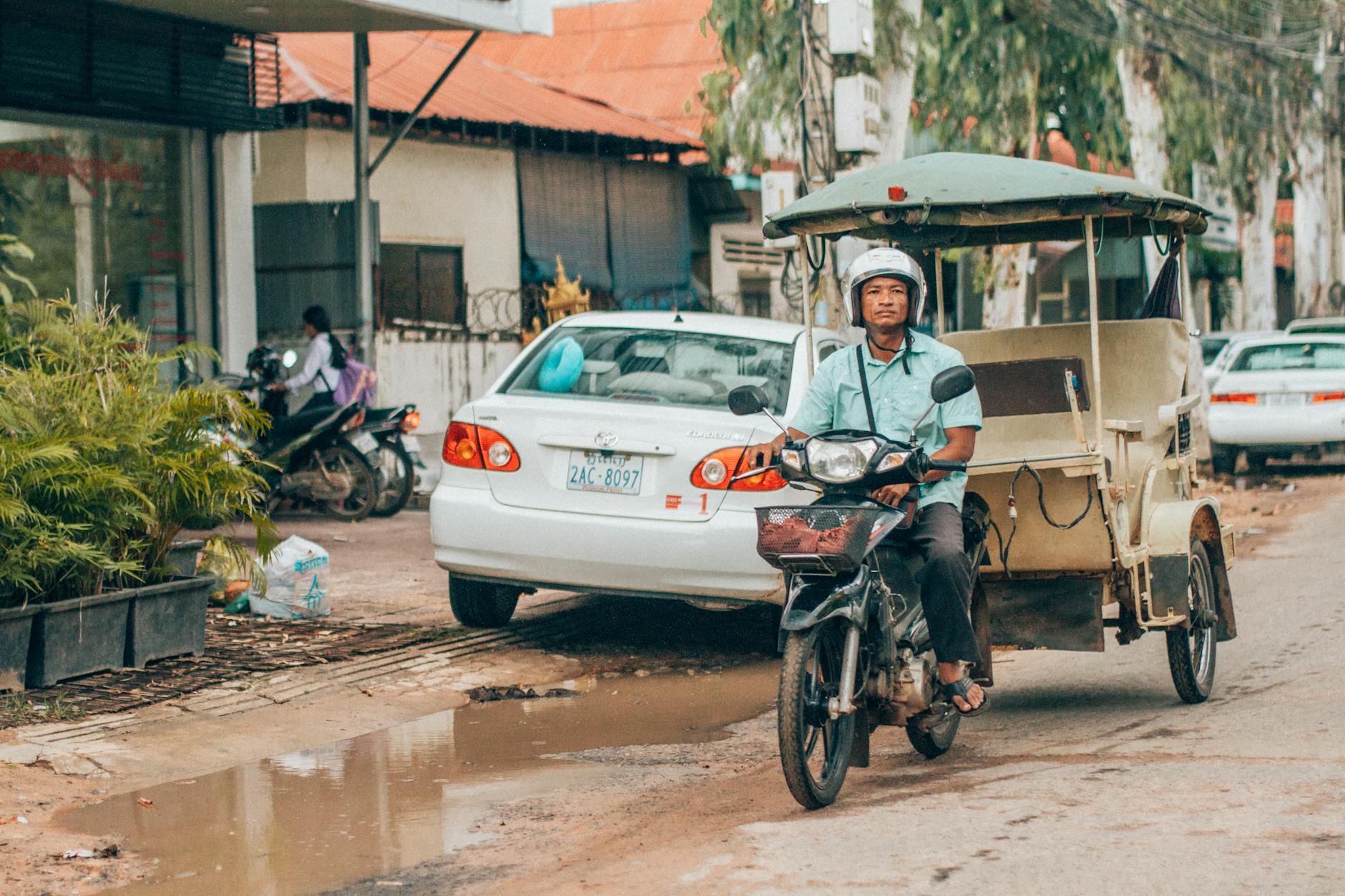
For short distances around town, tuk‑tuks are the most flexible option; they’re inexpensive and support local drivers. For temple visits choose a trusted full‑day tuk‑tuk driver, rent a bicycle or an e‑bike for low‑impact exploration, or join a small shared minivan for longer transfers. Use guesthouse recommendations for reliable drivers and book airport transfers through your hotel when possible for a smoother arrival.
Khett Siem Reab (often called Siem Reap) is compact but its main sights—especially the Angkor Archaeological Park—are spread out. This page gives practical, low‑impact options for short stays and for linking into the companion 3 days in Khett Siem Reab itinerary. Expect short rides across town, longer transfers to temples, and seasonal variability that affects comfort and road conditions.
What This Page Helps You Decide
This guide helps you choose the right transport for: short town runs and evening meals, half‑ or full‑day trips to Angkor, airport and intercity transfers, and sustainable options that support local businesses.
Use it with the 3 days in Khett Siem Reab itinerary to decide which days to walk, bike, or book a driver.
Key outcomes:
– How to get from Siem Reap–Angkor airport to town reliably.
– When to hire a driver vs. self‑guided cycling.
– How to plan sunrise/sunset temple visits efficiently.

Top Recommendations
For first‑time visitors:
– Hire a trusted tuk‑tuk driver for a full day to visit Angkor (driver waits and can recommend timings). Agree a clear price and route beforehand.
– Rent a bicycle or an e‑bike (preferably from a guesthouse or a shop that maintains batteries and helmets) for short trips and nearby temples like Wat Bo and the Old Market.
– Book airport transfers through your hotel to support local drivers and avoid haggling on arrival.
– For intercity travel to Phnom Penh or coastal cities, choose daytime buses with reputable operators or private transfers arranged by a local agency.
Practical tip: if you’re following the 3 days in Khett Siem Reab plan, reserve your Angkor day(s) and tuk‑tuk in advance for peak season and shoulder‑season mornings.

Local Context
Neighborhoods and flows:
– Old Market (Psar Chaa) and Pub Street are the town’s focal points for food and nightlife and are best reached on foot or by short tuk‑tuk rides.
– Svay Dangkum and Wat Bo are popular neighborhoods with guesthouses and bikeable streets.
– Angkor temples lie north and northwest of town; distances mean multiple short drives each day if you hop between sites.
Seasonal realities:
– Dry season (Nov–Apr) is busiest and cooler; book drivers and accommodations early.
– Monsoon (May–Oct) brings heat followed by heavy afternoon showers — roads to smaller villages can be muddy.
– Shoulder seasons (late Sep–Nov and Apr–May) have fewer tourists and can be the best compromise for lower impact travel.
Etiquette and safety:
– Dress modestly at temples (shoulders and knees covered).
– Ask permission before photographing people, especially monks.
– Helmets aren’t always standard for motos/tuk‑tuks; request one and prioritize drivers who offer them.
How to Choose Well
Match mode to purpose:
– Short errands and evening meals: walk or use a short tuk‑tuk ride; expect 1–3 USD inside town after a brief negotiation.
– Angkor temple days: full‑day tuk‑tuk (commonly a set day rate) or shared small‑group tours that combine transport and a licensed guide.
– Active sightseeing: bike or e‑bike for flat, quiet streets and to visit riverside paths; avoid cycling between distant temple clusters in midday heat.
– Intercity travel: reputable daytime buses or private cars—book through established operators or your hotel to ensure proper breakdown support.
Booking tips:
– Ask guesthouses for recommended drivers by name and phone number; repeat bookings help drivers and reduce deadheading.
– Confirm prices in writing (text or app) when possible and include waiting time, fuel, and any tolls or parking fees.
– For Angkor sunrise, plan a pickup at least 30–45 minutes before official sunrise and budget for the driver’s wait time.

Responsible and Local-First Tips
Support local livelihoods and reduce impact:
– Use local tuk‑tuk drivers and small guesthouse‑owned rental shops rather than international chains.
– Prefer shared transfers or combine pickups so drivers make fewer unnecessary trips.
– Choose e‑bikes or well‑maintained push bikes for short legs instead of motorized trips when feasible.
– Tip fairly: small cash tips matter; add 10–20% for full‑day drivers who act as informal guides.
– Avoid littering and follow temple rules; keep to marked paths and avoid touching fragile structures.
– When booking day trips to floating villages, choose operators that pay entry or landing fees to the local communities and avoid incentivizing tourist behaviors that disrupt daily life.
Common Mistakes to Avoid
Avoid these frequent errors:
– Leaving Angkor booking to the last minute during high season; drivers and guides sell out early.
– Cycling long distances midday without water or sunscreen—temperatures rise quickly.
– Accepting ambiguous prices—always confirm total cost and waiting time before the ride.
– Relying solely on unfamiliar ride‑hail apps; availability can be spotty outside town center and apps may surge without alternatives.
– Underestimating transport time between temples—build buffer time into your 3‑day plan to avoid rushed visits.
– Paying drivers in foreign currency when they prefer local riel or U.S. dollars; clarify accepted currency in advance.
FAQ
How far is Angkor Wat from Siem Reap town center?
Angkor Wat is about 6–8 km from the town center depending on your starting point; expect a 10–20 minute tuk‑tuk ride without traffic.
Is it safe to rent a motorbike in Siem Reap?
Experienced riders can rent motorbikes, but road conditions and local driving norms mean it’s safer for confident drivers only. Helmets and insurance are important; check the bike for basic maintenance and consider opting for an e‑bike or tuk‑tuk if unsure.
What’s a typical tuk‑tuk rate for a half‑day or full‑day temple run?
Rates vary by season and negotiation. As a guideline, many drivers offer full‑day Angkor tours at a fixed rate—confirm this with your guesthouse. Always clarify waiting time and whether entrance fees are included (they usually are not).
Can I use Grab or other apps in Khett Siem Reab?
Ride‑hailing apps operate unevenly outside Phnom Penh. Apps like PassApp may work in town, but availability fluctuates. Rely on guesthouse contacts for reliable in‑town or Angkor drivers.
How can I get to Phnom Penh or the coast sustainably?
Choose reputable daytime buses with clear refund and safety policies, or a shared private transfer that consolidates passengers. Trains are limited; buses and private cars remain the primary intercity options.
Conclusion
Khett Siem Reab is easy to navigate when you match transport to purpose and season. Prioritize local drivers and guesthouse recommendations, consider bikes or e‑bikes for short trips, and book Angkor days in advance to reduce stress and support local livelihoods. Use this guide alongside the 3 days in Khett Siem Reab itinerary to plan efficient, low‑impact days and smooth transfers to nearby destinations like Phnom Penh, Preah Seihanouk, or cross‑border trips into Thailand.
How this guide was prepared
This guide was prepared through a structured research that combines destination research, geographic context, itinerary planning logic, and content review.