
Marbella travel budget: realistic daily costs and money-saving tips
Practical Marbella budget guide with daily cost ranges, transport options from Málaga airport, food prices, tipping norms and five city-specific savings tips.
Practical daily budgets for Marbella with concrete price ranges for accommodation, food, transport and attractions. Includes money-saving tactics like using ALSA/Correos bus routes, Museo Ralli free entry, La Cañada supermarkets and where to find cheap menu del día lunches.
Marbella travel budget?
Expect to pay about €70–€250 per day in Marbella depending on style: budget ~€70/day, mid-range ~€140/day, comfortable ~€250/day. A one-way bus from Málaga Airport to Marbella costs around €8 with ALSA or Avanza; taxis are typically €60–€80.
Who This Page Is For
This page is best for travellers planning a 2–5 day stay in Marbella who want concrete per-day budgets and local saving tactics. It is less useful for travellers staying long-term, luxury-property renters, or those who only plan to transit through Málaga airport.
Key Takeaways for Marbella
- Budget daily range: €60–€90 (hostel or budget hotel €30–€55, food €15–€25, local transport €5–€10, attractions €5–€10, incidentals €5–€10).
- Mid-range daily range: €110–€170 (hotel €80–€130, food €25–€40, transport €10–€20, attractions €10–€20, incidentals €10–€20).
- Comfortable daily range: €200–€320 (hotel €150+, food €40–€70, transport/taxis €20–€35, attractions €20–€40, incidentals €20–€40).
- Airport transfer options: ALSA/Avanza one-way bus from Málaga Airport to Marbella ~€8; Cercanías C1 to Fuengirola + bus is often cheaper than a direct taxi (€8 vs ~€70 taxi).
How This Page Was Prepared
This page was prepared through a structured editorial workflow that combines destination research, geographic context, and practical travel-planning review.
Plan the Rest of Your Trip
Use this page together with the full itinerary and the related planning pages below to make better booking, timing, transport, and budget decisions.
A practical baseline: budget travellers should plan about €60–€90 per day, mid-range travellers about €110–€170 per day, and comfortable travellers about €200–€320 per day. Include in those totals an airport transfer: ALSA or Avanza direct bus from Málaga Airport to Marbella costs roughly €8 one-way; a taxi will commonly be €60–€80 depending on luggage and time. For saving, use the Cercanías C1 to Fuengirola and then a local bus to Marbella for a similar low-cost transfer, eat menu del día lunches (€10–€15) at local bars, and plan hotel stays outside Puerto Banús or the Golden Mile (San Pedro Alcántara, Elviria or areas around Avenida Ricardo Soriano offer lower nightly rates). Expect the highest prices in July and August and on weekends when regattas or events at Puerto Banús drive hotel and restaurant rates up.
This page answers a simple practical question: how much will a typical day in Marbella cost and where to save without sacrificing local experience. Many visitors underestimate two facts: Marbella has no passenger train station, and prices spike sharply in July and August on the Golden Mile and in Puerto Banús. Small differences change budgets fast: a taxi from Málaga Airport to Marbella can run around €60–€80, while the bus is about €8 one-way. Accommodation is the single biggest variable: a private budget room in San Pedro Alcántara or near Avenida Ricardo Soriano can be €30–€55; a room on the Golden Mile or in Puerto Banús will usually be €150+. This guide breaks daily budgets into accommodation, food, local transport, attractions and incidentals, lists concrete money-saving tactics tied to Marbella, and explains tipping norms and seasonal trade-offs. The aim is a clear, verifiable daily number so budget decisions match real neighbourhood prices.
What This Page Helps You Decide
This guide helps choose a daily budget target and where to allocate spending in Marbella. Decisions covered include whether to: book a cheaper hotel in San Pedro Alcántara or spend more for Puerto Banús; take the ALSA/Avanza bus for €8 from Málaga Airport or pay a taxi of €60–€80; eat tapas and menu del día lunches (€10–€15) versus dining at upscale restaurants on the Golden Mile (€30+ per person); invest in a rental car for day trips to Ronda and Estepona versus relying on buses and taxis. Also covered is when to visit to get real savings (shoulder seasons like April–June and September–October) and which local purchases cut costs (supermarket shopping at Centro Comercial La Cañada, buying water and snacks rather than relying on beach kiosks). The recommendations give concrete per-day figures so a target budget can be set before booking hotels or transits.
Top Recommendations
Daily budget breakdowns (EUR and approximate USD at €1 = $1.10; exchange rates vary):
- Budget traveller (€/USD): total €60–€90 (~$66–$99)
- Accommodation: €30–€55 (small guesthouse or budget hotel in San Pedro Alcántara or near Avenida Ricardo Soriano).
- Food: €15–€25 (breakfast €3–€6, menu del día lunch €10–€12, tapas/snacks €2–€6).
- Local transport: €5–€10 (single bus rides or shared short taxis).
- Attractions: €5–€10 (paid small museums or boat trips; many beaches free).
- Incidentals: €5–€10 (water, sunscreen, small purchases).
- Mid-range traveller (€/USD): total €110–€170 (~$121–$187)
- Accommodation: €80–€130 (3-star hotel near Old Town, or mid-range on the Golden Mile outskirts).
- Food: €25–€40 (breakfast and a mix of menu del día and evening restaurants; seafood in chiringuitos €12–€25).
- Local transport: €10–€20 (occasional taxi, local bus, short airport shuttle shared transfers).
- Attractions: €10–€20 (entry fees, guided walks, small boat trips).
- Incidentals: €10–€20.
- Comfortable traveller (€/USD): total €200–€320 (~$220–$352)
- Accommodation: €150+ (4-star hotel or boutique stay on the Golden Mile or Puerto Banús).
- Food: €40–€70 (dinner at mid-to-high end restaurants, seafood at Puerto Banús, cocktails).
- Local transport: €20–€35 (taxis, car hire split across days, private transfers).
- Attractions: €20–€40 (day trips to Ronda, guided boat trips, paid tours).
- Incidentals: €20–€40.
Five concrete city-specific money-saving tactics:
– Book Málaga Airport transfers via the ALSA or Avanza apps for the Málaga–Marbella coach; single fares are typically around €8 and advance purchase often discounts the fare.
– Take Cercanías line C1 from Málaga Centro-Alameda to Fuengirola (tickets ~€2.50–€4.00) and then the local bus from Fuengirola to Marbella when schedules match; this can cut airport transfer costs compared to a taxi.
– Use Mercado Municipal de Marbella for groceries and inexpensive cooked dishes; buy fresh fruit, cheeses and bread to reduce food spend versus daily restaurant breakfasts.
– Visit Museo Ralli in Puerto Banús (commonly free entry) and plan on municipal museum free times—check current free-entry days at Museo del Grabado Español Contemporáneo to save on attraction costs.
– Hunt for menu del día at local bars on Avenida Ricardo Soriano and in Casco Antiguo where a 2-course lunch with drink runs €10–€15; avoid ordering à la carte at beachfront restaurants at midday.
Tipping norm: Round up small bills in cafés and for taxi fares; leave about 5–10% in restaurants when service warrants it. For guided private tours, 5–10% is normal. No mandatory service charge is standard across Marbella venues.

Local Context
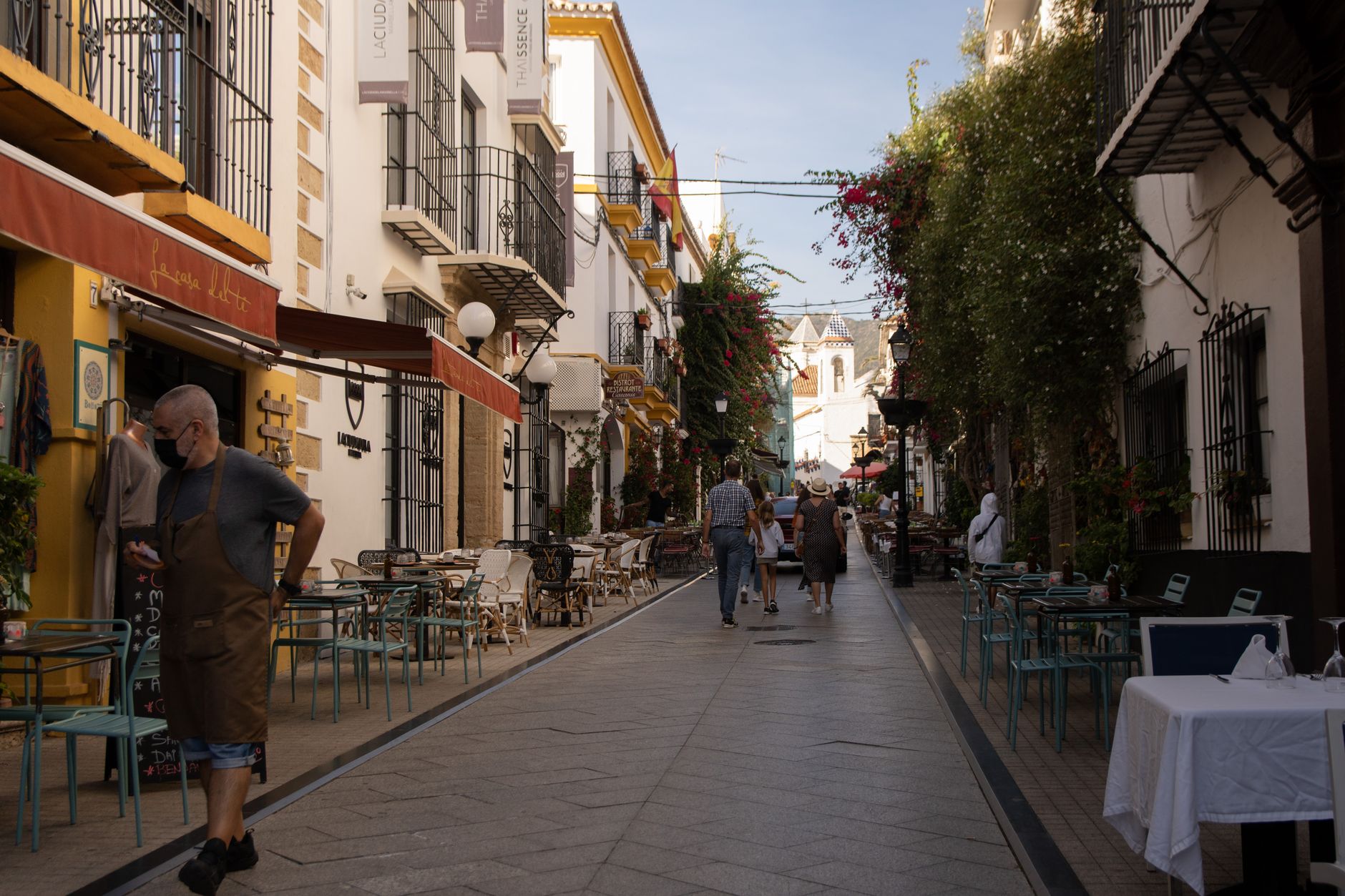
Marbella sits on the Costa del Sol and the local economy swings strongly with seasons. Peak months are July and August when hotel rates on the Golden Mile and in Puerto Banús often double compared with April–June or September. Shoulder seasons (April–June, September–October) combine lower prices with pleasant beach weather and fewer crowds. The Old Town (Casco Antiguo) around Plaza de los Naranjos is pedestrian-friendly and has many mid-priced restaurants and bars; prices there are typically lower than in Puerto Banús or on the Golden Mile seafront.
Public transport options are limited compared to big cities. There is no rail station in Marbella; the nearest Cercanías rail line ends in Fuengirola. Long-distance and airport coaches by ALSA and Avanza serve Marbella directly, and a network of local buses and taxis link neighbourhoods like Nueva Andalucía, San Pedro Alcántara and Elviria. Supermarket chains such as Mercadona and Carrefour Express inside Centro Comercial La Cañada keep grocery costs down. Beaches like Playa de la Fontanilla and Playa de Venus are free, while private beach clubs in Puerto Banús and parts of the Golden Mile charge for sunbeds and services. Local dishes to prioritise for cost and authenticity include espetos (sardines grilled on a skewer), pescaíto frito (small fried fish), and the typical Andalusian menu del día lunches.

How to Choose Well
Decide prime trade-offs by location, comfort and transport. Location: staying in Casco Antiguo or near Avenida Ricardo Soriano saves walking time to restaurants and shops and generally lowers nightly rates compared with Puerto Banús or the Golden Mile. Comfort vs cost: a €30–€55 budget room will be smaller and often without breakfast; adding €30–€60/night typically upgrades to a 3-star with breakfast included. Transport choices: a rental car gives freedom for day trips to Ronda and Estepona but adds parking and fuel costs (and stress) — budget €30–€60/day for a small car in low season, more in summer. Using ALSA/Avanza coaches and local buses reduces daily transport costs to a few euros.
Timing: pick April–June or September–October for the best price-to-weather ratio. If visiting in July–August, expect hotel prices to be 1.5–2x and book at least 2–3 months ahead. If the primary aim is beach time and Puerto Banús nightlife, accept higher accommodation costs; if the focus is walking the Old Town and day trips, a base in San Pedro Alcántara or Elviria gives better value. For short stays of 2–3 days, prioritize location near the Old Town to reduce transit time and incidental taxi fares.
Responsible and Local-First Tips
Support local businesses and reduce impact by choosing neighbourhood cafés and family-run bars in Casco Antiguo over large chain restaurants in Puerto Banús. Buy produce and prepared foods at Mercado Municipal de Marbella and cook simple meals in self-catering accommodation when possible. Prefer local chiringuitos for a seafood meal—ask for seasonal catches rather than imported seafood. Take registered taxis or official transfer companies when arriving from Málaga airport rather than unlicensed offers; use the ALSA or Avanza apps for confirmed rides.
Avoid single-use plastic on beaches by bringing a refillable water bottle; many bars and cafés will refill bottles for a small charge or with a purchase. Hire local guides for paid tours to ensure money goes to residents; ask for Spanish-language or bilingual guides when available to support local employment. When attending events at Puerto Banús or private beach clubs, check whether entrance fees support local services and consider daytime visits to public beaches where spending supports local food stalls and vendors.

Common Mistakes to Avoid
Mistake 1: budgeting only for headline hotel rates and ignoring transfer costs. A cheap room that saves €30/night can be offset by a €60 taxi from Málaga airport. Compare ALSA/Avanza coach costs (~€8) and Cercanías + local bus options before assuming a taxi is necessary.
Mistake 2: staying in Puerto Banús because of pictures of yachts. That area increases nightly rates and meal prices; walking back from Puerto Banús to cheaper neighbourhoods is impractical late at night and taxi fares add up.
Mistake 3: assuming beaches and services are uniformly cheap. Public beaches like Playa de Venus are free, but sunbed rental and beach club services on parts of the Golden Mile and Puerto Banús can be €15–€35 per person. Confirm prices before sitting down at a beach club or paying for sunbeds to avoid surprises.
FAQ
How much should I budget per day for Marbella?
Plan €60–€90/day for budget travel, €110–€170/day for mid-range, and €200–€320/day for comfortable travel; these include accommodation, food, local transport and modest activities.
What is the cheapest way to get from Málaga Airport to Marbella?
Book an ALSA or Avanza coach from Málaga Airport to Marbella (one-way ~€8). A cheaper option can be Cercanías C1 to Fuengirola (ticket ~€3) followed by a local bus to Marbella if schedules align.
Are there free or low-cost attractions in Marbella?
Yes. Beaches such as Playa de la Fontanilla and Plaza de los Naranjos in the Old Town are free. Museo Ralli in Puerto Banús often offers free entry; check current opening hours before visiting. Walking the Old Town and coastal promenades costs nothing.
When is the cheapest time to visit Marbella?
April–June and September–October are the best months for lower hotel rates and good weather. July and August are peak and significantly more expensive.
How much should I tip in restaurants and taxis?
Round up small bills in cafés and leave 5–10% in restaurants if service is good. Taxis are usually rounded up to the next euro or left a few euros extra for luggage help.
Is a rental car necessary in Marbella?
Not strictly. For staying within Marbella and neighbouring beaches, walking, local buses and taxis suffice. A rental car is helpful for day trips to Ronda or inland Andalucía but adds fuel and parking costs.
Where are the best places to eat on a budget?
Look for menu del día at bars along Avenida Ricardo Soriano, small eateries in Casco Antiguo and fish stalls at Mercado Municipal de Marbella where lunches run about €10–€15.
Conclusion
The single most important thing to remember is that location and season drive costs in Marbella. Choose a neighbourhood (Casco Antiguo or San Pedro Alcántara for value; Golden Mile or Puerto Banús for convenience and higher prices) and pick travel dates in shoulder season to stretch a modest budget. Use ALSA or Avanza coaches or Cercanías + bus to reduce airport transfer costs, shop at Mercado Municipal de Marbella and seek menu del día lunches to cut food spend. For practical daily planning, use the budget ranges above and then consult the 3 days in Marbella itinerary to match lodging location with planned activities.
How this guide was prepared
This guide was prepared through a structured research that combines destination research, geographic context, itinerary planning logic, and content review.