

3 Days in Lucca: Practical 72-Hour Itinerary and Tips
A no-nonsense 3-day guide to Lucca with day-by-day plans, transport tips, realistic prices and where to eat and sleep.
A focused, realistic weekend plan for Lucca: cycle the walls, climb the towers, taste Lucchese dishes and use trains to visit Pisa or the coast.
Expect cobbled streets, a strong sense of local life and an unusually intact ring of city walls that shape how the place feels. The first impression is a compact historic centre with narrow lanes off a handful of main squares, where mornings are for markets and afternoons are for slow coffee and people watching. Sound levels are moderate; scooters and delivery vans move through early but most pedestrian areas are calm by late morning.
Many visitors treat this town like a quick stop between Pisa and Florence and miss the architectural quirks: rooftop holm oaks on Torre Guinigi, a Roman-sited oval piazza that became a medieval market, and small civic museums with local art. This guide keeps the pace manageable and focuses on walkable circuits, tower climbs, and real lunchtime options rather than trying to pack in too many day trips.
The place suits travelers who enjoy short walks, cycling on flat ground, and eating at small family-run trattorie. Those looking for long evenings of nightlife or nonstop shopping should look elsewhere.
Is 3 days in Lucca enough?
Three days are enough to feel the town: cycle the Mura, visit the main towers and museums, and have time for a short trip to Pisa or the coast. The honest caveat: three days won’t allow a deep exploration of nearby countryside wineries or full-day trips to Florence without losing time in transit.
Who This Guide Is For
Best for travelers who prefer walking, cycling and food-focused city breaks and who want relaxed days with time to sit in piazze. Less suitable for those expecting nightlife, designer shopping or a base for many long-distance day trips.
Local Tips for Lucca
Practical details that most travel sites skip — specific to Lucca.
- Circle the Mura di Lucca — about 4.2 km — and rent a bike from a wall-side shop near Porta San Pietro; expect roughly €8–12 for a half-day adult hire.
- Buy Trenitalia regional tickets at Lucca Centrale ticket machines or on the Trenitalia app; the regional train to Pisa Centrale costs about €2.70 and takes ~25 minutes.
- Casa di Puccini (Corte San Lorenzo) charges roughly €6–8 for entry; opening hours change seasonally, so confirm before planning an evening visit.
- Autolinee Toscane runs local buses; buy single bus tickets in a tabaccheria or via the Autolinee Toscane app and validate on board — single rides are about €1.50–1.80.
- Avoid driving into the historic centre: the ZTL cameras around Porta Santa Maria, Porta Elisa and Porta San Pietro issue automatic fines; park at Parcheggio San Francesco or Parcheggio del Giardino and walk 10–15 minutes.
How This Guide Was Prepared
This guide treats Lucca as a small, walkable Italian town with distinct rhythms rather than a stop on a Tuscany checklist. Many guides cram in coast or Florence day trips; this plan shows how to use three days to experience the walls, local museums, food and everyday rhythms without overpacking the schedule. This guide was prepared through a structured research that combines destination research, geographic context, itinerary planning logic, and content review.
Plan Your Stay in Lucca
Use this itinerary as your starting point, then compare areas to stay, transport options, seasonal timing, and realistic daily costs before booking.
Why Visit
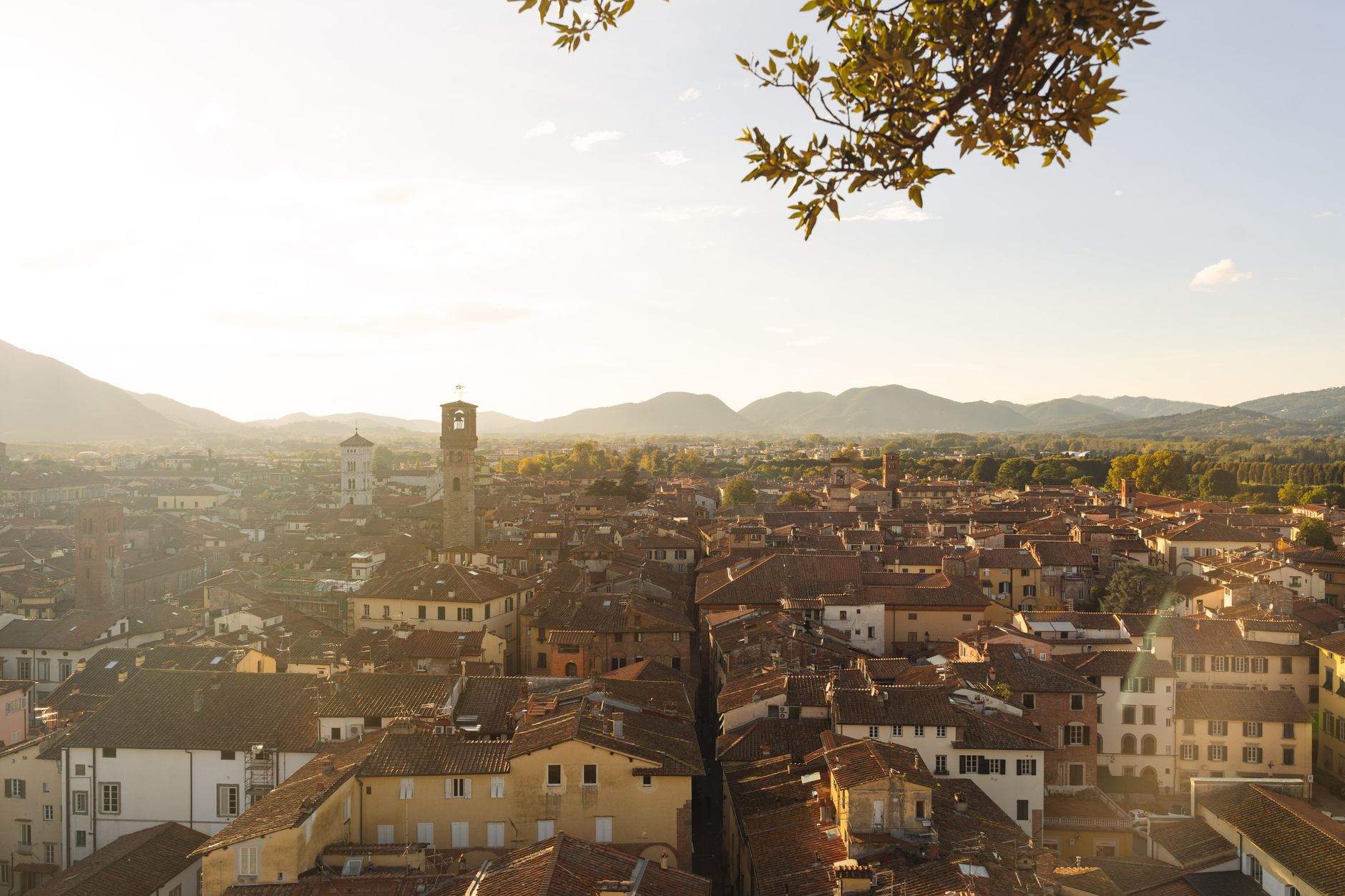
The walls are the main reason: the Mura di Lucca provide a continuous, raised green promenade ideal for an easy bike loop and give a clear orientation to the compact centre. The route past Porta San Pietro and the tree-lined ramparts offers immediate, local character.
Secondly, small but focused cultural sites concentrate local identity: Torre Guinigi with its rooftop oak trees and Torre delle Ore clock tower reward short climbs with different perspectives, while Casa di Puccini and the Museo Nazionale di Villa Guinigi reveal local art and musical heritage.
Third, the food scene centers on Lucchese dishes rather than Tuscan clichés — expect tordelli lucchesi, buccellato and simple trattorie on side streets. Markets and an active café culture around Via Fillungo and Piazza Napoleone make short wandering pleasant.
Finally, short rail connections to Pisa and Viareggio let visitors combine coastal time or airport travel with a base that is quieter and more compact than nearby cities.

Quick Planning Tips
Arrive by train at Lucca Centrale when possible — the station is a 10–15 minute walk to the walls and avoids city parking hassles. Regional trains are frequent from Pisa Centrale and Florence via Porrettana/Empoli routes.
Carry euros and small notes. Many smaller museums and tabaccherie accept cards, but cash is useful for market stalls, bike hires and smaller cafés. Buy local bus tickets at a tabaccheria or with the Autolinee Toscane app before boarding and validate on entry.
Plan around opening hours: towers and small museums close earlier outside high season and many attractions close one weekday afternoon for cleaning. Avoid scheduling a flight the same day as heavy museum plans; use the morning on the walls and catch a midday train to Pisa if needed.
Do not attempt to drive into the historical centre. Book accommodation near the walls or in a named neighbourhood to reduce walking with luggage.

Day 1
Morning: Start at Porta San Pietro and walk or rent bikes to circle the Mura di Lucca — the full loop is about 4.2 km and flat, which makes it a 30–60 minute cycle depending on stops. Stop at the Ramparts Gardens for early views and the statue-lined stretches by Piazza Napoleone.
Late morning: Enter the centro via Via Fillungo and reach Piazza San Michele and the Duomo di San Martino. Spend time inside the cathedral: the Volto Santo replica and the sacristy artworks. Walking time from the walls to the Duomo is 10–15 minutes.
Lunch: Eat at a nearby trattoria such as Ristorante Buca di Sant'Antonio for a traditional Lucchese midday meal; expect mains around €12–20. After lunch, stroll to Piazza dell'Anfiteatro to view the oval plan and browse small shops.
Afternoon: Climb Torre delle Ore for clock-face views (allow 30–45 minutes including queue) then head to Torre Guinigi to see the rooftop oaks and panorama. Both towers have modest entry fees (around €5–7 each) and are a 5–10 minute walk apart.
Evening: Dinner in the historic centre; choose a smaller osteria off Via Fillungo to avoid tourist-marked menus. Finish with a late walk on the walls to see the lights around Porta Elisa and the riverside.

Day 2
Morning: Begin at Casa di Puccini on Corte San Lorenzo to see the composer's birthplace and artifacts; allow 45–60 minutes and check the seasonal hours. From there, walk to the Museo Nazionale di Villa Guinigi to view local paintings and civic collections — both sites are within a 10–15 minute walk of each other.
Late morning: Explore the west side of the centre toward Palazzo Pfanner and its gardens. Palazzo Pfanner's baroque rooms and small garden are worth a quieter hour and are only about 10 minutes on foot from the Puccini area.
Lunch: Try a sandwich or panino at a local bakery near Piazza San Francesco, then visit the weekly market or local stalls (check the market schedule). After lunch, head to the Orto Botanico Comunale di Lucca to see the small municipal botanical collection and shaded paths, a 15-minute walk from Palazzo Pfanner.
Afternoon: Take a short bus or a 20–30 minute walk across the west gate to San Concordio neighbourhood for a look at everyday life away from the tourist centre and for quieter cafés. Return through the walls and stop at small artisan shops on Via Fillungo.
Evening: Have dinner near Piazza Napoleone where evening service tends to start later; choose a local wine bar that serves Montecarlo DOC or regional pours.

Day 3
Morning: Reserve this for anything missed — a second pass up Torre Guinigi at golden hour or a final coffee in Piazza dell'Anfiteatro. If checking out mid-morning, store luggage at the hotel or use a luggage locker service and leave with light bags.
Late morning: Visit the Museo della Città (or Museo Nazionale) if still on the list; alternatively, take a short regional train (25–30 minutes) to Pisa Centrale for a half-day change of scene. Trains run frequently and are the fastest option for airport connections.
Lunch: If staying local, eat at a trattoria near Lucca Centrale to be close to transport; otherwise pick a café near Pisa Centrale before transferring to the Pisa Mover shuttle to the airport.
Afternoon: For travelers catching an afternoon flight, allow 90–120 minutes to get from the historic centre to Pisa International Airport: 10–15 minute walk to Lucca Centrale, 25 minutes by regional train to Pisa Centrale, and 8 minutes on the Pisa Mover to the terminal. Taxi directly from central Lucca to Pisa Airport runs about €70–90 depending on time and luggage, so budget accordingly.
Evening (if staying): Finish with a relaxed dinner on the east side of the walls or a riverfront walk to close the visit.

Best Local Experiences
Cycle the entire Mura di Lucca at least once and stop at different gates: Porta Santa Maria, Porta San Pietro and Porta Elisa each have different views and nearby cafés. The loop is the single most local activity.
Attend an evening recital or small concert at Casa di Puccini when available; schedules are seasonal and intimate. Buy a combined ticket or check the Puccini Foundation calendar.
Spend time in Piazza dell'Anfiteatro: pick a café terrace for coffee and watch market stalls and shoppers move around the oval layout. Nearby artisan shops on Via Fillungo offer local cakes and leather goods.
Visit Palazzo Pfanner and its garden for a quieter baroque interior, then contrast that with the civic collections at Museo Nazionale di Villa Guinigi. Small museum circuits are easy on foot and offer concentrated local art.
Take a half-day rail trip to Viareggio for a coastal promenade or to Pisa to see the Campo dei Miracoli; both are under 40 minutes by regional train and useful if a break from the centre is wanted.
Where to Stay
Historic centre (inside the walls): Suits travelers who want immediate access to towers, cafés and evening walks. Rooms range widely; expect €90–180 per night for mid-range options (about $98–$195). Booking early helps secure small properties with private courtyards.
Near Lucca Centrale / Porta San Pietro: Suits train travellers and those with luggage who prefer short walks to the station. Nightly prices are typically €70–120 (about $76–$130) and hotels here often include parking or arrange it nearby outside the ZTL.
San Concordio / West of the walls: Suits budget-minded visitors or families who want slightly larger rooms and calmer neighbourhood streets. Expect €50–90 per night (about $55–$98) with easier street parking and local grocery options.
For short stays that include a car, prefer accommodation that advertises “parking outside ZTL” or a dedicated garage. Many central hotels will offer details on controlled access and how to register a temporary plate for hotel arrivals.
Food and Drink
Tordelli lucchesi: a local meat-filled pasta similar to ravioli, often served with a meat ragù. Good versions appear at family-run trattorie; expect about €10–15 for a portion.
Buccellato di Lucca: a ring-shaped sweet bread with raisins and anise, sold at bakeries such as those on Via Fillungo or near Piazza San Michele. A slice or small loaf costs about €3–6.
Zuppa di farro: a barley or spelt-based soup in colder months served in traditional osterie; expect €6–10. Look for seasonal soups in winter menus.
Street/quick option — schiacciata or panino: local bakeries and paninoteche near Piazza San Francesco sell filled flatbread sandwiches for €3–6, ideal for midday when museums are closed.
Dinner recommendation: sit-down at a trattoria in a side street off Via Fillungo or near Piazza Napoleone; choose local wines such as Montecarlo DOC whites or reds. Expect mains €12–22 and a three-course meal with wine €25–40 per person.
Coffee and aperitivo: morning espresso at a bar costs €1–€1.50 standing; an aperitivo plate with a glass of wine typically €6–10 in central bars.
Getting Around
Walking and cycling are the primary practical modes inside the walls; most attractions lie within a 15–25 minute walk of each other. Rent a bike on the walls near Porta San Pietro for the easiest circulation.
Regional trains (Trenitalia) connect Lucca to Pisa Centrale, Viareggio and Florence. Buy tickets at Lucca Centrale ticket machines, Trenitalia app, or staffed window and validate where required. A typical regional fare to Pisa is about €2.70.
Local buses are operated by Autolinee Toscane; buy tickets in a tabaccheria or via the Autolinee Toscane app before boarding and validate on the bus. Single fares run roughly €1.50–1.80.
Taxi from the historic centre to Pisa International Airport typically costs €70–90; a train-to-shuttle route is cheaper but takes longer (train to Pisa Centrale then Pisa Mover to the airport). Useful apps and sites: Trenitalia app for trains and Autolinee Toscane app for local buses and timetables.
Best Time to Visit
Spring (April–June) offers mild temperatures (12–24°C) and lower peak crowds than July–August; late April and May are particularly pleasant for cycling the walls. Expect more events and open hours starting in April.
Summer (July–August) brings heat (mid-20s to low 30s°C) and the highest visitor numbers. Many small museums extend opening hours but restaurants may charge higher prices; early reservations for tower climbs are recommended.
Autumn (September–October) has warm days and cooler evenings (10–22°C) with fewer crowds and harvest-related food events. This period offers good value for accommodation outside the high-season rates.
Winter (November–March) is quiet, with lower prices and shorter opening hours for minor museums; some attractions and small restaurants close one weekday or have limited hours, but the walls and churches remain accessible.
Budget and Practical Tips
Realistic daily budget (per person): Accommodation mid-range €80–120 (€86–130 USD), budget €50–80 (€54–86 USD). Food: €25–40 per day for a mix of bakery lunches, a sit-down dinner and coffee (€27–43 USD). Transport: €5–10 per day including short regional trains or occasional bus rides (€5–11 USD). Entry fees: plan €10–20 per day if visiting a tower and a museum (€11–22 USD).
Tipping: Service is often included as servizio on the bill in sit-down restaurants; if not, rounding up or leaving an extra 5–10% for good service is appreciated but not obligatory. For cafés, locals pay the cashier; tipping at the bar is uncommon.
Practical tip: keep a small amount of cash for market stalls, bike rental and old-fashioned cafés. Carry a photocopy of hotel details for ZTL access questions at villa gates or for taxis. Validate bus tickets on boarding to avoid fines.
FAQ
Is Lucca safe for solo travelers?
Yes. Street crime is low compared with larger cities; standard precautions apply after dark and on isolated streets. Keep valuables secure in crowded market areas.
How do I get from Lucca to Pisa International Airport?
Walk 10–15 minutes to Lucca Centrale, take a regional Trenitalia train (~25 minutes) to Pisa Centrale, then use the Pisa Mover shuttle (~8 minutes) to the airport. Total travel time including transfers is typically 60–90 minutes.
Are the walls free to enter and open all day?
Yes, the Mura are public and free; access points such as Porta San Pietro and Porta Elisa are open daily, but specific garden entrances and amenities may have limited hours.
Is a Lucca city card or museum pass worth buying?
A combined ticket for multiple municipal sites can be worth it if planning to enter several paid museums and towers (for example Torre Guinigi, Museo Nazionale and Casa di Puccini). Check current local museum circuit offers at city tourist offices.
Can visitors drive in and park inside the centre?
No — the centro storico is within a ZTL enforced by cameras. Visitors should use off-ZTL parking (Parcheggio San Francesco or Parcheggio del Giardino) and walk or take local transit.
Are English-language guided tours available?
Yes. Guided tours in English are offered for major sites such as Torre Guinigi and Casa di Puccini; book in advance for high season or weekend visits.
Is Lucca a good base for day trips to Florence or the coast?
The town is a good base for Pisa and Viareggio by frequent regional trains; Florence is reachable by train in about 1h 15–90 minutes with a transfer, but daily Florence trips reduce time spent in the centre.
How early do museums and towers open?
Many open around 9:00–10:00 and close mid-afternoon in low season or later in high season; check each site’s timetable to avoid disappointment.
Conclusion
Three days used well leave a lasting view of the walls, a few tower panoramas and a sense of local food and musical history. The strongest memory for most visitors is the contrast between riding the flat ramparts and slipping into narrow medieval lanes for coffee.
If time becomes tight, prioritise a full circuit of the Mura early on and one tower climb (Torre Guinigi or Torre delle Ore) for perspective and orientation — these deliver the clearest sense of place in minimal time. Plan transport to and from Pisa in advance if flying out the same afternoon.
How this guide was prepared
This guide was prepared through a structured research that combines destination research, geographic context, itinerary planning logic, and content review.