

Getting Around Milan: Practical Transport Guide for 3 Days and Day Trips
How to move efficiently and sustainably around Milan: metros, trams, regional trains, airports, bikes, taxis, and practical tips for day trips to Como, Bergamo, Brescia, Desenzano and Parma.
Clear, local-first advice on public transit, airport links, bike lanes, and regional trains to help you follow a 3-day Milan itinerary and make low-impact day trips to nearby cities.
Quick Answer
Clear, local-first advice on public transit, airport links, bike lanes, and regional trains to help you follow a 3-day Milan itinerary and make low-impact day trips to nearby cities.
Who This Page Is For
This page is for travelers planning a stay in Milan who want clearer decisions about getting around, local logistics, timing, budgeting, and practical trip planning.
How This Page Was Prepared
This page was prepared through a structured editorial workflow that combines destination research, geographic context, and practical travel-planning review.
Plan the Rest of Your Trip
Use this page together with the full itinerary and the related planning pages below to make better booking, timing, transport, and budget decisions.
Use the ATM network (metro, trams, buses) for city mobility; buy a 24/48/72-hour or weekly pass if you plan frequent trips. Take Malpensa Express or M4/Linate options for airports and Trenord/Trenitalia/Italo from Centrale or Garibaldi for regional day trips. Walk Brera and the Duomo area, cycle between Navigli and Porta Ticinese, and prefer trains over cars for trips to Como, Bergamo and beyond.
Milan is compact, walkable and served by a dense public-transport network. The metro is fast for longer hops, trams are scenic and useful for shorter cross-city trips, and regional trains from Centrale and Porta Garibaldi make easy, lower-carbon day trips to Como, Bergamo, Brescia, Desenzano del Garda and Parma. This guide helps you choose the right combination of walking, bike-share, tram and train for a practical, low-impact 3-day stay and nearby excursions.
What This Page Helps You Decide
This page helps you pick the best way to get from airports and stations to your neighborhood, decide whether to buy day passes, choose trains or buses for day trips, and plan low-impact local travel during a 3-day visit.
You'll get actionable recommendations for:
- Airport transfers (Malpensa, Linate, Orio al Serio)
- Which neighborhoods to use as a base for walking to sights
- When to buy a city pass vs. single tickets
- Practical train options for Como, Bergamo, Brescia, Desenzano and Parma
- Short-term bike and scooter options and safety tips
For suggested daily walks and what to see once you arrive, pair this guidance with the 3 days in Milan itinerary.

Top Recommendations
For a 3-day stay centered on the Duomo, Brera and Navigli:
- Buy a 24 or 48-hour ATM pass if you plan 4+ rides in a day; otherwise single 90-minute tickets can be economical. Check ATM Milano for current fares and contactless options.
- From Malpensa: take the Malpensa Express to Milano Centrale or Cadorna (valid choice if you have luggage). From Linate: the M4 metro now connects the airport with the city; there are also direct buses.
- Use Trenord or Trenitalia from Centrale/Porta Garibaldi for day trips. Regional trains are frequent and low-impact compared with driving.
- Walk central neighborhoods (Duomo, Brera, Castello) and use bikes or trams to link longer stretches (Navigli to Porta Garibaldi).
- Pre-book long-distance or high-speed train tickets (Italo/Trenitalia) for travel to Parma or Brescia during weekends or holidays; regional train seats are first-come and can fill on morning commuter runs.
Local Context
Neighborhood realities and seasonal notes:
- Duomo and Brera: dense with pedestrians, easiest on foot; peak tourist months are May–September and December holidays. Shoulder seasons (April, October) have milder crowds.
- Navigli: lively evenings and weekend markets; canals are busiest at sunset—expect crowds on weekend nights.
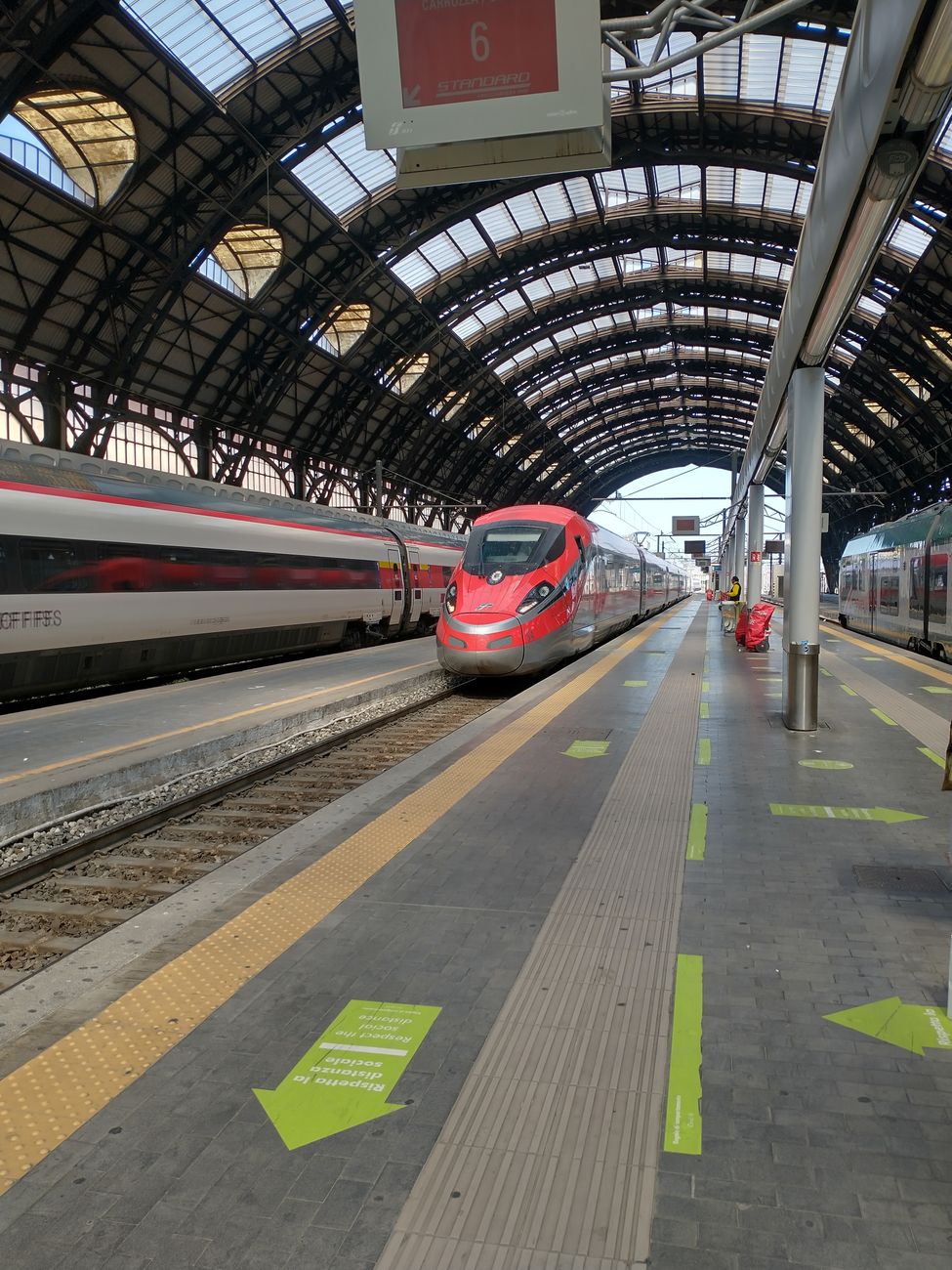
- Porta Garibaldi and Centrale: major transport hubs with many regional and high-speed services—useful for day trips but watch luggage and pickpocketing on busy platforms.
- Isola and Porta Ticinese: good for cheaper dining and short bike rides; streets can be narrow with tram tracks and cobblestones—use caution if cycling.
Transport realities:
- Metro lines (M1, M2, M3, M4) cover most tourist axes. M4 provides a fast connection to Linate.
- Trams are frequent and stop often; they are slower but offer direct cross-town links where metros don't run.
- Regional trains to nearby cities are run mainly by Trenord; intercity by Trenitalia/Italo. Ticketing rules differ—always check the operator.

How to Choose Well
Decide based on luggage, time and sustainability goals:
- Heavy luggage or early/late flights: prefer direct airport trains or taxis to reduce stress.
- Short hops inside the center: walk or take a tram—lower impact and you see local life.
- Multiple museum visits or many hops in one day: buy a 24/48/72-hour ATM pass.
- Day trips: choose regional trains (Trenord) for Como and Bergamo; high-speed trains for Parma if you need a faster journey. Prioritize trains over rental cars to support low-impact travel.
Practical booking advice:
- Use the ATM Milano app for city tickets and validators; use Trenord, Trenitalia or Italo apps (or Trainline) for regional and high-speed bookings.
- Validate paper tickets where required; keep digital confirmations for inspectors.
- Book airport shuttles (Orio al Serio) or Malpensa Express in advance during peak weekends.

Responsible and Local-First Tips
Travel choices that support the local economy and reduce impact:
- Take trains for nearby towns rather than renting a car; spend in local cafés and small shops when you arrive.
- Use bike-share or e-bike services for short trips—choose helmets and avoid busy streets during rush hour.
- Support independent osterias and family-run stores in neighborhoods like Porta Ticinese and Isola rather than international chains.
- If using taxis or private hire, prefer licensed cabs or reputable local companies and look for drivers who speak basic English or use the app to confirm details.
- Avoid contributing to canal overcrowding by visiting Navigli in the morning or late afternoon on weekdays if possible.
Small sustainable habits:
- Carry a refillable bottle (many public fountains in Milan) and a reusable bag for shopping.
- Keep to marked bike lanes and respect tram boarding areas to minimize conflicts.

Common Mistakes to Avoid
Avoid these frequent errors:
- Assuming a single city ticket covers airport express services or regional trains—Malpensa Express and some regional services often require separate fares.
- Waiting until the last minute to buy high-speed train tickets for weekend day trips—prices rise and seats can sell out.
- Riding crowded trams or metros at rush hour with large suitcases—plan airport transfers outside peak commuter windows.
- Not validating paper tickets or not carrying printed/digital confirmations—inspectors are common and fines are high.
- Relying solely on scooters or cycling without checking local rules or parking zones—dockless vehicles are regulated and can be removed or fined if parked improperly.
FAQ
How do I get from Malpensa Airport to central Milan?
The Malpensa Express train runs to Milano Centrale and Cadorna stations; it's reliable for luggage. There are also scheduled airport buses. Book tickets on the Malpensa Express site or buy at the station—compare times and luggage convenience.
Is a Milan transport pass worth it for 3 days?
If you expect to take 4+ rides per day, a 24/48/72-hour pass usually saves money and is more convenient. For light itineraries that stay close to the Duomo and Brera, pay-as-you-go single 90-minute tickets can be cheaper.
How do I reach Como, Bergamo or Brescia as day trips?
Regional Trenord trains depart from Milano Centrale and Porta Garibaldi to Como, Bergamo and Brescia. Travel times are typically under 1–1.5 hours. For Como, consider the train to Como S. Giovanni and then a short walk to the lakefront. Check Trenord schedules and validate regional tickets where required.
Can I use contactless payment on Milan public transport?
Milan has expanded contactless and mobile ticketing, but coverage can vary by vehicle and validator. The safest approach is to download the ATM Milano app or buy tickets from machines and validate when needed.
Are taxis safe and how much should I tip?
Licensed taxis are marked and metered. They are safe; use ranks or official apps to book. Tipping is not expected—rounding up or adding a few euros for extra help with bags is common but optional.
Where can I store luggage for a day trip or late flight?
Milano Centrale has luggage storage options and private services such as luggage lockers or staffed left-luggage counters; app-based services like LuggageHero also operate in the city. Book in advance during busy periods.
Conclusion
Milan's transport mix of metro, trams and reliable regional trains makes it an efficient base for a 3-day itinerary and day trips to nearby cities. Prioritize trains over cars for sustainability, walk or cycle inside neighborhoods, and buy the right pass for your travel pattern. For walking routes and a day-by-day plan, use this guide alongside the 3 days in Milan itinerary to turn efficient transport choices into relaxed sightseeing and local discovery.
How this guide was prepared
This guide was prepared through a structured research that combines destination research, geographic context, itinerary planning logic, and content review.