
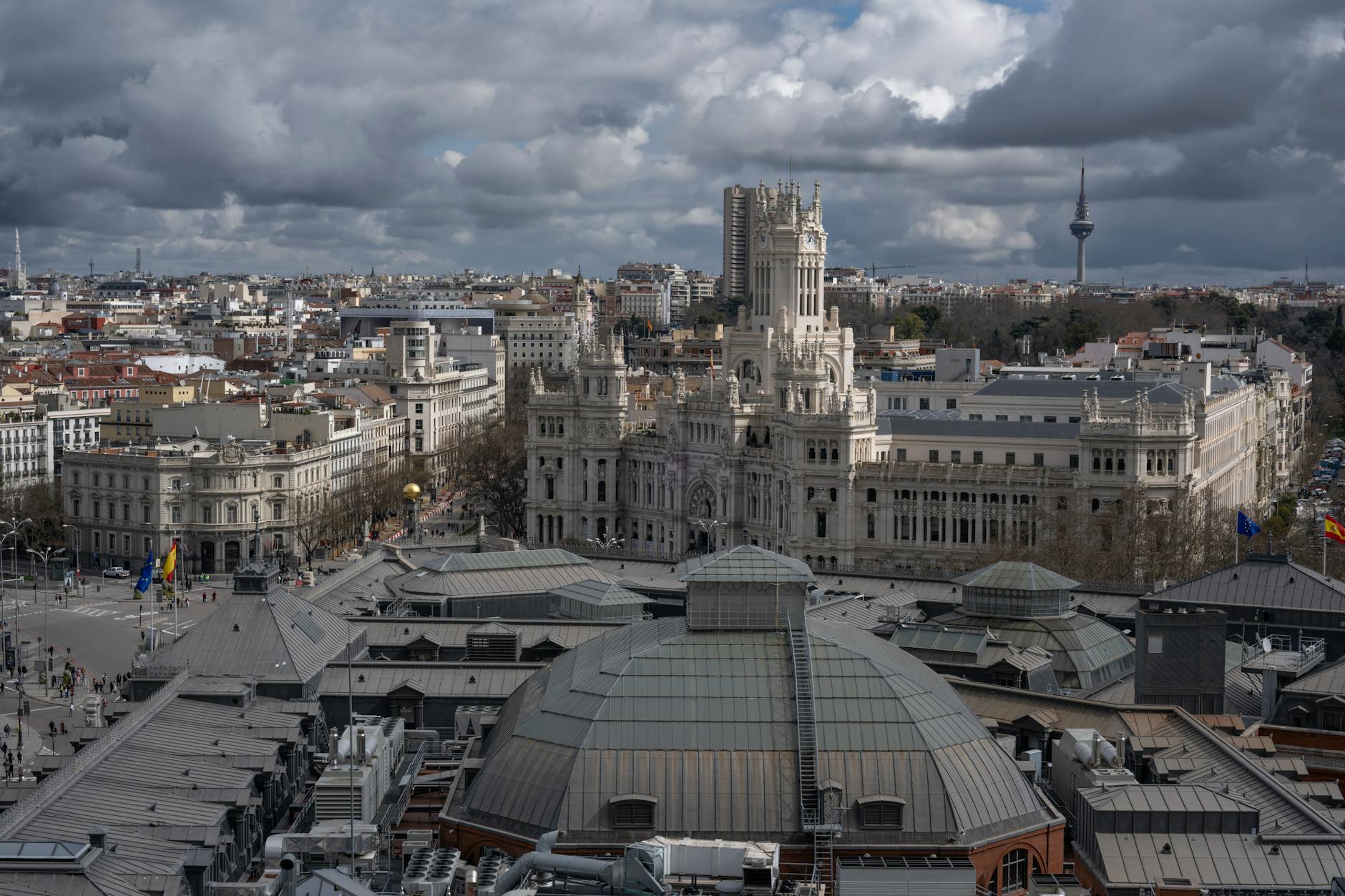
Responsible Travel Guide to Madrid — Practical Support for a 3-Day Visit
Practical, low-impact advice for enjoying Madrid responsibly: where to stay, move, eat and take sustainable day trips. A compact support page for the main 3 days in Madrid itinerary.
A compact, practical companion to the 3 days in Madrid itinerary with neighborhood picks, transit realities, sustainable tips and nearby train-friendly day trips to places like Toledo and Alcalá de Henares.
Quick Answer
A compact, practical companion to the 3 days in Madrid itinerary with neighborhood picks, transit realities, sustainable tips and nearby train-friendly day trips to places like Toledo and Alcalá de Henares.
Who This Page Is For
This page is for travelers planning a stay in Madrid who want clearer decisions about responsible travel, local logistics, timing, budgeting, and practical trip planning.
How This Page Was Prepared
This page was prepared through a structured editorial workflow that combines destination research, geographic context, and practical travel-planning review.
Plan the Rest of Your Trip
Use this page together with the full itinerary and the related planning pages below to make better booking, timing, transport, and budget decisions.
For a responsible 3-day visit, base yourself in a central, walkable neighborhood (Retiro/Salamanca or Malasaña/Lavapiés), buy a short-term transport pass, prebook timed-entry tickets for Prado or Reina Sofía, choose a couple of neighbourhood meals at small, family-run bars, and make any day trips by Cercanías or regional train to keep impact low and support local economies.
This page is a practical support resource for travelers using the main 3 days in Madrid itinerary. It focuses on making low-impact, locally beneficial choices: where to stay by neighborhood, how to navigate using public transport, when to visit to avoid crowds, and sustainable day-trip options by train. Use this alongside the main itinerary for booking details and a timed plan of top sights.
What This Page Helps You Decide
Use this page to quickly pick practical options that align with responsible travel values:
– Which neighborhood to book for quiet nights and easy access to the 3-day itinerary.
– Whether to buy single tickets or a Madrid transport pass and how to use Cercanías for day trips.
– When to visit museums and markets to avoid peak crowds (shoulder seasons and morning windows).
– Which day trips are best done by train (Alcalá de Henares, Toledo, Salamanca, Valladolid, Burgos).
– How to choose tours and eateries that funnel money to local guides and producers.
Top Recommendations
Neighborhoods and lodging
– Retiro / Salamanca: quieter, tree-lined streets, good for families and museum access (Prado, Reina Sofía). Best for daytime walking and low-night noise.
– Malasaña / Tribunal: creative, independent shops and small bars; lively but quieter on weekdays.
– Lavapiés and La Latina: culturally diverse dining and tapas streets; good for slow evening meals and local markets.
Transport and bookings
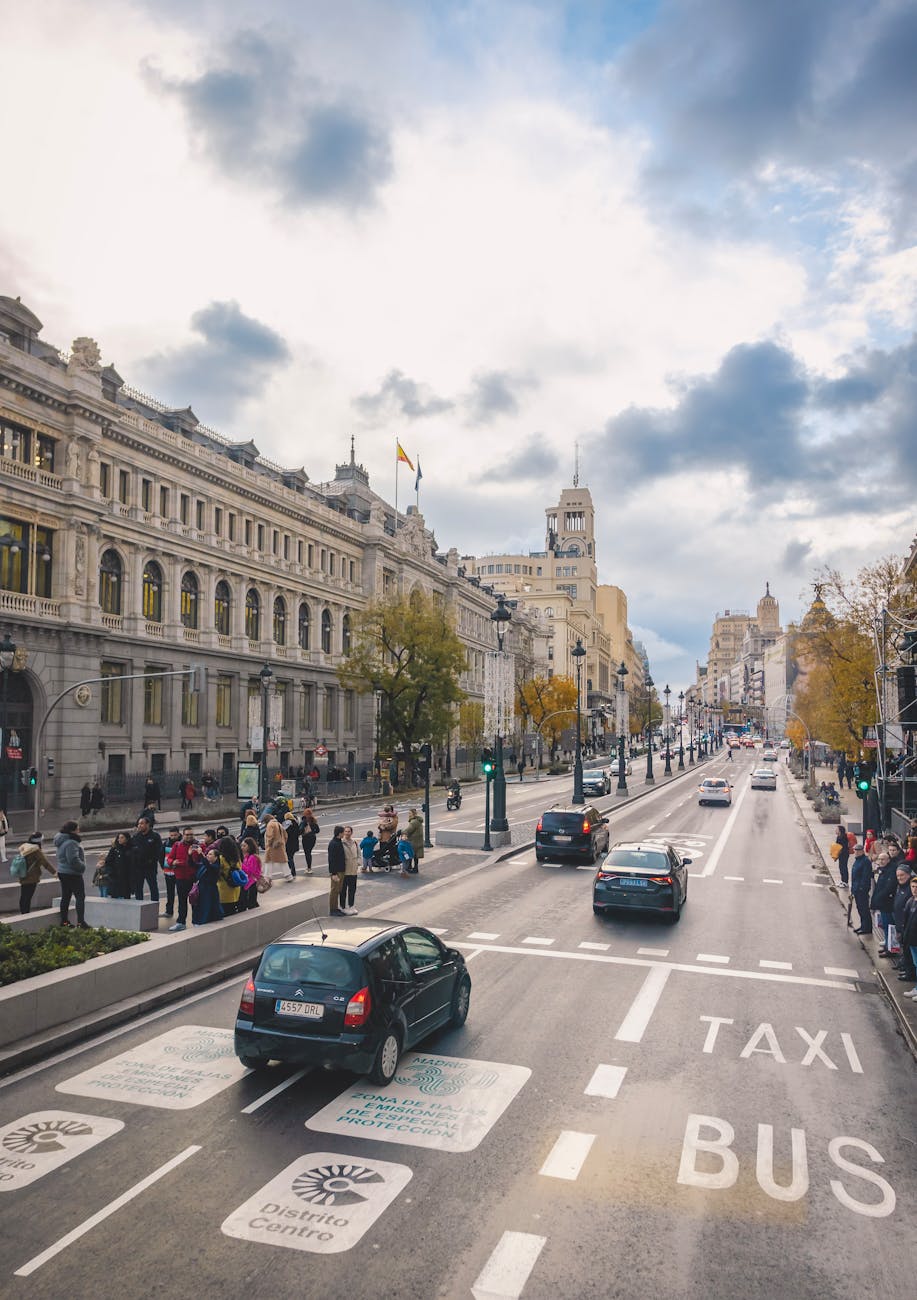
– Buy a 2–3 day Tourist Travel Pass or rechargeable contactless card if you plan multiple metro/bus trips; for day trips, use Renfe Cercanías or regional trains.
– Prebook Prado and Reina Sofía timed tickets and reserve slot for popular temporary exhibitions.
Low-impact activities
– Rent a city bike or use the bikeshare for short trips and Retiro loops.
– Join small-group walking tours led by licensed local guides rather than large coach tours.
Day trips to prioritize by train
– Alcalá de Henares: 30–40 min by C-2 Cercanías — UNESCO Cervantes sites.
– Toledo: ~30 min by fast regional train from Atocha; walkable historic core.
– Salamanca, Valladolid, Burgos: longer high-speed or regional options; book AVE/Alvia seats in advance to reduce last-minute stress.
Local Context
Seasonality and crowds
– Best shoulder months: April–May and September–October for comfortable weather and fewer tourists.
– Summer (July–August) is hot and busy; many locals take holidays in August, and some small businesses may close.
Transport realities
– Madrid’s Metro is extensive and fast; buses fill gaps and Cercanías trains connect nearby cities. Peak hours are roughly 7:30–9:30 and 17:30–19:30 weekdays.
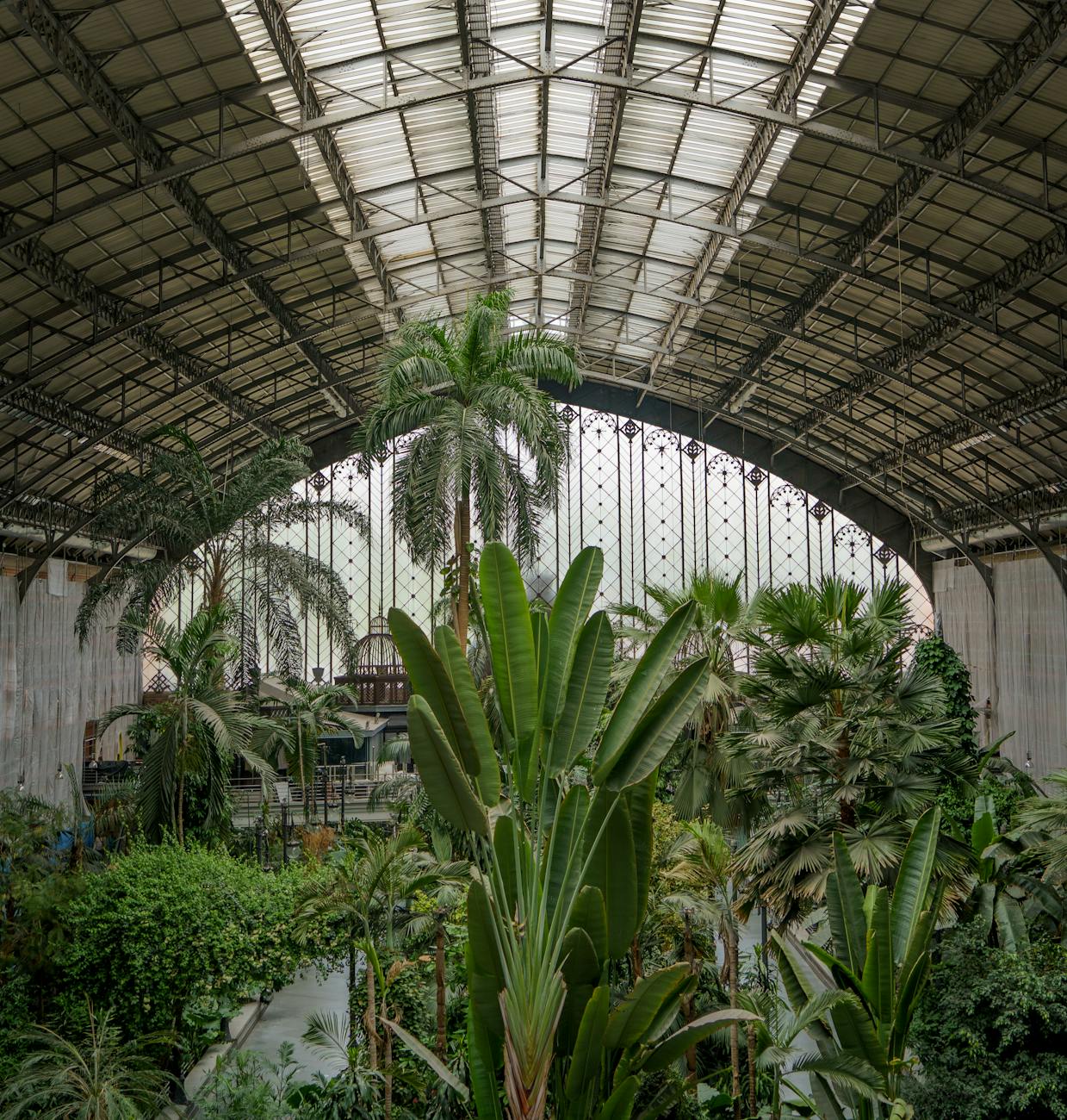
– Atocha is the main rail hub for regional and long-distance trains; arrive 20–30 minutes early for ticket pickup or luggage checks.
Local etiquette
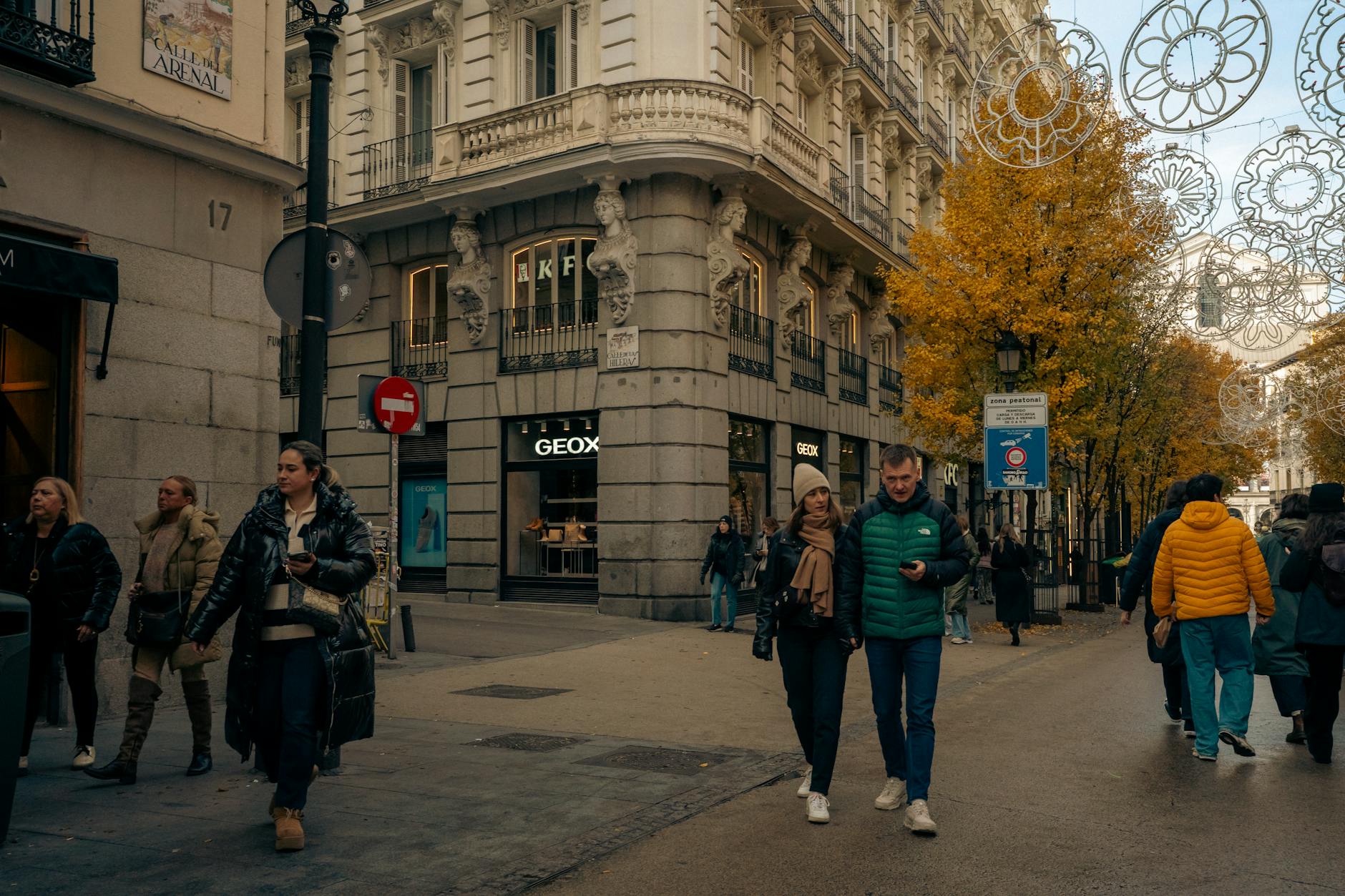
– Greet with a simple ‘‘hola’’ and use ‘‘por favor’’ and ‘‘gracias’’. Dining is later than in many countries — lunch around 14:00, dinner from 21:00.
– Keep noise low in residential neighborhoods after 23:00; apartment blocks can be sensitive to late-night disturbance.
How to Choose Well
Accommodation
– Prefer small guesthouses, family-run pensions, or certified sustainable hotels over large chains when possible.
– Look for places with good ventilation and quiet evenings; Retiro and Salamanca are safer bets for low noise.
Tours and guides
– Choose licensed local guides (look for official credentials) and small-group or private walks focused on history and local life.
– Check cancellation policies and prefer flexible bookings that allow last-minute changes without penalty.
Eating and shopping
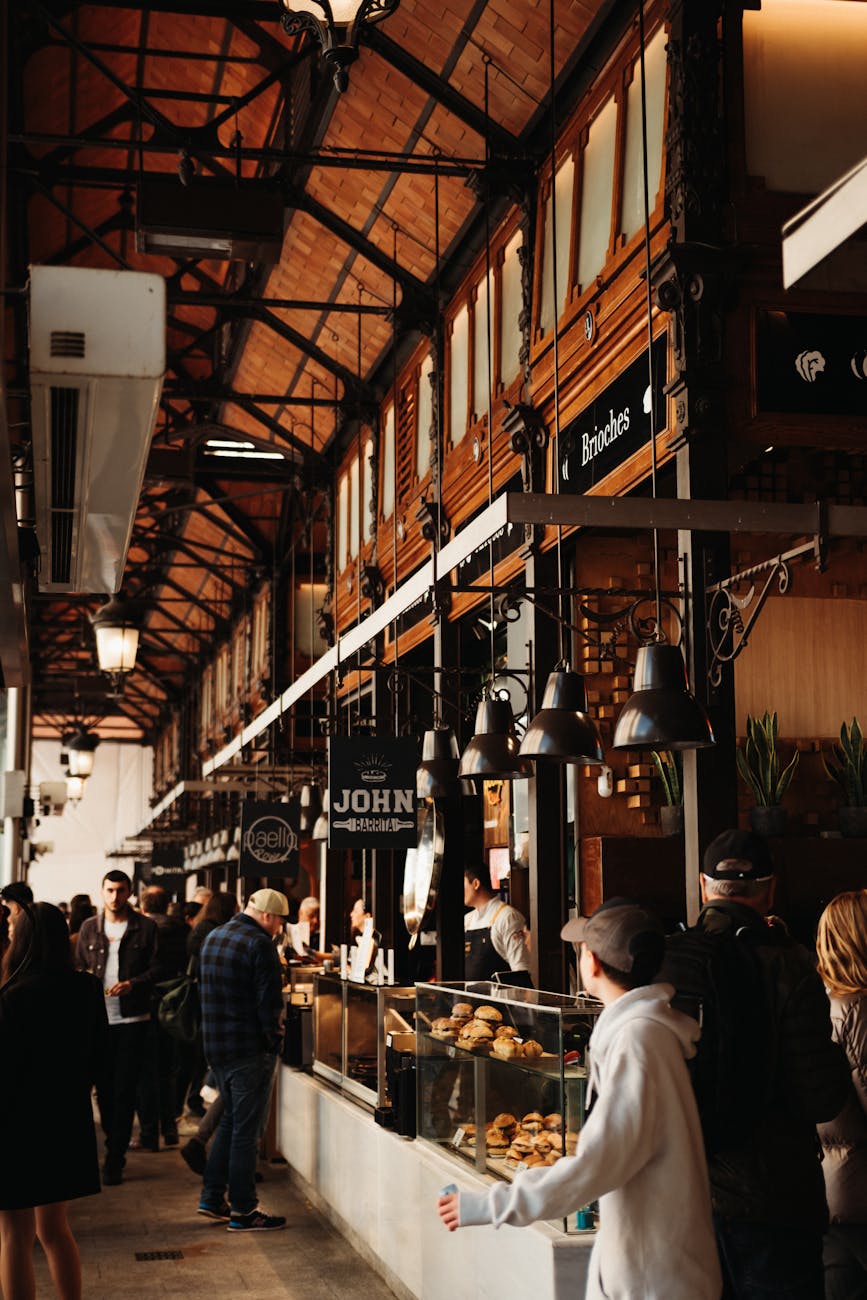
– Favor neighbourhood bars and markets (weekly market stalls, panaderías, small bodegas) over tourist-targeted menus; avoid the overpriced Mercado de San Miguel for every meal.
Booking practicalities
– Reserve museum slots online in advance. Book train tickets to Toledo/Salamanca early for better prices and smaller crowds. Use official Renfe or Cercanías apps/sites or reliable resellers.
Responsible and Local-First Tips
Support local businesses
– Eat at family-run taverns, buy produce at neighbourhood mercados, and book tours with resident guides.
Transport and low-impact choices
– Prefer trains (Cercanías, regional, AVE for longer hops) over buses or private day-trip coaches when possible.
Waste and water
– Carry a refillable bottle — many cafés and bars will fill it. Avoid single-use plastic where you can.
Respectful behaviour
– Dress modestly for religious sites and follow photo rules in museums and churches.
Avoid exploitative experiences
– Skip large commercialized flamenco dinners unless they clearly support local artists; instead, ask local bars for authentic, smaller shows or community-driven tablaos.
Give back thoughtfully
– If you tip, do so directly to service staff; consider small donations to conservation or heritage groups when visiting fragile sites outside the city.
Common Mistakes to Avoid
- Overbooking: trying to cram every museum and a long day trip into one day reduces quality and increases carbon footprint.
- Choosing only tourist hubs: eating every meal at Mercado de San Miguel or around Puerta del Sol wastes money and misses local value.
- Ignoring timetables: Cercanías and regional trains have fixed departures — check schedules and reserve seats for longer routes.
- Not validating travel cards: know how to use the contactless or paper tickets to avoid fines and delays.
- Assuming everything accepts cards: smaller bars and markets may be cash-preferred; carry small bills.
- Booking large, high-impact coach tours for nearby towns — opt for train travel or small group operators instead.
FAQ
Is Madrid easy to visit without a car?
Yes. The city is highly walkable and served by a comprehensive Metro, buses, and Cercanías trains for nearby towns. For day trips to Alcalá de Henares and Toledo, trains are faster and more sustainable than driving.
When should I book museum tickets and day-trip trains?
Book Prado and Reina Sofía timed tickets at least a week ahead in shoulder season and earlier in high season. For Toledo, Salamanca or Valladolid, reserve regional or AVE seats as soon as your dates are fixed to secure lower fares and preferred times.
Where is best to stay for a quiet, responsible visit?
Retiro and Salamanca districts for quieter nights and easy museum access; Malasaña for independent shops and cafés; Lavapiés or La Latina for supporting multicultural food businesses. Avoid booking in heavily tourist-saturated streets if you want calm evenings.
Are there low-impact ways to see the city at night?
Yes — take an after-dinner walk around the lit Paseo del Prado and Plaza Mayor, enjoy small-table tapas in La Latina or Lavapiés, or ride a shared bike for short trips instead of taxis.
How do I choose an ethical flamenco or cultural show?
Look for small venues that list performers and split revenue transparently, or ask for local recommendations. Avoid big tourist packages that bundle overpriced meals with generic shows.
Conclusion
Pair this support page with the main 3 days in Madrid itinerary: use the neighborhood, transport and booking tips here to reduce impact and deepen local benefit. For sustainable day trips, prioritize Cercanías and regional trains to Alcalá de Henares, Toledo, Salamanca, Valladolid or Burgos, and book early to secure smaller-group options. Small choices—where you eat, who you book with, how you travel—are the easiest ways to make your Madrid visit more responsible and memorable.
How this guide was prepared
This guide was prepared through a structured research that combines destination research, geographic context, itinerary planning logic, and content review.