

Rimini in 3 Days: Practical Itinerary & Local Planning Guide
A practical 3-day Rimini itinerary with transit advice, museum costs, beach tips and realistic budgets to plan a focused weekend on the Emilia-Romagna coast.
A frank, usable 72-hour plan for Rimini that balances the Roman and medieval centre, Fellini-related sites, and managed beach time — with real transit and price details.
Arriving gives a split first impression: a long, commercial seafront with rows of numbered bagni and, a ten-minute walk inland, a compact medieval and Roman centre. The coast is loud in summer with kiosks and music; the centro storico is quieter by comparison and rewards slow wandering. Visitors often underestimate how walkable the centre is—most major monuments sit within a 10–20 minute radius of Piazza Cavour.
Expect crowds on the promenade from late June to mid-September and more local life in spring and autumn. The place suits people who want both archaeology and a practical beach morning or two rather than a full two-week beach holiday. Noise, music from beach clubs and a high proportion of seasonal businesses are normal; peak-season prices for beach services, parking and restaurants will feel higher than inland Emilia-Romagna towns.
Practical first moves on arrival are to check the START Romagna app for bus schedules and the Metromare stops, and to buy day or single tickets rather than paying onboard, which can be slower and more expensive in peak times.
Is 3 days in Rimini enough?
Yes: three days lets a traveler see the historic core (Arch of Augustus, Tiberius Bridge, Tempio Malatestiano), visit the Fellini sites, and spend a morning on a managed beach. One honest caveat: full-day trips to Ravenna or long beach lounging beyond a half-day will require extra time.
Who This Guide Is For
Best for travellers who want a mix of archaeology, mid-sized museums and a managed Adriatic beach experience; less suitable for those wanting a relaxed long beach holiday or an in-depth Emilia-Romagna food tour on a tight budget.
Local Tips for Rimini
Practical details that most travel sites skip — specific to Rimini.
- Buy bus and Metromare single tickets from the START Romagna app or vending machines at Stazione FS and Metromare stops; single urban ride is about €1.50 and the Metromare single is the same price when paid in advance.
- Book a private 'bagno' (beach cabin) by name—Bagno 26 or Bagno 81 are typical—expect €15–€30 per day for two sunbeds and an umbrella in high season; pay on arrival at the kiosk.
- Museum combo: check combined admission for Domus del Chirurgo and the nearby Museo della Città; individual entries are commonly €4–€6 each, combined tickets can save a few euros.
- From Federico Fellini International Airport (RMI) take the ARR Shuttle or a taxi to Rimini station; a taxi to Marina Centro costs roughly €15–€20 depending on luggage and time of day.
- Borgo San Giuliano has painted house facades and local seafood restaurants; avoid the busiest stretch around Via San Giuliano at dinner if on a strict budget because tourist menus inflate prices.
How This Guide Was Prepared
Rimini mixes an active beach economy with a compact historic centre; most guides treat it either as only a summer resort or only as Fellini lore. This guide shows how to split time so three days include Roman monuments, local seafood culture and an effective beach morning without wasting transfers. Practical micro-details about START Romagna buses, Metromare and specific bathhouses are included because those usually trip up short visits. This guide was prepared through a structured research that combines destination research, geographic context, itinerary planning logic, and content review.
Plan Your Stay in Rimini
Use these planning pages to compare areas to stay, expected costs, seasonal timing, and local transport before booking.
Why Visit
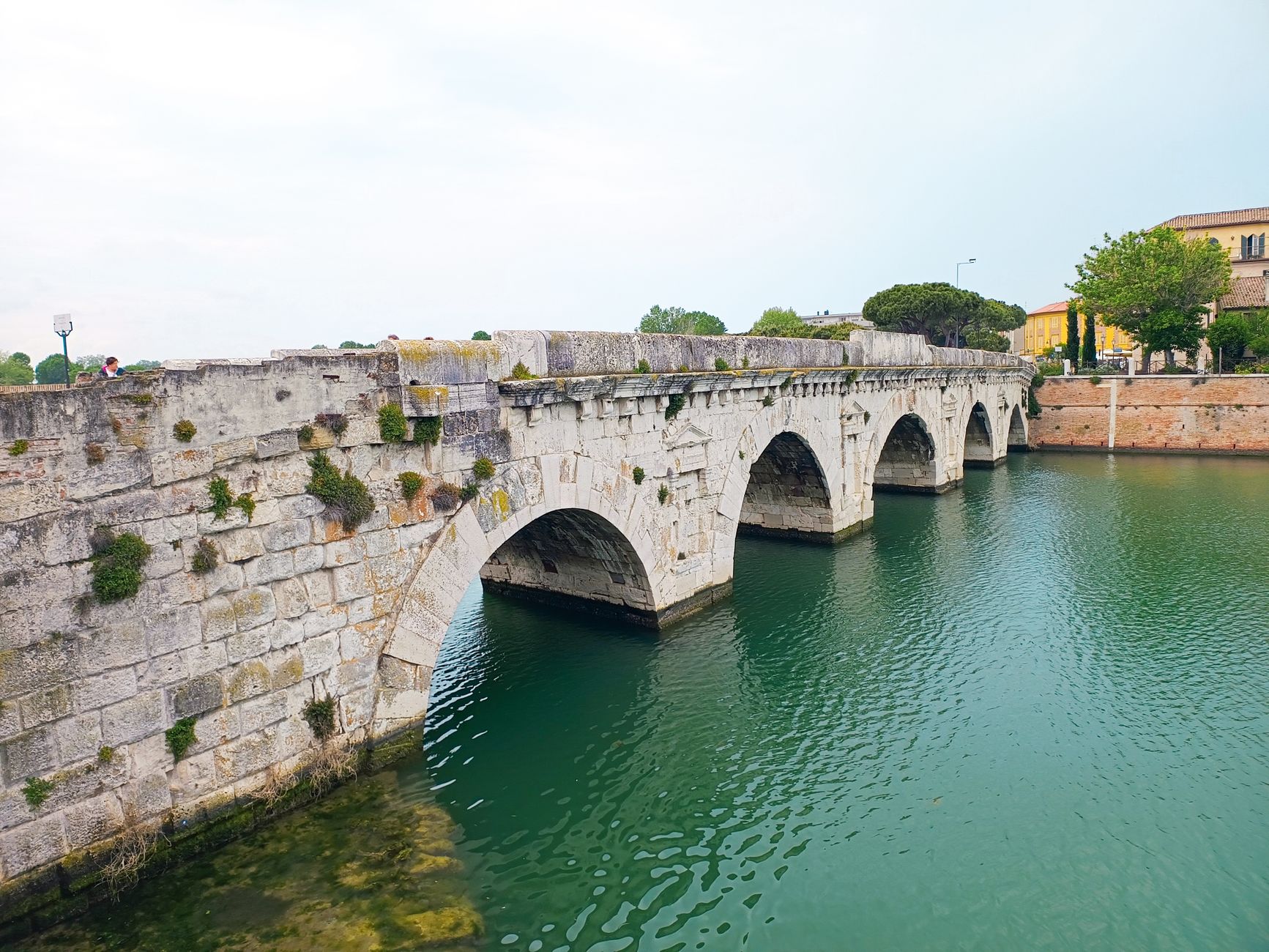
Well-preserved Roman remains coexist with a small-scale Renaissance and 20th-century cinema history. The Arco d'Augusto and Ponte di Tiberio are genuine first-century landmarks that can be seen in short visits without detours to bigger archaeological parks.
Film fans have concentrated sites: the Museo Federico Fellini and his birth house area make for short, focused visits that explain why this place repeatedly appears in his films. Food and coastal culture matter: piadina romagnola and brodetto alla riminese give a clear taste of the local coastline rather than inland Emilia food.
Compact size and frequent regional trains make day trips to Ravenna (mosaics) or Cesenatico (canal port) simple, so this town is useful as a base for short hops along the coast. Good public transit and a walkable centre mean three days will feel full but not rushed.
Quick Planning Tips
Best arrival: from Federico Fellini Airport (RMI) use the airport shuttle to Rimini Stazione FS or a taxi; trains run to Bologna and Ancona from Stazione FS. If arriving by train, the historic centre is a 10–15 minute walk from the station; taxis queue at the station rank.
Payment and tickets: use the START Romagna app for bus and Metromare tickets and the Trenitalia app for regional train tickets. Cash remains useful for small café purchases, but most restaurants and bagni accept cards; carry €20–€50 in small notes for market purchases and tipping.
A common planning mistake is stacking beach days in August without pre-booking a bagno; book by name or choose a free stretch early in the morning. Also avoid planning museum-heavy mornings on Mondays: several small museums close or have limited hours that day.

Day 1
Morning: Start at the Arco d'Augusto then walk 3 minutes to Ponte di Tiberio for photos and river-edge views. Both are public, outdoor sites with no entry fee. Allow 45–60 minutes total to see both and read the plaques.
Midday: Walk 10 minutes to Piazza Cavour to see the Tempio Malatestiano and nearby Castel Sismondo (Corso d'Augusto). Tempio Malatestiano has a small entry fee (roughly €5) and modest queues during high season; Castel Sismondo often hosts temporary exhibitions—check the schedule for combined tickets.
Lunch: Eat at Trattoria dal Biason near Borgo San Giuliano for local fish or order piadina at a nearby kiosk; a decent seafood or piadina lunch will cost €8–€18 per person. After lunch, spend an hour exploring Borgo San Giuliano’s painted facades on Via San Giuliano and side streets.
Afternoon: Visit the Domus del Chirurgo archaeological site and the Museo della Città (allow 1.5–2 hours, combined entry about €8–€10). These sites are within a 10–12 minute walk from Piazza Cavour.
Evening: Return toward Marina Centro by bus 1 or a 20–25 minute walk to Viale Regina Elena for dinner on the seafront. For evening, try a beach-front passeggiata along the promenade and an apertivo bar near the Kursaal; expect higher prices on the seafront after 8pm.

Day 2
Morning: Reserve a Metromare ride to Riccione or use it just to sample the rapid coastal link; if staying local, start with Museo Federico Fellini (allow 1–1.5 hours) and the small Fellini walking route near Via Clementini. The museum ticket is usually around €6 and good for film-curious visitors.
Midday: Head to the fish market near Mercato Coperto (check opening days—market mornings are best) and buy snacks or a takeaway piadina. From the museum area, it’s a 10–15 minute walk or a short bus ride to the market.
Lunch: Eat at a seafood osteria in the harbour area—look for brodetto alla riminese on the menu. A mid-range seafood lunch will run €15–€30 per person.
Afternoon: Spend the afternoon at the beach in Marina Centro or choose a quieter stretch at Torre Pedrera reachable by local bus 9 or by bicycle (rentals along Viale Regina Elena). Renting two sunbeds at a bagno costs roughly €15–€30; expect higher rates in August.
Evening: Dine in Borgo San Giuliano for a low-key finish; avoid the main tourist strips if on a tight budget and request the daily catch rather than a fixed-price menu. Late-night: walk the seafront for people-watching and gelato from a reputable gelateria on Viale Regina Elena.

Day 3
Morning: Use this day for a half-day trip or a relaxed museum visit. Options include taking a regional train to Ravenna (mosaics) that departs from Stazione FS; the ride is 25–40 minutes depending on the service. Alternatively, spend a relaxed morning visiting the Civic Archaeological Museum and the Domus del Chirurgo if not already seen.
Midday: If catching a mid-afternoon flight or train, plan lunch near Stazione FS so luggage and transfers are simple; a reliable option is a café on Corso d'Augusto or a takeaway piadina to eat on the platform. Allow at least 90 minutes between leaving the last museum and airport check-in during high season.
Afternoon: For departures: airport shuttle from Stazione FS leaves regularly and runs 20–25 minutes; a taxi to Federico Fellini International Airport is typically €15–€25 depending on luggage and time.
Late-afternoon alternative: if not leaving until evening, rent a bike and cycle along the seafront to Miramare for quieter beaches and end with a final coffee in a marina-side bar. For travellers checking out of hotels, most front desks will hold luggage for a fee so the last hours can be used sight-seeing without dragging bags.
Best Local Experiences
Piadina tasting in a small bakery: try piadina stuffed with prosciutto crudo and squacquerone from a local forno or a stand on Via XX Settembre. Prices €3–€6.
Borgo San Giuliano evening walk: the painted murals and old fishermen’s houses give a clear sense of local social geography; go early evening to avoid the busiest dinner slots.
Fish market at Mercato Coperto or shifts at the waterfront docks: arrive at market opening for fresh catches and street-level bargaining; expect small queues on market days.
A bagno morning: book a named bagno (e.g., Bagno 26 or Bagno 81) and combine a rented sunbed with a quick swim; local bathhouses offer lockers, showers and a bar. A half-day or day pass ranges €10–€30.
Fellini micro-tour: visit Museo Federico Fellini, the Piazza Malatesta area, and the small memorials dotted in the centro; this takes under three hours but gives context for film references.
Bike ride along Lungomare: rent a city bike near Viale Regina Elena and cycle north toward Torre Pedrera for quieter sand and lower prices; rentals vary but expect €6–€12 per hour.

Where to Stay
Marina Centro: best for beach-first travellers who want immediate access to bagni and the promenade. Close to Viale Regina Elena and the Kursaal, it suits those preferring nightlife and cafes. Nightly cost: low season €50–€90, mid-range €90–€160, high-end €160+ (EUR).
Centro Storico / Near Stazione FS: suits visitors prioritising walking access to monuments, museums and train connections. Expect short walks to Piazza Cavour and the Domus del Chirurgo. Nightly cost: low season €45–€85, mid-range €80–€140, higher for renovated B&Bs near the station.
Borgo San Giuliano: suits food-oriented travellers and those who want a local neighbourhood feel rather than seafront clubs. Small guesthouses and family-run B&Bs are common. Nightly cost: low season €40–€75, mid-range €70–€120. Prices rise in August across all neighbourhoods; book early for weekends in July and August.
Food and Drink
Piadina Romagnola: a flatbread folded with fillings such as prosciutto, squacquerone and rucola. Buy at a forno or dedicated piadineria; €3–€6 for a takeaway.
Brodetto alla Riminese: a local fish stew with tomato and garlic base, often served with polenta or toasted bread. Best at small harbour osterie; €12–€25 depending on portion and restaurant.
Sardoncini fritti: small fried sardines common at market kiosks and snack bars; a portion is €6–€12.
Passatelli in brodo or with ragù: thick noodle-like dumplings made from breadcrumbs and cheese, typical inland but common in local trattorie; main-course portions €10–€15.
Breakfast option: cappuccino and cornetto at a bar near Piazza Cavour; about €2. Street food: piadina stands on Corso d'Augusto and Viale Regina Elena. Dinner recommendation: a seafood trattoria in Borgo San Giuliano or near the old harbour—look for daily-catch signs and house wine. Expect dinner prices €18–€35 per person for a full meal with wine.
Getting Around
Local buses: START Romagna runs urban and regional routes. Key urban lines serve the seafront and centro; use the START Romagna app for tickets and route maps.
Metromare: a bus-rapid transit service running along the coast between Rimini and Riccione with dedicated stops; buy tickets at station machines or via the START app. It shortens travel along the coastline compared with regular buses.
Trains: Trenitalia regional trains connect Stazione FS to Ravenna, Bologna and Ancona. Check the Trenitalia app for schedules and buy regional tickets in advance to avoid queues.
Ticket prices: single urban bus ticket about €1.50 (valid ~70 minutes), day passes around €4.50–€6 depending on coverage. Metromare single-ticket rates generally mirror urban pricing when bought in advance.
Taxis and apps: official taxis use the station rank or Radio Taxi Rimini; airport taxi to Marina Centro roughly €15–€25 depending on luggage. Bicycle rentals are widespread along Viale Regina Elena and useful for short coastal trips.
Useful apps: START Romagna for buses and Metromare tickets; Trenitalia for regional train tickets.
Best Time to Visit
Spring (April–June): pleasant temperatures 15–25°C, fewer beach crowds, many cafes open; good value for museums and sea views. Expect occasional rain in April.
High summer (July–August): hot, 25–32°C, busiest and most expensive time. Beaches are full and bagni book up; nightlife and events are at their peak but prices for beach services and hotels spike.
Early autumn (September–October): still warm enough for bathing through mid-September with 20–26°C, lower accommodation rates in October and fewer crowds; many restaurants remain open.
Winter (November–March): quiet and many seafront businesses close; temperatures 5–13°C. Good for museum visits and lower hotel costs but limited beach services. Best value months are May and September when weather is good and crowds smaller.
Budget and Practical Tips
Daily budget (per person, moderate): Accommodation €70–€120 (mid-range hotel), Food €25–€45 (mix of coffee, market lunch, one restaurant dinner), Transport €3–€8 (bus/day pass and occasional train), Entry fees €6–€15 (one or two small museums). Total about €110–€190 per day (EUR). In USD this is roughly $120–$210 depending on exchange rates.
Cheaper option: shared dorms or budget B&Bs can bring accommodation to €30–€60, lowering the daily total to €70–€110. Splurging on beach cabins and front-line dining will push daily costs to €200+.
Tipping: service charges are often included; leaving small change or rounding up €1–€5 for good table service is customary but not obligatory. For taxi drivers, rounding up or adding €1–€3 is normal.
Practical tips: carry small euro notes for markets and beach kiosks. During high season, book beach cabins and any weekend hotel stays well in advance. Keep photocopies of train or flight reservations and check museum opening hours—many small sites close on Mondays or have reduced hours in winter.
FAQ
Is Rimini safe for solo travellers?
Yes, daytime areas and the centro storico are generally safe; standard precautions apply at night on the promenade during peak-party hours and in crowded markets.
How do I get from Federico Fellini Airport to the city centre?
Take the airport shuttle to Stazione FS (approx 20–25 minutes) or a taxi; the shuttle timetable is posted at arrivals and tickets are sold at the desk.
Is a Rimini city card worth buying for 3 days?
There isn’t a widely used universal Rimini card; pick and choose museum tickets and look for combined Domus del Chirurgo/Museo della Città deals rather than buying a generic pass.
Can day trips to Ravenna or Bologna be done from here?
Yes; Ravenna is 25–40 minutes by regional train, Bologna is 1–1.5 hours by regional or faster connections. Trains depart from Stazione FS.
Are beaches free or paid?
Both: public free stretches exist, but the classic experience uses a private bagno with paid sunbeds and services; prices rise significantly in July–August.
What’s the best way to reach Riccione?
Metromare and regional trains both connect; Metromare is faster along the coast with dedicated stops and reliable frequent service.
Do many museums close on Mondays?
Several small museums and archaeological sites have reduced hours or closures on Monday—check online before scheduling a Monday museum morning.
Is English widely spoken?
Basic English is common in hotels, tourist shops and restaurants, but some smaller local businesses and market vendors may use only Italian; carry a phrase list if not confident.
Conclusion
A three-day plan gives a realistic balance: Roman monuments and a fine Fellini primer in the centre, one relaxed beach morning at a named bagno, and room for a short coastal day trip if desired. The memory that sticks is usually the contrast between river-side antiquities and the regimented rows of umbrellas on the Adriatic.
If time becomes tight, prioritise the Arco d'Augusto, Ponte di Tiberio and a short walk through Borgo San Giuliano; those three deliver the clearest sense of place within a few hours and free up other time for beach or travel connections.
How this guide was prepared
This guide was prepared through a structured research that combines destination research, geographic context, itinerary planning logic, and content review.